Shop on Lazada
Paco Rabanne products
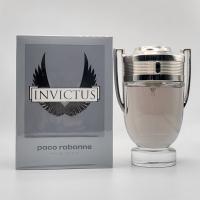
Paco Invictus eau de toilette sp 100ml
$88.00$153.00
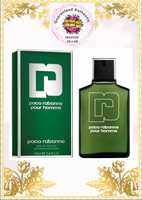
Paco Rabanne Green Pour Homme EDT 100ml for Men (Tester with Cap/Retail Packaging) - BNIB Perfume/Fragrance
$56.43$57.00
![Paco Rabanne XS EDT for Men (100ml Tester) Eau de Toilette Excess Blue [Brand New 100% Authentic Perfume/Fragrance]](https://sg-live.slatic.net/p/c48677c00d4057494f0d46c9d4f65dad.jpg_200x200q80.jpg)
Paco Rabanne XS EDT for Men (100ml Tester) Eau de Toilette Excess Blue [Brand New 100% Authentic Perfume/Fragrance]
$86.00$128.00
![Paco Rabanne Invictus Parfum Spray 100ml [TESTER PACKAGING] - Eclat Parfum](https://sg-live.slatic.net/p/75f57491866fb853fbe38788f72bebe9.jpg_200x200q80.jpg)
Paco Rabanne Invictus Parfum Spray 100ml [TESTER PACKAGING] - Eclat Parfum
$109.00$187.00
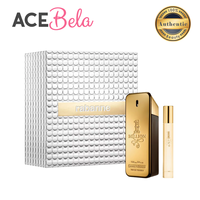
Paco Rabanne 1 Million EDT 100 ml + EDT 20 ml (100% Authentic from Acebela)
$86.59$139.00
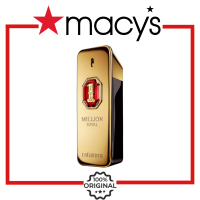
Paco Rabanne One Million Royal Parfum 100ml
$39.60$80.00
![PR Invictus Eau De Toilette Spray 100ml [TESTER PACKAGING] - Eclat Parfum](https://sg-live.slatic.net/p/7e198c8c6057edb4caf511b07dec13fa.jpg_200x200q80.jpg)
PR Invictus Eau De Toilette Spray 100ml [TESTER PACKAGING] - Eclat Parfum
$79.00$138.00
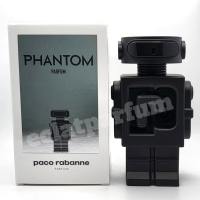
Paco Rabanne Phantom Parfum Spray 100ml - Eclat Parfum
$118.00$182.00
About Paco Rabanne
Paco Rabanne, now officially branded as Rabanne, is a French fashion and beauty house established in Paris in 1966 by Spanish-born designer Francisco Rabaneda Cuervo, widely known as Paco Rabanne. The maison first gained prominence for its radically experimental approach to fashion, particularly through the use of metal, plastic, paper and other unconventional materials, before evolving into a major international name in fashion, fragrance and beauty.1
Today, Rabanne forms part of the Spanish luxury group Puig, with business interests spanning fashion, fragrances and makeup. In 2023, the brand’s visual identity shifted from “Paco Rabanne” to “Rabanne”, reflecting a strategic effort to position the house as a broader, contemporary lifestyle brand.2
Brand overview
| Category | Information |
|---|---|
| Brand name | Paco Rabanne / Rabanne |
| Current name | Rabanne |
| Founder | Francisco Rabaneda Cuervo, known as Paco Rabanne |
| Founded | 1966 |
| Founded in | Paris, France |
| Founder nationality | Spanish-born; later established in France |
| Industry | Luxury fashion, fragrance, cosmetics |
| Parent company | Puig |
| Famous for | Experimental fashion, metal dresses, futuristic aesthetics, fragrances |
| First fragrance | Calandre (1969) |
| Major fragrance | 1 Million (2008) |
| Fashion creative director | Olivier Rousteing, from 2026 |
| Previous fashion creative director | Julien Dossena (2013–2026) |
| Current brand identity | Rabanne |
The house traces its foundation to 1966, when Paco Rabanne presented his first significant collection.3
Who was Paco Rabanne?
Paco Rabanne (1934–2023) was the designer behind the eponymous house.
Born Francisco Rabaneda Cuervo on 18 February 1934 in Pasaia, in Spain’s Basque Country, he was the son of a head seamstress who worked for the Spanish fashion house associated with Cristóbal Balenciaga. Following the Spanish Civil War and the execution of his Republican military father, his family fled Spain and settled in France.4
Unusually for a fashion designer, Rabanne originally studied architecture at the École Nationale Supérieure des Beaux-Arts in Paris. This architectural training profoundly influenced his approach to clothing; he treated garments almost as three-dimensional structures rather than conventional sewn apparel.5
Before establishing his own fashion house, he designed accessories and jewellery for established couture houses, creating pieces for maisons such as Balenciaga, Givenchy and Dior.6
The founding of Paco Rabanne
The fashion house was established in 1966.
Rabanne immediately challenged conventional definitions of clothing. Rather than relying primarily on traditional fabrics such as silk and wool, he experimented with metal, plastic, paper, discs, chains and other industrial materials.7
His debut collection was famously titled:
“12 Unwearable Dresses in Contemporary Materials”
The title itself was provocative. These creations were not designed merely as practical everyday clothes but were intended to demonstrate that fashion could be sculpture, architecture, performance and art.8
This approach established Rabanne as one of the most recognisable figures of the 1960s avant-garde fashion movement.
The “Space Age” aesthetic
One of Paco Rabanne’s most significant contributions to fashion was his futuristic visual language.
During the 1960s, popular culture was captivated by space exploration, science fiction, new technology, plastics, modern architecture, industrial design, futurism and evolving ideas about gender and youth. Rabanne translated this atmosphere directly into clothing.
His garments frequently featured metal, geometric shapes, exposed construction, reflective surfaces and unconventional materials, which together formed the classic Rabanne aesthetic. Metal discs joined by rings became particularly characteristic of the house. The technique could resemble chain mail while simultaneously appearing futuristic and technological. The Metropolitan Museum of Art describes this combination as a defining example of Rabanne’s experimental approach.9
Although Rabanne himself did not necessarily embrace being reduced to the label of “futurist”, the association became inseparable from his legacy.
Connection with popular culture and film
Rabanne’s designs quickly transcended traditional fashion boundaries.
Between 1966 and 1970, he created costumes for theatrical productions and films, including work associated with Barbarella and Casino Royale.10 The most famous example is arguably Jane Fonda’s costume in the 1968 science-fiction film Barbarella. This collaboration perfectly matched Rabanne’s aesthetic, featuring metallic surfaces, futuristic silhouettes and an overtly theatrical approach to the body.
Such work helped establish Rabanne not merely as a fashion designer but as a creator whose output belonged to the broader world of 1960s popular culture.
Famous celebrity associations
Rabanne’s designs attracted musicians, actresses and cultural figures.
A particularly important muse was French singer Françoise Hardy. In 1968, Hardy famously wore a Rabanne creation incorporating approximately 9 kilograms of gold, an extraordinary demonstration of the designer’s willingness to blur the boundary between fashion and precious-object design.11
Spectacle of this kind became integral to the Rabanne identity. The house was not simply selling clothes; it was promoting the idea that fashion could be dramatic, provocative, technological, luxurious and slightly impossible.
Entry into fragrance
Fragrance eventually became one of the most commercially significant pillars of the Paco Rabanne business.
The relationship with Puig began in the late 1960s. The first major fragrance was Calandre, launched in 1969. Puig describes Calandre as a groundbreaking fragrance and an important early milestone in its relationship with Rabanne.12
Calandre was significant because it translated Rabanne’s fashion language into perfume. Even the bottle referenced the house’s modernist aesthetic, helping to establish the concept that the fragrance bottle itself could function as a piece of design. The fragrance business subsequently became enormously important to the brand’s global identity.
Relationship with Puig
Puig is central to understanding the modern Paco Rabanne brand.
The relationship between Rabanne and Puig began in the late 1960s, initially through fragrance. Puig subsequently became deeply involved in the brand’s development and ultimately acquired the fashion business. According to Puig’s 2025 annual report, Paco Rabanne was founded in 1966 and acquired by Puig in 1987, having already held the beauty licence since 1968.13
This relationship transformed Rabanne from an avant-garde Parisian fashion experiment into an international luxury business. Today, Rabanne operates within Puig’s portfolio alongside other major beauty and fashion brands.
Paco Rabanne’s fashion legacy
Rabanne’s importance in fashion lies less in producing conventional luxury clothing and more in challenging fundamental assumptions.
“What can clothing be made from?”
Instead of asking how to improve traditional garments, Rabanne asked what would happen if designers used industrial materials and construction techniques. His work anticipated or influenced several concepts that became increasingly important in contemporary fashion, including unconventional materials, wearable sculpture, fashion as performance, fashion and technology, gender experimentation, industrial design, celebrity-driven fashion and fashion as popular entertainment.
His metal dresses are now held in major museum collections. The Metropolitan Museum of Art, for example, possesses a 1967 Rabanne dress constructed from aluminium plates joined with metal rings.14
Paco Rabanne in the 1990s and 2000s
Rabanne gradually withdrew from active haute couture. The house’s history records 2000 as the year when Monsieur Rabanne presented his final haute couture Autumn/Winter collection.15
Although the founder stepped away, the Paco Rabanne name continued to wield significant commercial power, particularly in fragrance. This created a notable dynamic: Paco Rabanne the person became increasingly distant from the fashion business, while “Paco Rabanne” the brand became increasingly global.
The fragrance revolution
The 1990s and 2000s were particularly important for Rabanne’s perfume business. One significant release was XS, introduced in 1994.
1 Million — 2008
The major commercial breakthrough came with 1 Million, which became one of the defining fragrances associated with modern Paco Rabanne.
Its packaging was deliberately extravagant: the bottle was designed to resemble a gold bar, turning the fragrance into an object associated with wealth, glamour and excess. The scent helped establish a new Rabanne image characterised by gold, luxury, masculinity, confidence and excess. Puig identifies 1 Million, launched in 2008, as the house’s most iconic product by that point.16
Lady Million
The success of 1 Million was followed by Lady Million, which brought the same universe of luxury and excess into a feminine fragrance concept. The bottle’s gold, jewel-like appearance became highly recognisable.
Together, 1 Million and Lady Million helped make Paco Rabanne one of the most recognisable designer fragrance names among younger consumers. This marked an important shift in the brand’s identity. Whereas the original Paco Rabanne had been associated with avant-garde couture and metal dresses, the modern commercial brand became synonymous with gold, glamour, nightlife, sexuality, celebrity, confidence and fragrance.
Revival of the fashion house
Following Rabanne’s retirement, the fashion side of the house experienced periods of reduced activity and revival.
A major turning point arrived in 2013, when Julien Dossena became artistic director. The Fédération de la Haute Couture et de la Mode describes Dossena’s arrival as bringing youthful and eclectic energy to the house.17
Dossena’s work was significant because he did not simply reproduce Paco Rabanne’s 1960s metal dresses. Instead, he interpreted the archive through a contemporary fashion vocabulary. His Rabanne collections combined elements such as metal, chainmail, sequins, sheer fabrics, knitwear, sportswear, sensual silhouettes, graphic prints and contemporary street culture. This helped re-establish Rabanne as a serious contemporary fashion label rather than merely a historical name.
The 2023 transformation: Paco Rabanne becomes Rabanne
One of the most significant recent changes occurred in 2023, when the house adopted the simplified name RABANNE rather than Paco Rabanne.
The official house describes the change as part of a new era intended to unite fashion and beauty under one signature and lifestyle identity. The new typography also drew inspiration from the house’s archives and the visual language associated with Calandre.18
This does not imply that Paco Rabanne’s history has disappeared. Rather, Paco Rabanne represents the historical founder and original identity, while Rabanne denotes the contemporary fashion and beauty house. The founder’s name remains deeply associated with the brand, but the official branding has been simplified.
Rabanne Makeup
Another major development accompanying the new identity was the expansion into makeup. Puig’s 2025 annual report states that the brand introduced its new visual identity under the name Rabanne in 2023, followed by its first makeup line.19
This represents an expansion of the brand’s original fashion-to-fragrance model into a broader beauty ecosystem encompassing fashion, fragrance, makeup and lifestyle. It marks a significant departure from the relatively narrow world of Paco Rabanne haute couture in the 1960s.
Creative direction today
For much of the contemporary period, Julien Dossena was the key figure behind the fashion revival. However, Rabanne’s official website now records Olivier Rousteing as creative director from 2026, following Dossena’s 2013–2026 tenure.20
This makes 2026 another major transition point in the house’s history. Rousteing is particularly associated with his long tenure at Balmain, so his appointment places Rabanne at another important moment of reinvention.
What does the Rabanne aesthetic mean?
The brand’s visual DNA can be divided into two distinct eras.
Original Paco Rabanne (1960s–1970s)
- Futuristic
- Experimental
- Architectural
- Metallic
- Industrial
- Provocative
- Avant-garde
- Space-age
- Sculptural
- Unconventional
Modern Rabanne (2000s–2020s)
- Glamorous
- Sensual
- Youthful
- Metallic
- Maximalist
- Luxurious
- Celebrity-oriented
- Nightlife-inspired
- Commercially accessible
- Fashion-forward
Both eras share the same fundamental premise:
Rabanne has always treated fashion as something that should attract attention rather than simply blend into everyday life.
Major products and fragrances
Some of the best-known names associated with Paco Rabanne/Rabanne include:
Fragrance
- Calandre — 1969
- Paco
- XS — 1994
- Ultraviolet
- 1 Million — 2008
- Lady Million
- Invictus
- Olympea
- Phantom
- 1 Million Elixir
- Various flankers and limited editions
Among these, 1 Million, Lady Million, Invictus, Olympea and Phantom have been particularly important in defining the modern fragrance business.
Why Paco Rabanne is important in fashion history
Paco Rabanne is historically significant because he challenged the traditional hierarchy of fashion. Traditionally, luxury fashion emphasised beautiful fabric, expert sewing, craftsmanship and traditional couture techniques. Rabanne introduced an alternative proposition centred on material, construction, technology and spectacle.
His aluminium, plastic and metal creations demonstrated that an item did not need to be made from conventional textiles to qualify as fashion. This explains why his work continues to appear in museums and fashion-history discussions decades later. The Metropolitan Museum describes his experimental materials and sculptural construction as characteristic of the exploratory spirit of 1960s avant-garde fashion.21
Paco Rabanne vs. Rabanne
The distinction between the two names can be confusing.
| Name | Meaning |
|---|---|
| Paco Rabanne | Original name of the fashion house and the designer |
| Paco Rabanne | The historical designer, Francisco Rabaneda Cuervo |
| Rabanne | Current official brand name |
| Rabanne Fashion | Contemporary fashion business |
| Rabanne Beauty | Fragrance and cosmetics business |
| Puig | Parent company |
Consequently, if an older perfume bottle bears the name Paco Rabanne and a newer fashion product is labelled Rabanne, they belong to the same brand heritage.
Founder: Paco Rabanne’s final years
Paco Rabanne died on 3 February 2023 in France, aged 88, shortly before his 89th birthday.22
His death occurred in the same year that the house began transitioning its public identity from Paco Rabanne to Rabanne, making 2023 an unusually symbolic moment in the brand’s history. Nevertheless, the founder’s influence remains fundamental to the house’s identity.
Brand philosophy
Although the brand has evolved substantially, several principles have remained remarkably consistent.
Innovation
Rabanne has historically been interested in materials and techniques that other designers considered unusual.
Provocation
The house has never shied away from designs that attract attention.
Futurism
Even when the brand is not literally producing “space-age” clothing, its designs often reference technology, modernity and an imagined future.
Luxury
Modern Rabanne combines its experimental heritage with luxury materials, precious-looking finishes and premium fragrance.
Spectacle
Rabanne understands fashion as visual communication. A Rabanne piece is often designed to be noticed.
Brand identity in one sentence
Rabanne is a French fashion and beauty house born from Paco Rabanne’s radical 1960s experimentation with metal and unconventional materials, later transformed into a global luxury brand known for futuristic fashion, glamorous fragrances and provocative contemporary design.
Timeline
- 1934 — Francisco Rabaneda Cuervo, later known as Paco Rabanne, is born in Pasaia, Spain.23
- 1950s–early 1960s — Studies architecture in Paris and begins working in fashion accessories.24
- 1966 — Establishes the Paco Rabanne fashion house and presents 12 Unwearable Dresses in Contemporary Materials.25
- 1966–1970 — Creates costumes for films and theatrical productions, including Barbarella and Casino Royale.26
- 1968 — Françoise Hardy wears a famous Rabanne gold creation.
- 1969 — Calandre, the first Paco Rabanne fragrance, launches.27
- 1987 — Puig acquires the Paco Rabanne brand, following its earlier beauty licensing relationship.
- 1994 — XS fragrance launches.
- 2000 — Paco Rabanne presents his final haute couture collection.
- 2008 — 1 Million launches and becomes one of the house’s signature products.
- 2013 — Julien Dossena becomes artistic director.
- 2023 — The house adopts the simplified name Rabanne and launches its first makeup line.
- 2023 — Paco Rabanne dies in France at age 88.
- 2026 — Olivier Rousteing becomes Rabanne’s creative director.
Overall significance
Paco Rabanne’s story is essentially the story of three transformations: Paco Rabanne the designer pioneered revolutionary 1960s avant-garde fashion; Paco Rabanne the fashion & fragrance brand became an international luxury and fragrance powerhouse; and Rabanne today operates as a broader fashion, fragrance and beauty lifestyle house.
What makes the brand particularly noteworthy is that its commercial success did not erase its avant-garde origins. The metallic, futuristic and unconventional DNA of the original 1960s house continues to influence the modern brand, even when manifested in a perfume bottle, handbag, sequined dress, makeup package or contemporary runway collection.
In this sense, Paco Rabanne is not simply a fragrance brand or a fashion label. It stands as one of the fashion world’s clearest examples of how an experimental artistic vision can be transformed into a global luxury business while retaining recognisable design codes for more than half a century.
References
- Monsieur Paco Rabanne
- Paco Rabanne – Dress – French – The Metropolitan Museum of Art
- Paco Rabanne – Fundación Francisco Rabaneda Cuervo Fundazioa
- Paco Rabanne – The Perfume Society
- MR PACO RABANNE | Rabanne
- Paco Rabanne Passes Away at 88 | Puig Tribute
- PRESS RELEASE
- Monsieur Paco Rabanne
- Fashion and fragrance brand Paco Rabanne rebrands to Rabanne | Marketing-Interactive
- Paco Rabanne rebrands itself as Rabanne, and unveils new Winter Holiday Collection – FashionNetwork USA
- Paco Rabanne obituary | Fashion | The Guardian
- Paco Rabanne – Fundación Francisco Rabaneda Cuervo Fundazioa
- Paco Rabanne | Encyclopedia.com
- How Paco Rabanne’s Life Story and Archival ’60s Designs Reflect Our Times | Vogue
- Biographie de RABANNE FRANCISCO RABANEDA CUERVO dit PACO – Encyclopédie Universalis
- Monsieur Paco Rabanne
- Monsieur Paco Rabanne
- GENERAL TERMS AND CONDITIONS OF SALE PACO RABANNE – Rabanne
- Terms and Conditions of Use | Rabanne
- Paco Rabanne – Biography – IMDb
- Paco Rabanne Biography – Catwalk Yourself
- Paco Rabanne – Designer Biography and Price History on 1stDibs | paco rabanne history, paco rabanne biography, paco rabanne designer biography
- L’âge de l’aluminium – Biographie de Paco Rabanne
- Rabanne | LinkedIn
- Rabanne | LinkedIn
- Rabanne | LinkedIn
- Rabanne | LinkedIn