Shop on Lazada
Sofy products
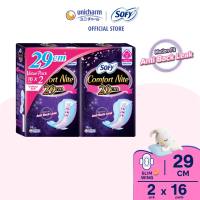
SOFY Comfort Nite Cottony Soft (Body Fit) Slim Wing Twin Pack 29cm 16s
$3.86$7.72
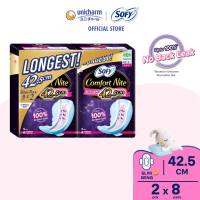
SOFY Comfort Nite Cottony Soft (Body Fit) Slim Wing Twin Pack 42.5cm 8s
$6.02$6.61
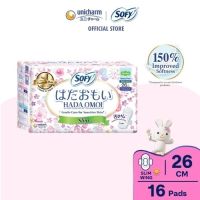
SOFY Hadaomoi Day Slim Wing Sanitary Pad 26cm 16pcs
$5.90$6.56
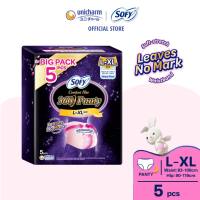
SOFY Comfort Nite 360 Panty Overnight Panty L-XL 5pcs
$5.15$5.80
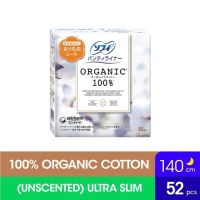
SOFY Hadaomoi Organic Day/Night Sanitary Pad 23CM/26CM/29CM/36CM/140MM
$8.05$8.65
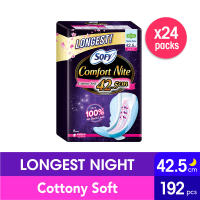
SOFY Comfort Nite Body Fit Night Slim Wing (Cottony Soft) 42.5cm 8s Sanitary Pads (24 packs) (Carton)
$81.19$96.72
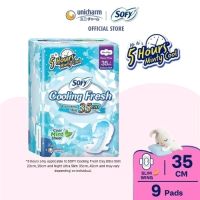
SOFY Cooling Fresh Day/Night Sanitary Pad 25CM/29CM/35CM/42CM
$5.50$6.36
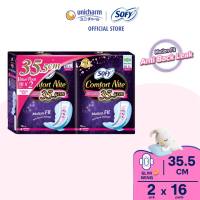
SOFY Comfort Nite Cottony Soft (Body Fit) Slim Wing Twin Pack 35.5cm 16s
$8.33$8.93
About Sofy
Sofy (stylised as SOFY) is a Japanese feminine hygiene and women’s wellness brand owned by Unicharm Corporation. While best known for its sanitary pads, the brand’s portfolio also encompasses tampons, pantyliners and, in selected markets, broader women’s care products. Unicharm positions Sofy as a range designed to accommodate diverse body types, lifestyles and menstrual needs.
Originally launched in Japan in 1982, Sofy has grown into an international feminine care brand with a significant presence across Asia and other regions. The name combines the concepts of “Sophisticated” and “Soft-hearted”, reflecting the brand’s aim to balance technical functionality with gentleness.1
Basic information
| Field | Information |
|---|---|
| Brand | Sofy / SOFY |
| Industry | Feminine hygiene / Women’s wellness |
| Parent company | Unicharm Corporation |
| Country of origin | Japan |
| Founded as a brand | 1982 |
| Main category | Menstrual care |
| Key products | Sanitary pads, tampons, pantyliners |
| Major markets | Japan, Thailand, India, Singapore, Malaysia, China, Taiwan and others |
| Brand name meaning | “Sophisticated” + “Soft-hearted” |
| Positioning | Comfort, protection, absorbency, fit and freedom of movement |
Unicharm began manufacturing and selling feminine napkins in 1963, nearly two decades before the introduction of the Sofy brand name.2
Company behind Sofy
Sofy is not an independent company but a consumer brand within Unicharm Corporation, a Japanese corporation with business divisions spanning baby care, feminine care, adult care, cleaning products and pet care.
Unicharm’s involvement in feminine hygiene dates to 1963, when it commenced production of sanitary napkins. The company subsequently developed tampons and increasingly advanced sanitary products before launching the Sofy brand in 1982.2
The corporate structure can be summarised as:
Unicharm Corporation → Feminine Care business → Sofy (SOFY)
History
1963–1981: Pre-Sofy era
Unicharm entered the feminine hygiene market in 1963 with the manufacture and sale of sanitary napkins. Over the following decades, the company introduced products addressing specific concerns such as thickness, nighttime leakage and absorbency.
Notable developments during this period included:
- 1972: Charm Nap Mini for nighttime protection
- 1976: A slimmer Charm Nap Mini responding to feedback that existing pads were too thick
- 1980: Charm Soft Tampon
- 1982: Launch of the Sofy brand2
This foundation indicates that Sofy was built upon Unicharm’s established expertise in feminine hygiene rather than emerging as an entirely new venture in 1982.
1982: Establishment of Sofy
1982 is recognised as the founding year of the Sofy brand. The name SOFY was derived from the concepts of:
- Sophisticated — technologically advanced, refined and well-designed
- Soft-hearted — gentle and considerate towards women
The brand subsequently became associated with products intended to make menstruation more comfortable and less restrictive.1
Early product innovation
A defining characteristic of Sofy has been its focus on resolving practical issues associated with menstruation through product engineering.
Sofy Sara (1988)
In 1988, Unicharm launched Sofy Sara, utilising a new material designed to improve absorption speed and surface feel. This development addressed consumer dissatisfaction with the relatively slow absorption of older non-woven and cotton-type sanitary napkins.3
Sofy Sara Wing (1990)
In 1990, Sofy introduced Sofy Sara Wing, featuring wings to help prevent side leakage and enable greater activity during heavier flow.4
Sofy Sara Super for Night (1991)
In 1991, the company released an overnight product incorporating a rear “hip guard” designed to reduce backward leakage during sleep.5
Side gathers (1993)
Sofy Sara Side Gathered, introduced in 1993, featured three-dimensional side gathers intended to enhance leakage protection.6
These innovations illustrate a recurring Sofy strategy: identifying a specific menstrual care challenge and engineering the sanitary product to address it.
International expansion
Following its establishment in Japan, Sofy expanded into international markets. Key milestones in this expansion include:
Thailand emerged as a significant international market; Unicharm had established a joint venture there in 1987, prior to the local introduction of Sofy.
Sofy maintains a substantial presence across Asian feminine hygiene markets and continues to enter new territories. For instance, Unicharm commenced local production and sales of Sofy products in Kenya in January 2025, alongside plans for a dedicated East African joint venture.8
Product portfolio
Sofy is primarily a menstrual care brand, although specific product lineups vary by country.
Sanitary pads
Sanitary pads constitute the brand’s core category. Sofy develops pads tailored to different:
- Menstrual flow levels
- Day and night usage
- Lengths and body shapes
- Sensitivity and absorbency requirements
- Activity levels
In markets such as Thailand, the current portfolio includes ranges such as Sofy Cooling Fresh, Sofy Body-Fit, Sofy Protective Edge, Sofy Skin Care, Charcoal Fresh and various overnight products.3
Overnight products
Nighttime leakage prevention has historically been a major area of innovation for Sofy. Current offerings in some markets include Sofy overnight pants, which provide full-body coverage rather than relying solely on a conventional adhesive pad. These products are described as offering 360-degree leakage protection, an elastic fit and breathable construction.10
This represents an evolution of the brand’s earlier focus on rear and side leakage protection.
Tampons
Sofy also manufactures tampons. In certain markets, the range includes SOFY Soft Tampon, with variants for normal and heavier flow.5 This category traces its historical roots to Unicharm’s 1980 Charm Soft Tampon, which predated the Sofy brand itself.
Pantyliners
The brand offers pantyliners designed for everyday use beyond menstruation. Available products in select markets include:
This range reflects an intention to extend feminine care support to non-menstrual days.
Other women’s care products
Sofy has increasingly positioned itself beyond the traditional sanitary pad category. Unicharm describes the brand as providing products for both menstrual and non-menstrual needs.8 For example, the portfolio in some countries includes SOFY Aile, an absorbent product for urinary leakage.9
Brand philosophy
Sofy’s brand philosophy is characterised by several recurring themes.
Comfort
The brand emphasises reducing physical discomfort through thinner construction, softer surfaces, body-fitting shapes and breathable materials.
Protection
Leakage protection remains a prominent theme in product development. Historical innovations have progressed from rear protection and side gathers to wings, wider coverage, body-fitting designs and overnight pants.
Freedom of movement
Product development has consistently emphasised enabling users to move, sleep and participate in daily activities with confidence, rather than treating menstruation as a period of restricted activity.10
Consumer-driven innovation
Unicharm frequently describes Sofy products as direct responses to consumer feedback. Examples include developing thinner products in response to complaints about thickness, faster-absorbing materials to address slow absorption, and wings or side gathers to mitigate side leakage. This approach makes consumer problem-solving central to the brand’s identity.10
Technology and product design
Despite the apparent simplicity of sanitary pads, Sofy operates in a technically demanding category. Major engineering challenges include:
- Absorption: Rapidly moving menstrual fluid away from the skin into the absorbent core.
- Leakage prevention: Managing fluid during movement, sleep and position changes.
- Fit: Maintaining alignment with the body.
- Thinness: Reducing bulk without compromising absorbency.
- Surface comfort: Minimising wetness, friction and unpleasant skin contact.
- Breathability: Reducing heat and stuffiness.
Historical product development demonstrates a progression from conventional pads towards increasingly specialised structures, materials and body-fitting designs.11
Sofy in Singapore and the region
Singapore is listed among Sofy’s major international markets, with the brand entering the country in 1997 as part of its broader Southeast Asian expansion.7 The brand’s regional history highlights its adaptation to local needs while maintaining its Japanese technological heritage.
In neighbouring Thailand, where Sofy was launched in 1995, the portfolio illustrates the brand’s segmentation strategy. Products are differentiated based on light versus heavy flow, daytime versus nighttime use, slim versus wide designs, sensitive skin needs, cooling freshness, odour concerns and overnight protection.1213 Similar segmentation principles apply across Sofy’s international markets, including Singapore.
Global positioning
Sofy serves as one of Unicharm’s flagship international feminine care brands. Unicharm describes the range as suitable for different bodies and lifestyles, with international sites confirming its presence across numerous countries.8
The international strategy generally combines Japanese product development technology with local consumer needs. Consequently, specific products, names, packaging and claims may differ substantially between countries. A product available in Singapore, for example, may not be sold under the identical name or specification in India, Japan or Kenya.
Brand evolution
Sofy’s development can be categorised into five broad stages:
1982–1987: Establishment
Introduction as a Japanese sanitary care brand.
1988–1994: Product innovation
Launch of Sofy Sara, wings, rear protection and side gathers, establishing the brand around absorption and leakage prevention.
1995–2004: Asian expansion
Entry into markets including Thailand, Singapore, Malaysia and China, alongside the development of increasingly specialised products.
2005–2019: Broader feminine care
Expansion into thinner products, body-fitting designs, pantyliners and additional technologies. Unicharm also developed a Sofy menstrual period monitoring app in 2018.
2020s: Women’s wellness
Extension beyond the traditional sanitary pad category towards broader women’s wellbeing. Unicharm’s 2025 corporate history lists initiatives such as Sofy Be, pregnancy-related support, menstrual health products and projects aimed at improving product availability.8
Recent direction
Sofy is increasingly presented as a women’s wellness brand rather than solely a sanitary napkin manufacturer. Recent initiatives include:
- Sofy Be
- Pregnancy-related support projects
- Menstrual health initiatives
- Products supporting sleep and recovery
- Menstrual blood and iron deficiency checking
- Projects improving access to sanitary products8
Geographical expansion continues alongside this strategic shift. In Kenya, for example, Unicharm and partners began local Sofy production in 2025 and established plans for a dedicated East African business structure.
The long-term trajectory suggests a transition from “sanitary pads” to “menstrual care” and ultimately to “women’s health and wellbeing”.
Competitive position
Sofy competes in the feminine hygiene market against brands such as:
- Laurier (Kao)
- Whisper (Procter & Gamble)
- Kotex (Kimberly-Clark)
- Stayfree (Kenvue)
- Various strong local and regional feminine care brands
Differentiation relies not merely on the existence of sanitary pads—a highly commoditised category—but on product engineering focused on comfort, fit, absorbency, leakage protection and lifestyle compatibility. Sofy’s Japanese Unicharm heritage forms a key component of this positioning.
Distinctive characteristics
Sofy can be summarised by the following attributes:
- Japanese origin: Derived from Unicharm’s extensive history in Japanese feminine hygiene.
- Strong engineering orientation: A history defined by solving technical problems related to absorbency, leakage, fit and comfort.
- Women’s lifestyle positioning: An objective to help users maintain normal activities rather than simply absorbing menstrual flow.
- Broad product segmentation: Diverse solutions tailored to flow, time of day, sensitivity, thickness preferences and lifestyle.
- International scale: Substantial expansion beyond Japan, particularly throughout Asia.
- Expansion beyond menstruation: Increasing inclusion of pantyliners, urinary absorbency products and broader women’s wellness initiatives.8
Timeline
| Year | Milestone |
|---|---|
| 1963 | Unicharm begins manufacturing and selling feminine napkins |
| 1972 | Charm Nap Mini nighttime product |
| 1976 | Slimmer Charm Nap Mini |
| 1980 | Charm Soft Tampon |
| 1982 | Sofy brand launched |
| 1988 | Sofy Sara introduced |
| 1990 | Sofy Sara Wing |
| 1991 | Sofy Sara Super for Night |
| 1993 | Sofy Sara Side Gathered; expansion to Taiwan |
| 1995 | Sofy launched in Thailand |
| 1997 | Expansion to Singapore, Malaysia and China |
| 2001 | Advanced nighttime leakage protection |
| 2004 | Sofy Wide Guard |
| 2005 | Sofy Body Piece and Body Fit Fuwapita Slim |
| 2008 | Sofy Kiyora pantyliner |
| 2010 | Sofy launched in India |
| 2018 | Sofy menstrual period monitoring app |
| 2025 | Local Sofy production begins in Kenya |
| 2025 onward | Broader women’s wellness initiatives |
References
- Sofy’s History-ผ้าอนามัยโซฟี, แผ่นอนามัย
- History | Sofy
- ผลิตภัณฑ์ทั้งหมด-ผ้าอนามัยโซฟี, แผ่นอนามัย
- ผ้าอนามัย SOFY หลับสนิทตลอดคืน แบบกางเกง-ผ้าอนามัยโซฟี, แผ่นอนามัย
- SOFY Soft Tampon-ผ้าอนามัยโซฟี, แผ่นอนามัย
- SOFY ถนอมผิว-ผ้าอนามัยโซฟี, แผ่นอนามัย
- Learn About Sofy: Leading Brand for Menstrual Hygiene Products
- SOFY’s History-Sofy Sanitary Pads Napkins
- ค้นหาผลิตภัณฑ์ปัสสาวะเล็ดที่เหมาะกับคุณ-ผ้าอนามัยโซฟี, แผ่นอนามัย
- ผ้าอนามัย SOFY หลับสนิทตลอดคืน แบบกางเกง-ผ้าอนามัยโซฟี, แผ่นอนามัย
- SOFY Cooling Fresh-ผ้าอนามัยโซฟี, แผ่นอนามัย
- SOFY Cooling Fresh-ผ้าอนามัยโซฟี, แผ่นอนามัย
- SOFY Comfort Fresh-ผ้าอนามัยโซฟี, แผ่นอนามัย
- 蘇菲歷史-蘇菲衛生棉