Shop on Lazada
The Macallan products
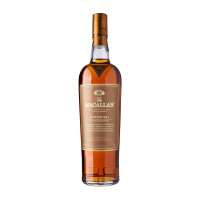
Macallan Edition No 1 - By The Liquor Shop Singapore
$6,999.99
Buy on Lazada
The Macallan 12 Years Double Cask Single Malt Scotch Whisky – 70cl
$138.00$304.00
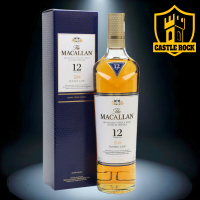
Macallan 12 Years Double Cask Single Malt Whisky 700ml (With Box)
$125.99$230.00
The Macallan 18 Years Double Cask – 70cl
$453.00$1,056.00
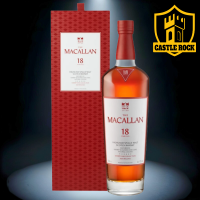
Macallan 18 Years Sherry Oak Single Malt Whisky 700ml (With Box)
$586.39$800.00
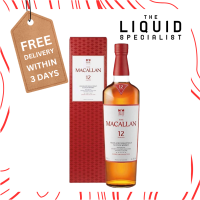
The Macallan 12 Years Sherry Oak Single Malt Scotch Whisky – 70cl
$156.00$344.00
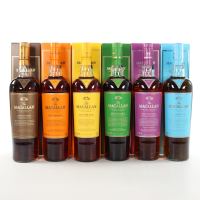
Macallan Edition 1-6 whisky 6x70cl single malt whisky
$5,988.00
Buy on Lazada
The Macallan 12 110 Proof Sherry Oak Single Malt Scotch Whisky - 70cl
$170.00$204.00
About The Macallan
The Macallan is a Scottish single malt Scotch whisky brand produced at The Macallan Distillery on the Easter Elchies Estate near Craigellachie in Speyside, Scotland. Founded in 1824, it is one of Scotland’s oldest legally licensed distilleries and has developed into one of the world’s most recognizable and prestigious single-malt whisky brands.1
The brand is particularly associated with sherry-seasoned oak casks, natural whisky colour, relatively small stills, long maturation, and an emphasis on wood management and craftsmanship. Its whiskies range from relatively accessible core expressions to highly aged and limited releases that occupy the luxury and collectible end of the Scotch whisky market.2
Basic information
| Attribute | Information |
|---|---|
| Brand | The Macallan |
| Category | Single malt Scotch whisky |
| Country | Scotland |
| Region | Speyside |
| Founded | 1824 |
| Founder | Alexander Reid |
| Distillery | The Macallan Distillery |
| Home | Easter Elchies Estate |
| Estate size | About 485 acres |
| Current owner | Edrington |
| Core identity | Sherry-seasoned oak, natural colour, craftsmanship |
| Main spirit style | Rich, fruity, full-bodied single malt |
| Historic house | Easter Elchies House |
| Current distillery | Opened in 2018 |
The Macallan has been part of Edrington since Edrington acquired Highland Distillers in 1999. Edrington describes The Macallan as one of its flagship ultra-premium spirit brands.3
History
1824 — The beginning
The Macallan traces its official distilling history to 1824, when Alexander Reid, a barley farmer and schoolteacher, obtained a legal licence to distil whisky. The distillery was established on the Easter Elchies Estate in Speyside.4
The history of the land itself is considerably older. The Macallan says the roots of the Easter Elchies Estate extend back to the 1500s, while the name “Macallan” is connected to the Gaelic Maghellan—associated with fertile ground and St. Fillan.
This distinction is important: 1824 is the date of legal distilling, rather than necessarily the beginning of whisky-making activity on the property.
Easter Elchies Estate
The estate became central to The Macallan’s identity.
Today the distillery sits on approximately 485 acres beside the River Spey. At the heart of the property is Easter Elchies House, a historic building dating from 1700, which The Macallan calls its “Spiritual Home.”5
The surrounding estate contains woodland, farmland and barley fields and has become an important part of the brand’s visual identity.
The Macallan therefore isn’t marketed simply as a whisky made in Speyside. Its identity is deliberately tied to a particular place: Easter Elchies + the River Spey + the estate + the distillery.
Roderick Kemp and the development of The Macallan
One of the most important figures in the early history of the brand was Roderick Kemp, who became proprietor in 1892.
Kemp was a businessman and wine connoisseur who placed considerable emphasis on quality and presentation. The Macallan’s own historical material connects him with the early use of red labelling to distinguish a superior “Choice Old Whisky.”6
This is significant because the modern Macallan identity places enormous emphasis on:
- Quality
- Sherry
- Oak
- Colour
- Luxury presentation
- Provenance
Many of those themes can be traced back to the brand’s development during this period.
Ownership and Edrington
The modern corporate history of The Macallan is somewhat different from its historic identity.
The distillery eventually became part of Highland Distillers. In 1999, Edrington acquired Highland Distillers, bringing The Macallan and Highland Park into the Edrington portfolio.7
Edrington has subsequently invested heavily in The Macallan’s distillery, brand development, international distribution and, increasingly, the supply chain surrounding its Spanish sherry-seasoned casks.
In 2020, Suntory Holdings acquired a 10% stake in Edrington, while Edrington remained an independent company.8
So, in simplified terms:
The Macallan → Edrington → independent Scottish spirits company
rather than The Macallan being owned directly by a large multinational beverage conglomerate.
What makes The Macallan distinctive?
The Macallan’s reputation rests on several interconnected characteristics.
Sherry-seasoned oak
This is probably the single most important part of The Macallan’s modern identity.
The company uses oak casks that have been seasoned with sherry in Jerez de la Frontera, Spain before they are transported to Scotland. The casks are then filled with The Macallan’s new-make spirit and used for maturation.9
The Macallan’s relationship with Spain is therefore fundamental to the whisky even though the whisky itself is Scottish.
Natural colour
The Macallan strongly emphasizes that its whiskies obtain their colour naturally through maturation in oak casks rather than through added colouring.10
This produces the characteristic progression from:
gold → amber → copper → mahogany → deep reddish-brown
depending on the whisky, cask and maturation period.
Oak management
The company treats its casks as a major component of the final whisky rather than simply containers for ageing.
The Macallan states that its casks are made from oak sourced from forests in Europe and North America, with the wood subsequently prepared, crafted and seasoned with sherry in Spain.11
The company has even invested in relationships and businesses in Jerez to strengthen control over this supply chain. Edrington says its 2023–2025 investments in Jerez were intended to protect the quality and sustainability of the sherry, cooperage and wood supply underlying The Macallan.12
The famous “curiously small stills”
Another defining characteristic is The Macallan’s stills.
The distillery uses relatively small copper pot stills, which the brand describes as “Curiously Small Stills.” The Macallan says their distinctive size and shape contribute to the rich and fruity character of its new-make spirit.13
The basic process is:
Barley → malting/mashing → fermentation → distillation → new-make spirit → oak cask → maturation → blending/batching → bottling
The character of the final whisky is therefore the result of both:
distillation character + maturation character
rather than simply “how long it was aged.”
The role of sherry
It is worth clarifying an often-misunderstood point.
A whisky described as “Sherry Oak” does not mean that the finished whisky is simply mixed with sherry.
Instead, sherry is used to season the oak casks. The sherry interacts with the wood, after which the sherry is removed and the casks are transported to Scotland. The Macallan’s new-make spirit is then matured in those casks for years.
During maturation, the whisky extracts compounds from the wood while also undergoing slow chemical changes.
This contributes to characteristics such as:
- Dried fruit
- Raisins
- Vanilla
- Cinnamon
- Ginger
- Sweet spice
- Orange/citrus
- Chocolate
- Toffee
- Oak
- Nuts
The precise profile varies enormously according to the cask, age and collection.
The major Macallan collections
The Macallan’s portfolio has changed over the years, but several collections are particularly important.
Sherry Oak
The Sherry Oak Collection is perhaps the clearest expression of the classic Macallan style.
It focuses predominantly on sherry-seasoned European oak, producing a rich and complex profile. Current releases include expressions such as:
- Sherry Oak 12 Years Old
- Sherry Oak 18 Years Old
- Sherry Oak 25 Years Old
- Sherry Oak 30 Years Old
The current collection describes flavours around dried fruits, sweet spices and deep oak character.14
For someone learning about Macallan, Sherry Oak is arguably the best collection for understanding the traditional image of the brand.
Double Cask
The Double Cask collection was introduced to emphasize a combination of:
American oak + European oak
Both are sherry-seasoned, and the two types of wood contribute different characteristics.
The Macallan describes American oak as bringing elements such as:
- Vanilla
- Fresh fruit
- Sweetness
while European oak contributes:
- Dried fruit
- Soft spice
- Deeper oak character.15
The current range includes 12, 15, 18 and 30 Year Old expressions.16
In simplified terms:
Sherry Oak = more traditional European-oak-led Macallan
Double Cask = American + European oak balance
Rare Cask
Rare Cask occupies a more luxurious position.
It emphasizes particularly rare casks and is known for its deep reddish/mahogany appearance and rich flavour profile. The current releases continue the focus on sherry-seasoned oak and natural colour.17
Rare Cask is less about simply saying “this whisky is X years old” and more about cask selection and rarity.
Colour Collection
The Colour Collection is a travel-exclusive range built around the relationship between sherry, Spanish culture, oak and natural colour.18
The collection forms part of The Macallan’s broader effort to tell the story of its connection to Jerez de la Frontera.
The Macallan M
The Macallan M represents the ultra-luxury side of the portfolio.
The “M” releases are associated with exceptional presentation, rare whisky and high-end collecting. They sit far beyond the role of an everyday drinking whisky and function partly as luxury objects and collectible spirits.
Age statements
The Macallan uses traditional age statements such as:
12 Years Old → 18 Years Old → 25 Years Old → 30 Years Old
An age statement means that the whisky in the bottle has been matured for at least that many years.
Importantly, older does not automatically mean better.
A 30-year-old whisky isn’t necessarily more enjoyable to every drinker than a 12-year-old. Older whisky generally represents greater maturation time, scarcity and production cost, but flavour preference remains subjective.
For Macallan specifically, the price difference between young and old expressions is also influenced heavily by:
- Rarity
- Cask selection
- Production quantities
- Brand positioning
- Packaging
- Collector demand
- Historical significance
The Macallan flavour profile
There isn’t one single “Macallan taste,” because the portfolio is broad.
Nevertheless, traditional Macallan expressions often occupy the rich, fruity, sweet-spiced, oak-influenced side of the single-malt spectrum.
Common descriptors include:
Fruit
- Raisin
- Sultana
- Dried fruit
- Orange
- Apple
- Orchard fruit
Sweetness
- Vanilla
- Caramel
- Toffee
- Honey
- Chocolate
Spice
- Cinnamon
- Ginger
- Nutmeg
- Cloves
Oak
- Toasted oak
- Polished wood
- Dried spices
- Nuts
The Sherry Oak collection in particular is characterized by rich dried fruit and sweet spice, while Double Cask tends to introduce more vanilla and fresh-fruit character through American oak.19
The modern Macallan distillery
A major chapter in The Macallan’s modern history came in 2018, when its new distillery and visitor centre opened.
The building was designed by Rogers Stirk Harbour + Partners and has a distinctive undulating green roof designed to integrate the architecture with the surrounding landscape. Edrington describes it as an important architectural landmark and notes that it has won several awards.20
The architecture is part of The Macallan’s modern strategy:
heritage + luxury + architecture + whisky + hospitality
rather than treating the distillery simply as a manufacturing facility.
The Macallan as a luxury brand
This is an important distinction.
The Macallan is not merely competing with other Scotch whiskies on taste.
It has deliberately positioned itself within the luxury goods market.
Its branding shares characteristics with luxury houses:
- Elaborate packaging
- Limited editions
- High-end collaborations
- Art and design
- Exclusive releases
- Prestigious age statements
- Highly controlled distribution
- Expensive collector editions
- Luxury hospitality experiences
Consequently, a bottle of Macallan can have two different values:
liquid value — how good the whisky is to drink
and
collectible/luxury value — rarity, packaging, age, edition, provenance and desirability.
Those two values don’t always move together.
Why Macallan can be so expensive
The Macallan’s highest-priced bottles can cost dramatically more than ordinary single malts.
This is not simply because “older whisky tastes better.”
The price can incorporate:
- Long maturation
- Evaporation during ageing — the so-called angel’s share
- Limited supply of old whisky
- Rare cask selection
- Expensive sherry-seasoned oak
- Packaging and presentation
- Luxury-brand positioning
- Collector demand
- Limited-release scarcity
- Auction and secondary-market demand
In other words, a very expensive Macallan is partly a whisky and partly a luxury collectible.
The Macallan’s “Six Pillars”
The brand describes its identity through Six Pillars, which serve as a framework for its philosophy and production.
They broadly encompass ideas around:
- The Spiritual Home — Easter Elchies Estate
- Curiously Small Stills
- Exceptional Oak Casks
- Natural Colour
- The Finest Cut / distillation character
- The Macallan’s heritage and craftsmanship
The precise presentation of these pillars has evolved with the brand, but the underlying concept is consistent: The Macallan wants its identity to be understood as the combination of place, spirit, wood, colour, craftsmanship and time, rather than simply the name on the bottle.21
Spain and Scotland: a transnational whisky
One fascinating aspect of Macallan is that its identity is simultaneously Scottish and Spanish.
Scotland provides:
- Barley
- Water
- Distillation
- Warehouses
- Climate
- The River Spey
- The estate
- Maturation
- Centuries of Scotch whisky tradition
Spain provides:
- Sherry
- Oak seasoning
- Jerez bodegas
- Cooperage expertise
- An important part of the cask supply chain
The Macallan itself describes Spain, North America and Scotland as three crucial geographic influences on its whisky.22
So the simplest way to understand it is:
Scottish spirit + Spanish-seasoned oak + time
Sustainability and the estate
The Macallan’s modern identity also includes environmental stewardship.
The 485-acre estate contains woodland, agricultural land and wildlife habitats. The company says it maintains a habitat-management approach intended to protect biodiversity and the ecological health of the property.23
At the corporate level, Edrington has committed to a net-zero target for 2045 and has been investing in the long-term sustainability of The Macallan’s wood and sherry supply chain.24
This is increasingly important for whisky producers because maturation requires enormous quantities of oak over very long periods.
The Macallan and collectors
The Macallan has an unusually strong presence in the collector market.
Collectors are interested in things such as:
- Old bottlings
- Discontinued expressions
- Vintage releases
- Limited editions
- Rare casks
- Special packaging
- Numbered bottles
- Exceptional age statements
- Macallan collaborations
- Historic labels and bottles
Some historical Macallan bottles have achieved extremely high prices at auction.
This has helped create an interesting phenomenon: The Macallan exists simultaneously as a drink, a luxury product, a status symbol and a collectible.
Macallan vs. other Speyside single malts
Within Speyside, Macallan is often associated with a richer and more oak/sherry-driven style.
Very broadly:
| Distillery style | General impression |
|---|---|
| The Macallan | Rich, fruity, sherry/oak, sweet spice |
| Glenfiddich | Fruity, approachable, often lighter |
| The Glenlivet | Elegant, fruity, generally smooth |
| Balvenie | Honeyed, malty, oak and cask-driven |
| Aberlour | Rich, sherry-influenced, fruity |
| Glenfarclas | Traditional, sherry-forward |
| Mortlach | Meaty, dense, powerful |
These are broad stylistic tendencies rather than strict rules. Individual expressions can differ substantially.
What “Macallan” really represents
If you strip away the marketing, the central technical philosophy is fairly straightforward:
Start with a rich and fruity new-make spirit, put enormous emphasis on high-quality sherry-seasoned oak, allow the spirit to mature for years, and carefully select and combine casks to create a consistent style.
But the brand goes further than production.
The Macallan has constructed a complete luxury narrative around:
Easter Elchies → Scotland → Speyside → oak → Jerez → sherry → natural colour → craftsmanship → time → luxury
That narrative is a major reason The Macallan has become one of the most recognizable names in premium Scotch.
Why The Macallan is famous
The Macallan’s fame comes from several factors working together:
Historic foundation
Founded in 1824, giving it a nearly two-century heritage.25
Sherry-cask reputation
Its association with sherry-seasoned oak became one of the defining characteristics of the brand.26
Distinctive production
Its small stills and strong emphasis on cask quality help establish a recognizable house style.27
Luxury positioning
Macallan has deliberately moved beyond being simply a Scotch whisky into luxury branding, art, design and hospitality.
Collector market
Rare and old Macallans have become highly sought-after collectibles.
Global distribution
Edrington has built The Macallan into a major international premium-spirit brand.28
Visual identity
The bottle, label, deep natural colours, Easter Elchies imagery and elaborate packaging are unusually recognizable.
A simple “Macallan family tree”
You can think about the portfolio like this:
THE MACALLAN
→ Core / classic style
→ Sherry Oak
→ Oak-combination style
→ Double Cask
→ Luxury / rare-cask style
→ Rare Cask
→ Travel/lifestyle collections
→ Colour Collection
→ Ultra-premium / collectible
→ M Collection and other special releases
→ Historic / archival releases
→ Older discontinued bottlings and limited editions
The exact portfolio changes over time, so particular expressions may be discontinued, replaced or released in new versions. The current official portfolio lists Sherry Oak, Double Cask, Colour Collection and other special collections.29
The Macallan in one paragraph
The Macallan is a historic Speyside single malt Scotch whisky brand founded in 1824 by Alexander Reid on the Easter Elchies Estate beside the River Spey. Now owned by Edrington, it has become one of the world’s most prominent luxury whisky brands, renowned particularly for its rich spirit, distinctive small copper stills, extensive use of sherry-seasoned European and American oak, naturally derived colour, and long maturation. Its modern identity combines Scottish whisky-making heritage with a deep connection to Spain’s Jerez sherry industry, while its portfolio spans classic Sherry Oak and Double Cask expressions through rare, highly aged and collectible releases.30
In short
If you want to understand why The Macallan matters, remember these six words:
Speyside — Sherry — Oak — Colour — Craftsmanship — Luxury.
Those six ideas explain much of both the whisky itself and the brand mythology surrounding it.
References
- About The Macallan | The Macallan®
- About The Macallan Estate | The Macallan®
- The Macallan Sherry Oak Whisky – The Macallan®
- The Making of The Macallan | The Macallan®
- Foundations: Stories that have shaped The Macallan | The Macallan®
- A Study in Red | The Macallan®
- The Macallan Double Cask Whisky | The Macallan®
- Rare Cask – The Macallan®
- Timeless Collections – The Macallan®
- Timeless Collections – The Macallan®
- History of the Macallan distillery: the excellence of Scottish single malt whisky – Maison du Whisky
- The Macallan in Lalique – The Six Pillars Collection: A History | Whisky & Spirits | Sotheby’s
- The Macallan – 200 years young – Edrington
- A look at The Macallan Distillery – The Journal – VCL Vintners
- The History of Macallan – Mark Littler Ltd
- The Macallan Estate Whisky – The Macallan®
- The Macallan Double Cask 30 Years Old | The Macallan®
- Macallan 30 Years Old Double Cask, 2025 Release | Single Malt Whisky | The Macallan®
- Anecdotes of Ages Collection: A Licence to Distil | The Macallan®
- Annual Report 2020 – The Macallan | Edrington
- Annual Report 2025 – The Macallan | Edrington
- Annual Report 2019 – The Macallan | Edrington
- The Macallan | Edrington Nordics
- The Macallan | Edrington UK
- Annual Report 2023 – The Macallan | Edrington
- Macallan Distillery – Whisky.com
- Macallan Distillery – Whisky.com
- History – The Macallan Distillery
- The Macallan | The Oxford Companion to Spirits & Cocktails | Spirits & Distilling
- FINE+RARE: Everything you need to know about The Macallan