Shop on Lazada
Tiger products
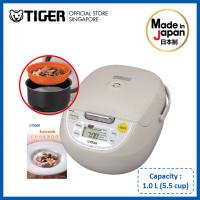
Tiger 1.0L Microcomputerized ″tacook″ Rice Cooker - MADE IN JAPAN - JBV-S10S
$209.00$399.00
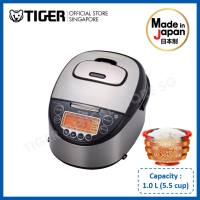
Tiger 1.0L Induction Heating Rice Cooker - MADE IN JAPAN - JKT-D10S
$399.00$890.00
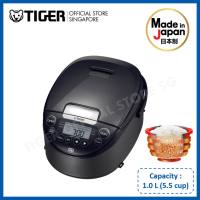
Tiger 1L Induction Heating Rice Cooker - MADE IN JAPAN - JPW-G10S
$549.00$790.00
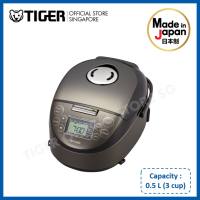
Tiger 0.5L Induction Heating Rice Cooker - MADE IN JAPAN - JPF-A55S
$629.00$799.00
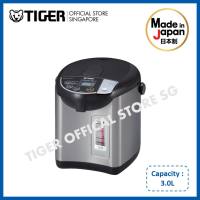
Tiger 3.0L Electric Water Heater - MADE IN JAPAN - PDU-A30S
$289.00$409.00
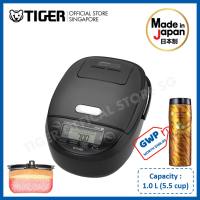
Tiger 1L Induction Heating Pressure Rice Cooker - Made In Japan - JPM-H10S
$665.00$1,390.00
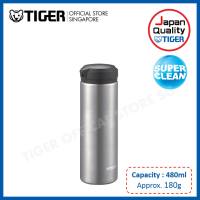
Tiger 480ml Stainless Steel Bottle - MEA-A048 / B048
$59.00
Buy on Lazada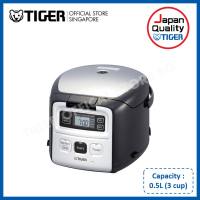
Tiger 0.54L Multi-Function Rice Cooker - JAI-G55S
$199.00$269.00
About Tiger
Tiger Beer is a Singaporean pale lager brand first brewed in 1932. As the flagship beer of Heineken Asia Pacific, it has grown from a locally produced lager into one of the most recognisable beer brands associated with Southeast Asia. Tiger holds a dominant position in Singapore, Malaysia, Vietnam, Cambodia and Thailand, and is currently sold in more than 75 countries worldwide.1
The brand is best known for its 5% ABV pale lager, distinctive tiger logo and longstanding association with Singaporean and regional culture. Its contemporary positioning emphasises an Asian identity, refreshment suited to tropical climates and a modern, energetic image.2
Basic information
| Category | Information |
|---|---|
| Brand | Tiger Beer / Tiger |
| Origin | Singapore |
| Founded / launched | 1932 |
| Beer type | Pale lager |
| Typical ABV | 5% |
| Original brewer | Malayan Breweries Limited |
| Current corporate owner | The HEINEKEN Company |
| Regional brewing organisation | Heineken Asia Pacific |
| Brand home | Singapore |
| Main market | Southeast Asia |
| International presence | More than 75 countries |
| Core ingredients | Water, malt/malted barley, sugar or maltose, hops, CO₂ |
| Major variants | Tiger Original, Tiger Crystal, Tiger White, Tiger Soju Infused Lager and market-specific products |
Current brand materials describe Tiger Original as a lager launched in 1932 that is now brewed in 11 countries and enjoyed in more than 75 nations. Product specifications may vary slightly by market.3
Origins and history
Establishment
Tiger Beer emerged during the formative years of Singapore’s modern brewing industry. Prior to the establishment of local production, beer consumed in Singapore was largely imported. In the early 1930s, Singaporean beverage company Fraser & Neave (F&N) partnered with Dutch brewer Heineken to establish Malayan Breweries Limited and construct a brewery in Singapore.4
The brewery released the first batch of Tiger Beer in 1932. Brand histories describe this launch as the creation of a new category of Asian beer, specifically designed to be refreshing in the tropical climate of Southeast Asia.5 Unlike many historic European brands that were imported into the region, Tiger was created and brewed in Singapore for an Asian market.
Symbolism and early recognition
The brand’s identity was built around an immediately recognisable tiger emblem, differentiating it from the European brands that dominated the market at the time. The tiger was chosen to represent strength, confidence, energy and boldness, qualities with strong cultural resonance across Asia. This distinctive visual identity subsequently became one of the most recognisable symbols associated with Singaporean beer.
The brand received international attention early in its history. According to official records, the Royal Air Force adopted a tiger-inspired insignia referencing the beer’s logo as early as 1937.6
By 1939, just seven years after launch, Tiger had won its first international beer medal. This marked the beginning of a sequence of more than 40 international awards over subsequent decades. Despite the disruptions of the Second World War, the brand continued to develop and became increasingly associated with everyday drinking culture as Singapore and the wider Malayan region underwent significant political and economic change.
International expansion
Tiger’s internationalisation accelerated significantly in the second half of the 20th century. A pivotal milestone occurred in 1981 when the brand entered the United Kingdom and German markets, marking its transition from a regional Asian beer to an internationally marketed brand.7
Throughout the 1990s and 2000s, Tiger expanded substantially across the Asia-Pacific region, entering markets including Malaysia, Vietnam, China, Thailand, Sri Lanka, India, Mongolia and Australia. By 2007, brewing operations were associated with 30 breweries in 12 countries, and the beer was sold in more than 60 nations.8 Current figures cite availability in more than 75 countries with brewing operations in 11 nations, reflecting the brand’s continued global reach.9
Corporate evolution
Tiger’s corporate history is intrinsically linked to Fraser & Neave and Heineken. The original company behind the brand, Malayan Breweries Limited, was formed through their collaboration in the early 1930s.10
In 1990, Malayan Breweries was renamed Asia Pacific Breweries (APB) to reflect its increasing regional focus. Around this time, production moved to a new state-of-the-art brewery in Tuas, Singapore.11 In 2012, APB Singapore became part of The HEINEKEN Company, integrating Tiger into Heineken’s global portfolio.12 Today, Tiger is a Heineken-owned global brand, though Singapore remains central to its identity.
Relationship with Singapore
In its country of origin, Tiger is closely intertwined with Singapore’s modern history and popular culture. Born during the colonial period and expanded alongside the nation’s post-war economy, it has become an international representation of Singapore and Southeast Asia. Much as Heineken is associated with the Netherlands or Guinness with Ireland, Tiger is strongly identified with Singapore.
This connection extends to the national tourism ecosystem, which has historically treated Tiger as part of the country’s cultural and commercial heritage. Even as physical production models evolve, Singapore retains its status as the intellectual and cultural home of the brand.
Tuas brewery and production changes
Modern Singaporean brewing history is closely connected to the Tuas brewery. In 1990, APB moved production from the original Alexandra Road site to the new Tuas facility, reportedly at a cost of S$200 million.12 The site subsequently became integral to the brand’s identity and Singapore’s beer tourism landscape.
In March 2026, Heineken announced that large-scale brewing at the Tuas facility would be progressively phased down by the end of 2027. Production will increasingly be supplied by Heineken breweries elsewhere in the region, particularly in Malaysia and Vietnam. However, Singapore will remain Tiger Beer’s global brand home, with leadership, strategy, creativity, innovation and R&D continuing to be anchored there.7
Product characteristics
Tiger Original
Tiger Original is classified as a pale lager with 5% alcohol by volume. It is golden in appearance, lager-fermented and designed to be highly refreshing and accessible compared to heavier beer styles. The official ingredient list includes water, malt or malted barley, sugar or sucrose, and hops, although formulations may differ between markets.13
The brand describes its brewing approach as a “tropical lagering” process, emphasising suitability for hot climates while retaining a full-bodied character.14
Taste profile
Tiger Original is positioned between very light commercial lagers and more strongly flavoured traditional European lagers. Typical characteristics include:
- Appearance: Clear golden to pale amber
- Aroma: Light malt, grain and subtle hop notes
- Taste: Moderate malt sweetness followed by mild bitterness
- Body: Medium-light
- Finish: Clean, crisp and refreshing
The beer is deliberately designed for consumption in warm weather and alongside food. Rather than being marketed as a technical craft beer, its appeal is based on refreshment, accessibility and consistency.
Brewing philosophy
Tiger distinguishes itself from European traditions by presenting itself as an Asian modern lager—a product born from the intersection of European brewing technology and Southeast Asian climate and culture. This combination remains a central element of the brand’s positioning.
Awards and recognition
Tiger has accumulated numerous international accolades. Highlights cited by the brand include:
- World Beer Cup Gold Medal — International-Style Lager, 2010
- World Beer Cup Gold Medal — European-Style Pilsner, 2004
- Brewing Industry International Awards — 1998
- More than 40 international awards overall15
Between 2004 and 2006, Tiger was also named a UK Cool Brand Leader, reflecting its popularity and cultural visibility in Britain.16
Product portfolio
While Tiger Original remains the core product, the brand has expanded into several variants.
Tiger Crystal
A lighter, smoother variant positioned around refreshment. In markets such as Malaysia, Tiger Crystal is listed at 4.2% ABV, compared to 5% for Tiger Original.17
Tiger White
A wheat-influenced product featuring wheat malt and clove flavouring, offering a profile distinct from the classic lager.18
Tiger Soju Infused Lager
A newer extension combining Tiger lager with soju and fruit flavours. Current offerings include Gutsy Grape, Cheeky Plum, Wonder Melon and Punchy Peach. Depending on the market, these products range from approximately 4.0% to 5.5% ABV.19
Availability varies significantly by country; products found in one market may not be available in others.
Regional presence: Thailand
Tiger maintains a significant position in Thailand through local production. Thai Asia Pacific Brewery (TAPB) began producing Tiger for the Thai market in 2004. A lower-alcohol variant, Tiger Crystal Light, was introduced locally in 2009 at 4.2% ABV.20 This reflects the brand’s broader regional strategy of developing local production facilities rather than relying solely on exports from Singapore.
Marketing and brand identity
Tiger’s marketing traditionally emphasises several key themes:
- The Tiger Symbol: Representing energy, confidence and boldness.
- Asian Identity: Positioning the brand as a beer from Asia, rather than merely a European-style lager sold in the region.
- Youth and Freedom: In 2014, the brand adopted the “Uncage” platform, encouraging young Asian consumers to challenge limitations and express themselves.21
- Social Occasions: Strong associations with restaurants, nightlife, music, football and social gatherings.
- Tropical Refreshment: Marketing the beer as a product designed to be consumed cold in Southeast Asia’s hot and humid climate.
Football sponsorship
Football has been a cornerstone of Tiger’s marketing in Southeast Asia. In Malaysia, Tiger FC was launched in 2005 as a platform for fans, utilising viewing parties and experiences to connect the brand with football culture.22 This aligns with Tiger’s positioning as a social, energetic and contemporary Asian brand.
Global positioning
Outside Asia, Tiger is frequently perceived as an “Asian beer” or “Singapore beer”. This distinction provides a competitive advantage against international brands that rely on European heritage narratives. Instead, Tiger owns the narrative of a modern Asian beer born in Singapore, allowing it to function as a cultural export alongside Singaporean food, tourism and architecture.
Distinction from Heineken
Although Tiger and Heineken belong to the same corporate group, they are distinct brands with separate identities.
| Feature | Tiger | Heineken |
|---|---|---|
| Origin | Singapore | Netherlands |
| Launched | 1932 | 1864 |
| Identity | Asian | Dutch/Global |
| Type | Pale lager | Pale lager |
| Cultural Association | Southeast Asia | Global |
| Ownership | HEINEKEN | HEINEKEN |
Tiger operates as one of Heineken’s major international brands rather than a regional alias for the parent brand.
Historical timeline
- 1930: F&N and Heineken collaborate to establish Malayan Breweries.23
- 1931: Singapore’s modern brewery infrastructure is established.
- 1932: Tiger Beer launches in Singapore.24
- 1939: Tiger wins its first international beer medal.25
- 1950s–1970s: Brand becomes established in Singapore and the wider Malayan region.
- 1981: Tiger enters the UK and German markets.26
- 1990: Malayan Breweries becomes Asia Pacific Breweries; production moves to Tuas.27
- 1998: Tiger receives Brewing Industry International Awards recognition.28
- 2001: Expansion accelerates across Asia-Pacific, including Thailand, Vietnam, Sri Lanka, China, Mongolia and India.29
- 2004: Tiger wins Gold Medal at the World Beer Cup.30
- 2005: Tiger FC launches in Malaysia.31
- 2007: Brand reaches more than 60 countries with 30 breweries in 12 countries.32
- 2012: APB Singapore becomes part of HEINEKEN.33
- 2014: Tiger launches “Uncage” brand platform.34
- 2026: Heineken announces phasing down of large-scale brewing at Tuas by end of 2027; Singapore confirmed as global brand home.35
Cultural significance
Tiger represents an example of a product created during the colonial period evolving into a national and regional cultural symbol. While it began with European brewing expertise and Singaporean commercial infrastructure, it developed a distinct Asian identity over nearly a century. Its branding has become intertwined with Singapore’s transformation from a colonial trading port to a modern global city.
As a case study in Asian branding, Tiger demonstrates a reverse flow of cultural influence: rather than being a Western brand adapted for Asia, it was created in Asia and subsequently exported to the rest of the world. Today, despite the reorganisation of physical production, Singapore remains the strategic and creative heart of the brand.36
References
- TIGER BEER | Our Story
- Tiger Beer Original
- TIGER ORIGINAL PRODUCT PAGE
- Product page
- Annex 6 Introduction The story of Tiger Be
- Bon voyage, Tiger Beer? The story of a Singapore icon as brewing prepares to shift overseas – CNA
- HEINEKEN shifts Singapore to an import-led supply model strengthening the country’s regional hub role and maintaining Tiger Beer’s global brand home
- TIGER WHITE
- TIGER SOJU
- OUR STORY
- The Straits Times: Made In Singapore – How Tiger Beer bottled a nation’s soul – Asia Pacific Breweries Singapore
- Tiger® Beer launches a bold new era with ‘You Never Roar Alone’
- Tiger® launches new brand film ‘Yet Here I Am’
- TIGER® beer launches #SUPPORTOURSTREETS initiative in Asia
- Heritage – Tiger Balm
- Heritage – Tiger Balm CA
- ตำนานไทเกอร์ บาล์ม – Tiger Balm TH
- 歴史 – Tiger Balm JP
- About Us | Tiger Balm UK
- よくある質問 – Tiger Balm Japan
- HISTORY – Tiger-Corporation
- ABOUT US – Tiger-Corporation
- Tiger Corporation | HEAT TO HEART
- TIGER BEER | HOME
- TIGER ORIGINAL
- TIGER ORIGINAL
- TIGER ORIGINAL
- Tiger Original Product Page
- 当社の沿革
- Our beers
- TIGER History
- From a Small Paint Store to a Global Player
- From a Small Paint Store to a Global Player
- Wisdom Of Generations | Tiger Balm History
- History | Tiger Balm
- Corporate Development | TIGER