Shop on Lazada
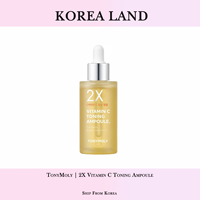
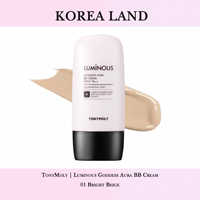
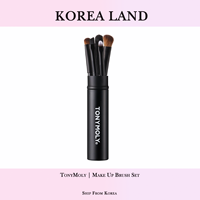
TonyMoly products
![[TONYMOLY] Easy Touch Auto Eyebrow 0.4g (1EA)](https://filebroker-cdn.lazada.com.my/kf/S9e0694c9e97b4643b05894839bbc4be7I.jpg_200x200q80.jpg)
About TonyMoly
TonyMoly (Korean: 토니모리) is a South Korean cosmetics and beauty brand recognised for its colourful packaging, accessible pricing and role in popularising K-beauty internationally. Established in Seoul in 2006, the company has grown from a domestic retailer into a global beauty business with products distributed across numerous markets, including Singapore.1
Corporate profile
| Type | South Korean cosmetics and beauty brand |
|---|---|
| Korean name | 토니모리 |
| English name | TonyMoly |
| Founded | 2006 |
| Headquarters | Seoul, South Korea |
| Industry | Cosmetics, skincare, beauty |
| Parent company | TonyMoly Co., Ltd. |
| Listed on | Korea Exchange (KOSPI) |
| Key categories | Skincare, masks, makeup, body care |
| Brand positioning | Fun, accessible, ingredient-focused K-beauty |
| Current brand message | BE UNCOMMON |
TonyMoly Co., Ltd. was formally established on 26 July 2006. Financial disclosures in South Korea classify the entity as a cosmetics manufacturer, and it is publicly listed on the KOSPI market.
Overview
TonyMoly is a Korean beauty brand that combines skincare innovation with distinctive visual design. Rather than presenting cosmetics solely as functional items, the brand has historically emphasised that packaging, character design, colour and product experience are integral to beauty itself.
The company’s corporate philosophy describes TonyMoly as a beauty brand centred on individuality and “the specialness that is most like oneself”. Its stated mission is to be a “boundless beauty brand for every lifestyle”, while its vision is “Create Beauty, Share Happiness”.5
Internationally, the brand is closely associated with the broader K-beauty movement, which introduced Korean skincare concepts such as multi-step routines, sheet masks, essences and ingredient-focused formulations to consumers outside South Korea, including those in Southeast Asia.
History
Foundation (2006)
TonyMoly was founded in Seoul in 2006. The company launched its initial range of approximately 1,000 skincare and functional cosmetics products in October of that year, followed by the opening of its first physical store in Busan’s Seomyeon district in November 2006.5
The brand emerged with connections to Taesung Industry, a major cosmetics packaging company. Academic analysis has described TonyMoly as a forward-integration initiative of Taesung Industry, noting that its distinctive value proposition and differentiated branding were significant factors in its early growth.3
Early expansion (2008–2010)
TonyMoly expanded its domestic retail network rapidly, reaching 100 stores in South Korea by 2009. International expansion began during this period, with entry into markets including Thailand, Hong Kong, Japan and Singapore.5 The company opened its 200th Korean store in 2010.5
International growth (2011–2015)
The 2010s marked a significant phase of internationalisation. TonyMoly entered or expanded in markets including Vietnam, Malaysia, Japan, Indonesia, the United States, Australia, Canada, Spain, Mexico and China. By 2014, the brand had entered Sephora in New York, its membership base exceeded five million, and annual revenue surpassed ₩200 billion.5
In July 2015, TonyMoly became a KOSPI-listed company. During this period, it also established or expanded manufacturing capabilities and overseas operations.
Global K-beauty expansion (2016–2019)
As Korean beauty gained global prominence, TonyMoly continued its international growth. In 2017, the company entered Sephora across 14 European countries and 826 stores, and completed a MEGACOS manufacturing facility in South Korea.5 It subsequently expanded its online presence, including launching an Amazon US store and developing its own e-commerce platform.
Digital and channel diversification (2020–2023)
During the early 2020s, TonyMoly shifted from a traditional single-brand store model towards a diversified digital, retail and multi-brand distribution strategy. The company announced a vision to become a digital beauty-health platform company, introducing data-oriented systems, personalised online recommendations and an omnichannel approach. It also diversified into additional brands and business segments.5
In 2023, TonyMoly secured distribution with Target in the United States, entering 1,500 stores.5
Recent developments (2024–2026)
TonyMoly has continued to pursue international retail expansion and portfolio diversification. Corporate records document the following milestones:
- 2024: Entry into 450 Walmart stores in Mexico
- 2024: Expansion via MINISO in the United States
- 2024: Entry into Olive Young offline stores in South Korea
- 2024: Expansion into 60 LOFT locations in Japan
- 2024: Launch of the BONCEP brand through Daiso
- 2025: Entry into Ulta Beauty in Mexico
- 2025: Entry into 430 Priceline locations in Australia
- 2025: Launch of the Dermatition brand through E-Mart
- 2026: BONCEP surpassing 10 million cumulative units sold through Daiso5
These developments reflect a strategic shift beyond the core TonyMoly brand towards a broader beauty portfolio and multi-channel consumer business.
Name and identity
The name TonyMoly is strongly associated with the brand’s emphasis on attractive and unconventional packaging. Historically, the company has positioned style and packaging as central to its identity, utilising distinctive shapes, illustrations, characters, colours and containers. Consequently, packaging is not merely secondary but remains one of TonyMoly’s most recognisable competitive characteristics.
Brand philosophy
TonyMoly’s current corporate positioning is summarised by the phrase BE UNCOMMON. The company describes itself as a brand that celebrates individuality and helps consumers express their own form of beauty. Its corporate mission is “Boundless Beauty Brand for Every Lifestyle”, and its vision is “Create Beauty, Share Happiness”.5
This approach differs from the notion that Korean skincare should pursue only flawless or standardised beauty; instead, TonyMoly increasingly emphasises personal expression, lifestyle and individuality.
Product categories
TonyMoly operates across several major areas of beauty and personal care.
Skincare
Skincare forms the core of the brand’s portfolio, which includes cleansers, toners, essences, serums, emulsions, moisturisers, eye products, creams, sun care and targeted treatments. The company describes its approach as combining ingredients, research and technology with accessible and playful product concepts.1
Face masks
TonyMoly is particularly well known internationally for sheet masks and other facial masks. This category became one of the brand’s signatures and helped establish its recognition among consumers discovering K-beauty outside South Korea.
Makeup
The brand offers various colour cosmetics, including lip products, eye makeup, base makeup, cheek products and makeup accessories.
Body and personal care
TonyMoly has expanded beyond facial skincare into hand care, body care, hair-related products and personal care items. The broader corporate strategy increasingly treats beauty as part of a wider lifestyle rather than limiting the company to facial cosmetics.
Signature products and collections
TonyMoly has produced numerous recognisable products and collections throughout its history.
I’m Real
The I’m Real mask range is one of TonyMoly’s most identifiable product families and helped establish the company’s reputation in the international sheet mask market.
Panda’s Dream
The Panda’s Dream line is notable for its panda-themed visual identity and packaging. It exemplifies the brand’s strategy of giving ordinary skincare products a memorable visual character.
Peach hand and body products
TonyMoly is also known for products featuring food- and fruit-inspired designs, particularly peach-themed items. These illustrate the brand’s tendency to combine sensory concepts, cute packaging and skincare functionality.
Packaging and visual branding
Packaging is considered one of TonyMoly’s most important brand assets. While traditional cosmetics branding often focuses on luxury, minimalism or scientific presentation, TonyMoly has utilised bright colours, cartoon-like illustrations, animal characters, food-inspired containers, unusual product shapes, playful typography and collectible-style packaging. This strategy has distinguished the brand from many competing Korean cosmetics companies.
In effect, TonyMoly sells an experience alongside the cosmetic product itself. International materials specifically emphasise the combination of high-quality ingredients, technology and distinctive packaging.4
Relationship with K-beauty
TonyMoly is frequently discussed as part of the global K-beauty phenomenon. Key characteristics of K-beauty include ingredient-focused skincare, multi-step routines, affordable experimentation, frequent product innovation, sheet masks and visually distinctive packaging. TonyMoly both benefited from and contributed to this trend by making Korean skincare feel fun, approachable and visually distinctive, rather than exclusively clinical or luxurious.
International presence
TonyMoly has developed a substantial international distribution network. The company’s Korean corporate site states that it operates more than 250 directly operated stores and approximately 3,000 stores through various distribution channels across 22 countries. Other international materials have described an even broader global presence, reflecting differences in how brand stores, distributors and retail channels are counted.4
The brand has maintained a presence or distribution relationships in the following markets:
- Asia: South Korea, Japan, China, Hong Kong, Taiwan, Singapore, Thailand, Malaysia, Vietnam, Indonesia
- North America: United States, Canada, Mexico
- Europe: Germany, Spain, Netherlands and other European markets
- Oceania: Australia
Corporate history documents expansion through retailers such as Sephora, Target, Walmart, LOFT, Priceline and Olive Young, illustrating a transition from dedicated brand shops towards large-scale retail distribution.5
Business structure
It is useful to distinguish between TonyMoly as a consumer brand and TonyMoly Co., Ltd., the publicly listed South Korean corporation behind the business. The parent company is officially registered as a cosmetics manufacturer and is listed on the KOSPI market. It has also pursued diversification through subsidiaries, manufacturing operations and additional beauty and lifestyle brands. Modern TonyMoly is therefore best understood as a beauty company with a portfolio of brands and distribution channels, rather than solely an operator of standalone TonyMoly stores.
Manufacturing and R&D
Research and product development are key components of TonyMoly’s business. The company established an R&I Center and developed manufacturing capabilities through MEGACOS, including a production facility in South Korea completed in 2017.5 The brand describes its product development approach as combining ingredients, research, technology and consumer insights. Materials for the US market similarly emphasise ingredient-driven formulas, research and ethical practices.6
Brand positioning
TonyMoly occupies a distinct position in the cosmetics market, situated between mass-market beauty, affordable K-beauty, ingredient-focused skincare and playful lifestyle branding. Rather than positioning itself exclusively as a luxury skincare company, TonyMoly has historically emphasised accessibility and experimentation. Current descriptions state that the brand aims to make beauty fun and accessible while combining playful ideas with effective formulations.6
Differentiating characteristics
Several factors distinguish TonyMoly from competitors:
- Strong packaging identity: Unusual and distinctive packaging is one of its most recognisable traits.
- Korean beauty heritage: Founded in Seoul in 2006, the company grew alongside the international expansion of K-beauty.1
- Accessibility: The brand has historically targeted consumers wishing to experiment with skincare without entering the premium luxury segment.
- Ingredient focus: TonyMoly emphasises skincare ingredients and formulation research.
- Fun branding: Instead of treating skincare as purely clinical, the brand uses humour, colour, characters and food or animal imagery.
- International distribution: Products are sold through dedicated stores, distributors, department and beauty retailers, mass retailers and online channels.
Corporate evolution
TonyMoly’s development can be broadly divided into four stages:
- 2006–2010 (Korean brand establishment): Establishment of the retail model and rapid expansion of the domestic store network.
- 2010–2015 (Asian and global expansion): Expansion throughout Asia and establishment of a significant presence in North America and Europe.
- 2016–2019 (Global K-beauty brand): Growth through international retailers and Sephora, alongside development of manufacturing capabilities.
- 2020–present (Omnichannel beauty company): Increased emphasis on digital commerce, major retail partnerships, additional brands, data-driven operations and international distribution.5
Current status
As of 2026, TonyMoly remains a publicly listed South Korean cosmetics company headquartered in Seoul. It continues to operate the TonyMoly brand while expanding into additional beauty and lifestyle categories. Recent strategy demonstrates a move away from reliance on the traditional Korean “one-brand shop” model towards a broader ecosystem involving e-commerce, major international retailers, mass-market distribution, K-beauty specialty retailers, multiple beauty brands, manufacturing, international partnerships and lifestyle products.
According to the corporate website and recent filings, Kim Seung-chul and Bae Jin-hyung serve as representatives of the company.2
Industry significance
TonyMoly’s importance extends beyond its individual products. It represents a significant stage in the development of K-beauty from a regional industry into a global consumer category. The company demonstrated that Korean skincare could compete internationally not only through formulation and ingredients but also through design, affordability, novelty and Korean beauty culture. Its distinctive packaging helped make Korean cosmetics visually recognisable to international consumers, while its sheet masks and skincare products helped introduce K-beauty routines to mainstream shoppers.