Shop on Lazada
TTArtisan products
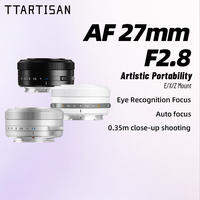
TTArtisan | 27mm F2.8 APS-C Frame Ultra-Compact Pancake Lens
$220.64$224.19
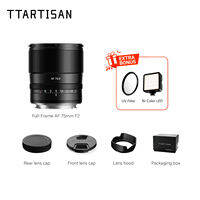
TTArtisan | Portrait AF Lens 75mm F2
$450.18
Buy on Lazada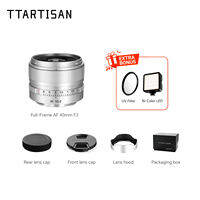
TTArtisan | Silver Full-Frame Lens 40mm F2 L Mount
$220.19
Buy on Lazada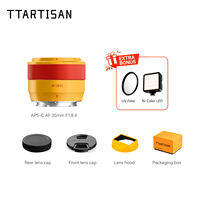
TTArtisan | Auto Focus Prime Lens 35mm F1.8 II
$190.35
Buy on Lazada
TTArtisan | Portrait Photography Lens 100mm f2.8
$278.10
Buy on Lazada
TTArtisan | Full-Frame Sony E-Mount Auto Focus Prime Lens 85mm F1.8 Neo
$210.87
Buy on Lazada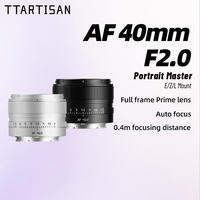
TTArtisan | Full Frame Auto Focus 40mm f/2 Lens
$315.25
Buy on Lazada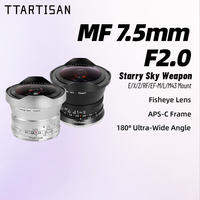
TTArtisan | APS-C Fisheye f2 Ultra-Wide Prime Manual Lens 7.5mm
$241.59
Buy on LazadaAbout TTArtisan
TTArtisan (铭匠光学, Mingjiang Optics) is a Chinese photographic optics brand best known for producing interchangeable camera lenses, particularly affordable manual-focus models for mirrorless and rangefinder systems. Headquartered in Shenzhen, Guangdong, the company was officially established in 2019 and has gained visibility among enthusiasts seeking distinctive optical designs, metal construction, large apertures and competitive pricing.1
Quick facts
| Category | Information |
|---|---|
| Brand | TTArtisan |
| Chinese name | 铭匠光学 (Míngjiàng Guāngxué) |
| Company | Shenzhen Mingjiang Optical Technology Co., Ltd. |
| Founded | 2019 |
| Headquarters | Shenzhen, Guangdong, China |
| Industry | Photographic optics / camera lenses |
| Main products | Manual-focus lenses, autofocus lenses, cine lenses, accessories |
| Major systems | Sony E, Fujifilm X, Canon RF, Nikon Z, Leica M, Leica L, Micro Four Thirds and others |
| Target market | Enthusiasts, hobbyists, street photographers, portrait photographers, filmmakers and budget-conscious professionals |
| Positioning | Affordable third-party optics with an emphasis on optical character and mechanical design |
The company describes itself as a lens manufacturer focused on research and development, manufacturing and sales, with a registered capital of RMB 3 million.2
Brand identity and naming
The brand is marketed internationally as TTArtisan, while its domestic Chinese identity is 铭匠光学. The term “Artisan” reflects the company’s design philosophy, which emphasises traditional mechanical controls, metal construction, tactile focusing and classic photographic aesthetics rather than the fully electronic approach typical of many modern OEM lenses. Consequently, TTArtisan functions less as a single budget product line and more as a third-party optical manufacturer with several distinct product families.
History
Establishment
TTArtisan states that it was founded in 2019 in Shenzhen. The company’s Chinese website identifies the business as Shenzhen Mingjiang Optical Technology Co., Ltd. and outlines its activities as the R&D, production and sales of lenses for mirrorless cameras.3 Shenzhen’s extensive electronics and precision-manufacturing ecosystem enables relatively small photographic companies to develop and manufacture specialised optical and mechanical products at competitive prices.
Early development and expansion
The brand initially gained recognition for its manual-focus lenses, including unusual wide-angle, ultra-fast and rangefinder-oriented designs. Its early popularity stemmed partly from offering specifications rarely found at similar price points, such as very large maximum apertures or designs aimed at Leica M users.
The catalogue has since expanded beyond purely manual-focus products to include:
- Manual-focus mirrorless lenses
- Leica M/rangefinder lenses
- Autofocus lenses
- Cine lenses
- Tilt/shift and other specialty optics
- Viewfinders and accessories
The current official catalogue maintains dedicated categories for AF, full-frame, APS-C, accessories and cine lenses.4
Corporate structure
The relationship between TTArtisan, Mingjiang Optics and Shenzhen Mingjiang Optical Technology Co., Ltd. can be a source of confusion. These are different names associated with the same business structure. The company’s Chinese website presents the branding as TTArtisan / 铭匠光学 and identifies Shenzhen Mingjiang Optical Technology Co., Ltd. as the entity behind the brand.5 Some overseas retailers and databases consequently refer to the company as Mingjiang Optics rather than TTArtisan. In practical terms, Shenzhen Mingjiang Optical Technology Co., Ltd. is the corporate entity operating the TTArtisan / 铭匠光学 brand for camera lenses and optical products.
Product range
Rangefinder and Leica M lenses
One of TTArtisan’s most recognisable categories comprises Leica M-compatible manual-focus lenses. Designed for the Leica M mount, these lenses generally emphasise compact mechanical construction, manual focusing, classic rangefinder operation, metal barrels, distinctive rendering and prices significantly lower than those of native Leica optics.6 This positioning has made the brand particularly relevant to Leica M users wishing to experiment with alternative lenses without incurring premium costs.
Manual-focus mirrorless lenses
Manual-focus lenses remain central to the brand’s identity and are available for systems including Fujifilm X, Sony E, Nikon Z, Canon RF, Micro Four Thirds and Leica L. Designs range from conventional primes to extreme wide-angle and specialty optics. A typical TTArtisan manual lens combines a metal body, mechanical focus and aperture rings, minimal or no electronics, and accessible pricing, appealing to photographers who value the physical process of image-making.
Autofocus lenses
A significant development in the brand’s history is its entry into the autofocus segment. The current lineup includes models such as the AF 27mm F2.8, AF 35mm F1.8, AF 40mm F2, AF 56mm F1.8, AF 75mm F2, AF 14mm F3.5, AF 17mm F1.8 and AF 50mm F1.8 Neo. AF lenses are now listed for Fujifilm X, Sony E, Nikon Z and Leica L, among other systems.7 This shift has repositioned TTArtisan from a niche maker of manual lenses to a broader third-party manufacturer offering affordable autofocus options.
Specialty lenses
TTArtisan has built a reputation for producing unconventional optics. Examples include extremely wide fisheye lenses such as the 11mm F2.8 Fisheye for full-frame cameras and the 7.5mm F2 Fisheye for APS-C/Micro Four Thirds systems. The catalogue also features ultra-wide lenses designed for architecture, landscape, interiors, astrophotography and creative work, as well as tilt/shift optics like the Tilt APS-C 35mm F1.4 and Tilt-Shift 17mm F4 ASPH.8 These products are notable given that tilt/shift optics have traditionally been expensive and highly specialised.
Cine lenses
The brand also offers a cine lens category intended for filmmaking and video production. These lenses feature consistent focus rotation, geared focus and aperture rings, manual operation, matching sets and controlled mechanical behaviour, placing TTArtisan in competition with both photographic third-party manufacturers and affordable cinema-oriented brands.
Design and manufacturing philosophy
TTArtisan combines traditional photographic design principles with modern Chinese manufacturing. The company highlights the use of optical elements such as aspherical (ASPH) and extra-low-dispersion (ED) glass, multi-element optical formulas and compact mechanical construction.9 This approach aims to deliver high optical specifications, attractive mechanical build quality and low prices simultaneously.
Build quality is frequently cited as a key factor in the brand’s popularity. Many manual lenses utilise substantial metal construction, engraved markings, mechanical aperture rings, damped focusing rings and classic finishes, resulting in a solid feel compared to inexpensive plastic kit lenses. However, robust mechanical construction does not automatically equate to flagship-level optical performance; the brand often prioritises overall user experience and price-to-performance ratio over matching the absolute optical benchmarks of premium OEM lenses costing several thousand dollars.
Optical performance and character
Optical performance varies considerably across the TTArtisan range. While some models offer strong sharpness, others intentionally prioritise character, bokeh, flare behaviour, vintage rendering, compactness, extremely large apertures or unusual focal lengths. This variation means reviews of individual models can differ significantly.
Unlike modern OEM lenses that typically target maximum sharpness and perfect correction, TTArtisan often provides an interesting optical character at an accessible price. Characteristics such as vignetting, spherical aberration, field curvature or distinctive bokeh can produce images that feel less clinically corrected, which is often desirable for street, portrait, documentary, lifestyle and film-emulation photography.
The brand is also well known for producing very fast lenses with apertures of f/0.95, f/1.2 and f/1.4. Large apertures enable shallow depth of field, subject isolation and low-light capability at prices far below equivalent offerings from major manufacturers, though extremely wide maximum apertures do not necessarily guarantee peak sharpness when used wide open.
Camera mount support
TTArtisan supports a broad range of camera systems. Depending on the specific model, products have been released for:
- Full-frame/larger systems: Leica M, Sony E, Nikon Z, Canon RF, Leica L
- APS-C systems: Fujifilm X, Sony E, Canon RF-S, Nikon Z DX
- Micro Four Thirds
- Medium format: Fujifilm GFX, Hasselblad XCD
Mount availability varies by model and should always be verified for each specific lens.
Comparison with 7Artisans
TTArtisan and 7Artisans are distinct brands, although both are Chinese third-party lens manufacturers with superficially similar product ranges. PetaPixel notes that TTArtisan was founded in 2019 and acknowledges a historical relationship between the two entities while confirming they operate separately.10
| TTArtisan | 7Artisans | |
|---|---|---|
| Brand | TTArtisan | 7Artisans |
| Chinese association | 铭匠光学 | 七工匠 |
| Founded | 2019 | 2015 |
| Headquarters | Shenzhen | China |
| Main business | Camera lenses | Camera lenses |
| Relationship | Separate company/brand | Separate company/brand |
| Typical positioning | Affordable enthusiast optics | Affordable enthusiast optics |
They should not be treated as the same manufacturer.
Relationship with Leica
TTArtisan is neither a subsidiary nor an official lens manufacturer of Leica. However, the brand has produced numerous Leica M-mount lenses, occupying a niche where genuine Leica optics cost thousands of dollars while third-party alternatives cost a fraction of that amount. This has allowed Leica M users to experiment with more affordable optics and has helped establish TTArtisan within the broader Leica enthusiast community.
Manufacturing base
Shenzhen is one of the world’s major hardware-manufacturing centres. For a lens company, location within this ecosystem provides access to CNC machining, precision metalworking, electronics manufacturing, coating technologies, component suppliers, optical fabrication, rapid prototyping and assembly infrastructure. TTArtisan explicitly cites Shenzhen’s industrial foundation as a key strength behind its products,11 helping to explain how a relatively young company could develop a broad lens catalogue quickly.
Business model
Rather than competing directly with premium lines such as Canon L, Nikon S, Sony GM or Leica SL/M on absolute performance, TTArtisan competes primarily on price, mechanical design, optical variety, large apertures, specialised focal lengths and creative character. This strategy appeals to users who do not require class-leading autofocus, corner-to-corner sharpness or comprehensive weather sealing.
Firmware and electronic support
For its electronic and AF lenses, TTArtisan provides firmware updates and lens profiles via its official download centre. Supported products include the AF 75mm F2 and various other AF and manual lenses.12 Ongoing firmware support is essential for maintaining compatibility with newer camera bodies and demonstrates the brand’s evolution from purely mechanical optics towards electronically controlled designs.
Current product themes
Several themes define the current catalogue:
- Compactness: Models such as the AF 17mm F1.8 Air are marketed around lightweight travel photography.13
- Large apertures: Fast primes remain central to the brand’s identity.
- Specialty optics: Fisheye, tilt and other unusual lenses continue to be offered.
- Retro aesthetics: Mechanical controls and classic styling remain common.
- Autofocus capability: The modern lineup increasingly resembles that of a conventional third-party lens manufacturer.
Strengths and weaknesses
Strengths
- Excellent price-to-performance ratio, often providing specifications previously unavailable at similar price points.
- Strong mechanical feel through metal construction and tactile controls.
- Diverse selection including unusual focal lengths and optical concepts.
- Broad mount support across mirrorless and rangefinder systems.
- Growing AF range increasing relevance to mainstream users.
Weaknesses
- Optical performance varies significantly by model and must be evaluated individually.
- Autofocus performance may not match OEM lenses and can vary by camera body.
- Firmware updates may be required for newer camera compatibility.
- Weather sealing is not universal and generally less comprehensive than professional OEM lenses.
- Manual lenses require skill, particularly at very wide apertures.
- Service and quality-control experiences can vary by market and distributor.
Market position
TTArtisan is part of a broader expansion of Chinese photographic optics alongside brands such as 7Artisans, Laowa/Venus Optics, Zhongyi/Mitakon, Viltrox, Yongnuo, Meike and AstrHori. Over the past decade, Chinese manufacturers have moved beyond producing inexpensive copies of older designs to developing autofocus systems, sophisticated optical formulas, ultra-fast lenses, cine lenses, tilt/shift optics, and full-frame and medium-format lenses. TTArtisan is one of the more recognisable participants in this shift.
The brand occupies a middle ground between mass-market manufacturers like Canon or Nikon and luxury optics companies like Leica. It has built its identity around making interesting photographic tools accessible to ordinary photographers, contributing to a more competitive modern lens market where users can choose between premium OEM optics and a growing ecosystem of Chinese alternatives offering different combinations of price, character, construction and functionality.
References
- TTARTISAN Official Website
- 铭匠光学-TTArtisan-国产镜头
- Lens Profile-TTARTISAN Official Website
- Af Lens-TTARTISAN Official Website
- Download Center-TTARTISAN Official Website
- TTArtisan – Wikidata
- Company Summary [CLeW]
- Giới thiệu – TTArtisan by BNCamera
- TTARTISAN Trademark Application of Shenzhen MingJiang Optical Technology Co. Ltd – Serial Number 90205334 :: Justia Trademarks
- TTARTISAN Official Website
- TTARTISAN Official Website
- Viewfinder-TTARTISAN Official Website
- Official Store-TTARTISAN Official Website