Shop on Lazada
URBAN REVIVO products
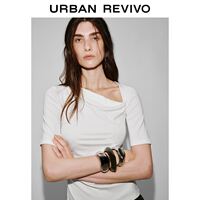
Womens Stylish and Versatile Off-Shoulder Ruched Waist Slim-Fit T-shirt
$35.54$42.90

URBAN REVIVO Womens 3D Bow French Floral Decorated Short-Sleeve Knit Cardigan
$49.47$57.90

Women Cable Knit Sleeveless Polo Top With Heart Embroidery Collared Vest
$40.54$47.90
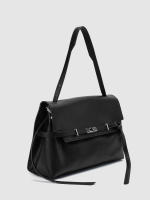
URBAN REVIVO Women Crossbody Bag Elegant PU Leather Convertible Strap for Handheld or Shoulder Bag
$81.32$99.00
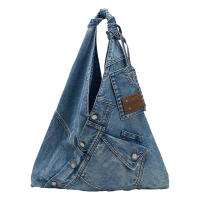
URBAN REVIVO Tote Shoulder Bag Large Capacity Denim with Leather Accents for Daily Commute and Dating
$89.32$99.00
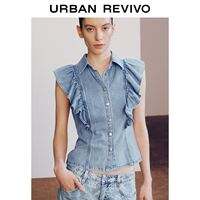
Denim Sleeveless Shirt Collared Neck Button Front Ruffle Trim
$80.54$87.90
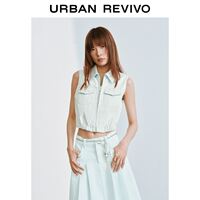
Lapel Collar Sleeveless Denim Vest Full Zip Front Elasticated Hem Flap Pocket Cropped Casual Waistcoat For Women
$62.54$69.90
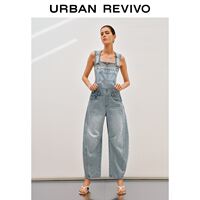
Adjustable Strap Denim Overall Front Patch Pocket Knee Stitch Loose Baggy Jumpsuit
$127.64$135.00
About URBAN REVIVO
URBAN REVIVO, commonly abbreviated as UR, is an international fashion retailer of Chinese origin founded in 2006 by Li Mingguang (李明光). Headquartered in Guangzhou, Guangdong, China, the brand operates within the trend-led, premium segment of the fast-fashion and high-street fashion market. It is owned by Fashion Momentum Group (FMG), a Guangzhou-based group that also manages the functional casualwear label BENLAI 1.
International media frequently describe URBAN REVIVO as an “Asian answer to Zara” due to its rapid product development cycles, frequent new arrivals, vertically integrated operations, accessible pricing, and global expansion strategy. However, UR distinguishes itself through a heightened emphasis on design, store experience, fashion imagery, and a more premium aesthetic than is typical of standard fast-fashion retailers 2.
Basic information
| Item | Information |
|---|---|
| Brand name | URBAN REVIVO |
| Abbreviation | UR |
| Founded | 2006 |
| Founder | Li Mingguang (李明光) |
| Parent group | Fashion Momentum Group (FMG) |
| Headquarters | Guangzhou, Guangdong, China |
| Industry | Fashion retail / apparel |
| Business model | Fast fashion / trend-led high-street fashion |
| Main products | Women’s clothing, men’s clothing, accessories, footwear and related fashion items |
| Core positioning | Trend-led, premium-looking fashion at accessible prices |
| Major markets | China, Southeast Asia, UK, US and other international markets |
| Design centres | London, Shanghai, Guangzhou; newer materials also reference New York |
| Global retail scale | More than 400 stores according to 2025 industry reporting; official regional sites give varying counts |
| Brand philosophy | “Because YOU ARE FASHION.” |
| Key slogan/positioning | “Global Live Fashion” |
Store counts vary across UR’s regional websites and third-party reports due to rapid expansion. The official Malaysia site lists 360+ stores, while the Singapore site states 380+, and 2025 industry reporting places the global network at 400+ stores. Consequently, “400+ stores” should be regarded as an approximate figure for the 2025 period rather than a fixed total 3.
Brand positioning
URBAN REVIVO combines the speed of fast fashion with a design-oriented, premium retail proposition. Its products occupy a space between traditional fast fashion, characterised by rapid trend turnover in the manner of Zara or H&M, and contemporary premium fashion, which offers stronger design identity, more polished retail environments, and higher perceived quality.
The brand describes itself as an “everyday premium trendy brand”, aiming to deliver runway-inspired ready-to-wear and high-street trends at relatively accessible prices 4. Rather than competing primarily on price, UR seeks to offer consumers a sense of purchasing something more sophisticated and fashion-forward than ordinary mass-market clothing without entering luxury price brackets.
A simplified positioning map illustrates this placement:
- Luxury fashion: Prada, Saint Laurent and similar houses
- Contemporary premium: COS, Sandro, Maje, Massimo Dutti
- URBAN REVIVO
- Mainstream fast fashion: Zara, H&M, Mango
- Value fashion: Primark and ultra-low-cost platforms
While such boundaries are subjective, they reflect where UR intends to sit within consumer perception.
History
Foundation in 2006
URBAN REVIVO was established in 2006 in China by Li Mingguang during a period when international fast-fashion concepts were rapidly reshaping Chinese consumer expectations of clothing retail 5. Li identified an opportunity to build a domestic retailer that combined rapid fashion cycles, original design, affordable pricing, sophisticated retail environments, technology-driven operations, and a distinctively modern Chinese fashion identity. Rather than replicating luxury fashion, the company aimed to create its own interpretation of international trends.
Expansion across China in the 2010s
During its early growth phase, UR expanded its physical retail footprint throughout China. While influenced by the international fast-fashion movement, the company developed a localised operating system tailored to the domestic market. By the mid-2010s, UR had become a significant player in Chinese fashion retail; industry data indicates the company operated approximately 150 stores by 2016, demonstrating the pace of its domestic growth 6. Throughout this period, UR differentiated itself through a combination of design, speed, store environment, technology, and supply chain integration rather than price alone.
International expansion
Singapore and Southeast Asia
Singapore served as UR’s first major international market and a strategic regional base, offering a sophisticated fashion market, high consumer spending, robust retail infrastructure, a multicultural demographic, and access to broader Southeast Asia. From this hub, UR expanded into Thailand, Malaysia, the Philippines, and Vietnam.
In 2024 alone, UR opened nine new stores across Southeast Asia, bringing its regional network to nearly 20 locations at that time 7. The region has functioned as one of the company’s most important international testing grounds.
Malaysia
Malaysia has become a key component of UR’s Southeast Asian strategy. In 2024, the company announced additional Malaysian stores, including locations at Pavilion Kuala Lumpur, Mid Valley, and Sunway 8. This approach demonstrates UR’s adaptation of its physical retail presence to major shopping destinations rather than reliance on low-cost locations.
Entry into Europe and North America
UR has subsequently targeted major global fashion capitals, including London, New York, Tokyo, and Hong Kong. The strategy extends beyond e-commerce sales of Chinese-designed clothing; the company aims to establish itself as a genuine international fashion brand with flagship stores in key fashion cities 9.
New York
In February 2025, UR opened its first US store in SoHo, New York City. Occupying approximately 30,000 square feet, the location significantly exceeds a small experimental format 10. SoHo was selected for its associations with fashion, contemporary retail, international tourism, younger demographics, design, and global brand visibility, reflecting UR’s use of location as a brand-building tool.
London
London represents another major international target. UR has established stores in Covent Garden and later a large-format location at Westfield Stratford City. Reuters described the latter as a nearly 2,700-square-metre store and reported that UR was expanding its London presence as part of its global strategy 11. London allows UR to demonstrate that its design language can compete in one of the world’s most established fashion capitals.
Brand philosophy and concept
URBAN REVIVO’s brand philosophy holds that fashion should be expressive, contemporary, and accessible. Official messaging focuses on individuals who dare to experiment, break conventional rules, express individuality, embrace fashion, and treat everyday life as a runway. The signature philosophy, “Because YOU ARE FASHION,” positions the brand as aspirational rather than purely functional, conveying to consumers that they are the person who makes fashion happen rather than simply encouraging affordable purchases 12.
Global Live Fashion
In its recent international strategy, UR has adopted the positioning “Global Live Fashion”. This concept describes a fashion ecosystem in which design, retail, digital commerce, social media, live commerce, and consumer feedback operate continuously rather than as discrete functions. The company designs more than 10,000 styles per year and releases hundreds of new styles weekly 13, making high product cadence a defining characteristic of the business.
Product range
URBAN REVIVO has traditionally been strongest in women’s fashion, though it also offers men’s fashion and accessories. The assortment includes:
Women’s fashion
- Dresses
- Blouses
- Shirts
- Tops
- T-shirts
- Trousers
- Jeans
- Skirts
- Coats
- Jackets
- Blazers
- Knitwear
- Workwear
Men’s fashion
- Shirts
- T-shirts
- Trousers
- Denim
- Jackets
- Knitwear
- Outerwear
- Tailored pieces
Accessories
- Handbags
- Shoes
- Jewellery
- Belts
- Fashion accessories
The brand emphasises a mix of tailoring, workwear, casual basics, and statement pieces 14.
Design language and centres
A key differentiator for URBAN REVIVO is its design-led approach. Rather than presenting as a pure basics retailer, UR incorporates runway-inspired silhouettes, contemporary tailoring, oversized proportions, statement pieces, streetwear influences, minimalist designs, feminine silhouettes, denim, seasonal colours, and fashion-forward accessories. Collections move between “uptown,” “downtown,” and more casual styles, providing a broad fashion vocabulary 15. The overall aesthetic is modern, urban, youthful, polished, and trend-conscious.
UR has built an increasingly international design infrastructure with centres in London, Shanghai, and Guangzhou, while more recent materials also reference creative operations in New York 16. For a Chinese fashion company expanding internationally, designing solely for domestic consumers and exporting overseas risks cultural mismatch; UR is therefore developing a multi-market design system. In 2025, industry reporting noted the establishment of a European design centre specifically to improve appeal to Western consumers 17.
Business model
URBAN REVIVO is fundamentally a fast-fashion and trend-fashion retailer, though it seeks to distinguish its model from negative associations traditionally linked to fast fashion. Key principles include:
- Rapid trend response: Translating new trends into commercially viable designs quickly.
- High product turnover: Introducing large volumes of new products throughout the year.
- Limited fashion cycles: Individual designs are not necessarily intended as permanent products.
- Data-driven retail: Using consumer behaviour and sales data to inform product development and inventory decisions.
- Integrated supply chain: Enabling rapid movement from design to production to retail.
- Physical and digital retail: Combining stores with e-commerce and social or live-commerce channels.
These characteristics explain frequent comparisons with Zara in international coverage 18.
Comparison with Zara
URBAN REVIVO and Zara share several similarities:
| URBAN REVIVO | Zara |
|---|---|
| Fast-fashion model | Fast-fashion model |
| Rapid product turnover | Rapid product turnover |
| Trend-driven design | Trend-driven design |
| Large physical retail network | Large physical retail network |
| Strong supply-chain integration | Strong supply-chain integration |
| Frequent new arrivals | Frequent new arrivals |
| International expansion | International expansion |
| Flagship stores | Flagship stores |
| Accessible pricing | Accessible pricing |
However, UR places particular emphasis on store aesthetics, fashion image, contemporary design, Asian consumer insight, and internationalisation, leading some media to term it “China’s Zara” or “Asia’s answer to Zara” 19. It would be misleading to characterise UR as merely a Chinese copy of Zara; its current strategy increasingly focuses on developing an independent global brand identity.
Store experience and retail strategy
The physical store is central to URBAN REVIVO’s brand. UR describes its stores as “urban art centres”, with individual locations designed to reflect their respective cities 20. The experience typically incorporates contemporary architecture, controlled lighting, fashion photography, minimalist interiors, strong visual merchandising, large product displays, art and design elements, and carefully constructed customer journeys, aiming to make shopping feel closer to visiting a fashion environment than entering an ordinary clothing shop.
UR employs several store formats:
- Flagship stores: Large-format locations in strategically important cities such as Bangkok, Singapore, Shanghai, Guangzhou, London, and New York, designed to build brand awareness. Official listings identify flagships including ICONSIAM in Bangkok, Changi in Singapore, and major locations in Shanghai and Guangzhou 21.
- Shopping-mall stores: Allowing UR to reach mainstream fashion consumers while benefiting from established retail traffic.
- Experiential stores: Emphasising architecture, art, and immersive brand experiences.
This combination enables UR to use physical retail as both a sales channel and marketing channel.
Digital strategy
URBAN REVIVO has invested heavily in omnichannel retail, launching urbanrevivo.com globally in 2021 to allow consumers outside traditional physical-store markets to purchase online 22. The digital strategy encompasses official e-commerce, social media, online campaigns, live commerce, digital marketing, international e-commerce platforms, and integration between physical and online stores, with the stated ambition of making the physical and digital shopping experience increasingly seamless.
Parent company and founder
Fashion Momentum Group
URBAN REVIVO is part of Fashion Momentum Group (FMG), established in 2006 and headquartered in Guangzhou. FMG describes itself as an international fashion retail group originating from China. Its portfolio includes URBAN REVIVO as the flagship fashion brand and BENLAI, a casualwear brand focused on technology, functionality, comfort, and sustainable materials. URBAN REVIVO thus sits within a larger fashion-retail group and supply-chain ecosystem 23.
Li Mingguang
Li Mingguang (李明光) is the founder of URBAN REVIVO and chairman and CEO of Fashion Momentum Group. He has played a central role in the company’s transition from a Chinese fashion retailer to a global brand. His international strategy treats overseas expansion not merely as an export opportunity but as a means to gain exposure to different consumer preferences, obtain earlier feedback on product design, build international brand recognition, access global fashion talent, and develop experience competing against established international retailers. In 2025, Li was recognised in The Business of Fashion’s BoF 500 Class of 2025 24.
Sustainability and quality
UR has increasingly emphasised quality and sustainability alongside fashion speed. Its Singapore operation describes original design, premium quality, and sustainability as core brand elements 25. This represents an evolution from traditional fast fashion, which faces criticism for overproduction, short product lifespans, waste, resource consumption, and environmental impact. UR’s response is to position itself towards “better” fast fashion, focusing more on design, quality, longevity, and controlled assortments.
However, it is important to distinguish between a company’s sustainability positioning and independently verified environmental performance. Marketing claims should not automatically be interpreted as evidence that structural environmental problems associated with fast fashion have been resolved.
Target customer and pricing
URBAN REVIVO primarily targets fashion-conscious younger and middle-younger consumers seeking contemporary clothing without luxury-level prices. The ideal customer follows fashion trends, cares about appearance, shops regularly, values newness, appreciates contemporary design, and is willing to pay more than ultra-cheap fast fashion but does not seek luxury prices. The brand occupies a middle ground summarised by the consumer proposition: “I want to look fashionable and premium, but I don’t want to pay designer prices.”
The brand is generally positioned as affordable premium high-street fashion, sitting above mainstream fast fashion and below contemporary premium brands. Exact prices vary significantly by category and market. The goal is not necessarily to win on lowest price but to create a perception of higher design value, better presentation, and relatively accessible pricing, reflected in historical use of terms such as “affordable luxury” and “premium trendy”.
Global expansion strategy and financial scale
UR’s international expansion has accelerated significantly since 2024, following a trajectory from China to Southeast Asia to global fashion capitals rather than immediate worldwide saturation. Plans for 2025 specifically identified London, New York, Tokyo, and Hong Kong as important markets, with additional interest in the Middle East 26. By September 2025, Reuters reported that UR operated 400+ stores worldwide and aimed to reach 200 overseas locations within five years 27.
As a privately held company, detailed financial information for URBAN REVIVO is less transparent than for publicly listed groups. However, Reuters reported that parent company FMG generated approximately RMB 7 billion in sales in 2024, equivalent at the time to roughly US$979 million. The company has discussed ambitious overseas-revenue targets, including a goal of approximately RMB 5 billion in overseas revenue by 2030 28. These figures represent FMG group-level performance rather than URBAN REVIVO-only revenue.
Competitive landscape
URBAN REVIVO competes with multiple groups of fashion retailers:
- Direct fast-fashion competitors: Zara, H&M, Mango, Uniqlo (though more basics-oriented), and C&A.
- Contemporary and high-street competitors: COS, Massimo Dutti, Sandro, Maje, and & Other Stories.
- Digital fashion competitors: SHEIN, ASOS, and various regional e-commerce platforms.
UR’s strategic challenge lies in occupying a space between categories, requiring it to compete against the speed and scale of fast fashion, the brand perception of contemporary fashion, and increasingly the price pressure of digital-native platforms.
Competitive differentiation
UR’s competitive DNA comprises six pillars:
- Design: Positioning as a fashion brand rather than merely a clothing retailer.
- Speed: Introducing hundreds of new styles regularly to respond quickly to trends 29.
- Supply chain: Maintaining strong infrastructure enabling design, production, and retail integration.
- Store experience: Treating stores as integral to brand identity.
- Technology: Integrating data, digital commerce, social media, and live commerce into the retail model.
- Globalisation: Transforming from a successful Chinese retailer into a globally recognised fashion brand.
Challenges of globalisation
URBAN REVIVO’s greatest opportunity is also its greatest challenge. Having demonstrated success in China and parts of Asia, the company faces fundamentally different environments in London, New York, Tokyo, and other Western markets. Challenges include low brand awareness, strong local and international competitors, different body shapes and sizing preferences, varying fashion cultures, differing consumer expectations, sustainability scrutiny, high overseas retail costs, geopolitical and trade risks, and the difficulty of transforming a Chinese retail success into a universally recognisable brand.
Reuters has reported that UR recognises the need for localised product development and has invested in European design capabilities to address Western consumer preferences 30. The central strategic test for the next stage of the company is whether UR can become a globally desirable fashion brand rather than simply a Chinese fashion retailer with overseas stores.
Significance in Chinese fashion
URBAN REVIVO represents a broader shift in the Chinese consumer industry. Where the global fashion hierarchy was historically dominated by Western and Japanese brands selling to Chinese consumers, UR exemplifies a newer model: Chinese brand achieving domestic success, expanding internationally, and reaching global consumers. It belongs to a wave of Chinese consumer brands seeking international recognition.
Notably, UR’s strategy is not based primarily on Chinese cultural symbolism but instead attempts to communicate through a globally recognisable fashion language, distinguishing its internationalisation from brands whose identity depends heavily on explicitly Chinese cultural products.
Current status
As of 2026, URBAN REVIVO has evolved through three broad stages:
- 2006–2015: Building a Chinese fashion-retail business.
- 2016–2023: Developing international operations, particularly in Southeast Asia, and establishing a recognisable premium-fast-fashion identity.
- 2024–2026: Accelerating global expansion into major fashion capitals and competing for international brand recognition.
Its current strategy is best understood as a progression from “Chinese fast fashion” to “Asian fashion brand” to “global fashion brand.” The company has established a substantial international footprint, but its most significant strategic chapter arguably remains ahead 31.
References
- About Urban Revivo Discover Our Brand Story and Style – URBAN REVIVO
- FMG | LinkedIn
- Urban Revivo | Retail & Leisure International
- I shopped at Urban Revivo, Asia’s answer to Zara. I’m a convert, but experts say Zara has nothing to worry about — yet.
- Chinese fast-fashion retailer takes on Zara and H&M in London and New York
- About Us – URBAN REVIVO Malaysia
- About Us – URBAN REVIVO Singapore
- URBAN REVIVO
- Urban Revivo – Leading The Era of New Retail | Retail & Leisure International
- Urban Revivo:品牌介紹,品牌代言,產品介紹,品牌榮譽,品牌公益,媒體報_中文百科全書
- URBAN REVIVO Celebrates 2024 Milestones and Unveils Ambitious Global Expansion Plans for 2025
- Urban Revivo unveils ambitious global expansion plans
- URBAN REVIVO Expands International Market Presence with Mores Stores to Open in Malaysia
- FMG, Chinese fast-fashion brand Urban Revivo’s parent, eyes 20 new stores globally | South China Morning Post
- Chinese Zara rival Urban Revivo steps up global push with new stores in fashion capitals
- URBAN REVIVO News and Press Releases | PR Newswire
- Urban Revivo sets sights on global markets with new flagship stores
- Stores – Urban Revivo Fashion influencer
- FMG | LinkedIn
- About us – Urban Revivo Fashion influencer
- URBAN REVIVO | LinkedIn
- Chinese Zara rival Urban Revivo steps up global push with new stores in fashion capitals – The Business Times
- Fashion brands eye bigger global footprint – Chinadaily.com.cn
- Urban Revivo Celebrates 2024 Milestones and Unveils Ambitious Global Expansion Plans for 2025 – Fashion Mannuscript
- URBAN REVIVO celebrates 2024 milestones and unveils ambitious global expansion plans for 2025
- Chinese fashion brand Urban Revivo opens in Bangkok, eyes New York, London | South China Morning Post
- Chinese ‘fast luxury fashion’ pioneer Urban Revivo opens first local flagship at Pavilion KL (VIDEO) | Malay Mail
- About Urban Revivo – Urban Revivo Fashion influencer
- About us – Urban Revivo Fashion influencer
- Historias – URBAN REVIVO
- À propos d’Urban Revivo Découvrez notre histoire de marque et notre style – URBAN REVIVO