Shop on Lazada
WUYINLIANGPIN products

WUYINLIANGPIN | Pure Cotton Bed Skirt with Ruffle Edges and Padding
$93.60$179.79
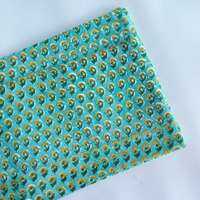
Hand-Stamped Plant-Dyed Baby Cotton Long-Pile Fabric Home Clothing Skirt Apparel Various Flower Patterns Indian Imported
$9.74$10.23
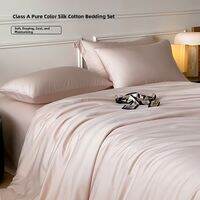
WUYINLIANGPIN | Summer Tencel-Cotton Single Bed Duvet Cover 150x200cm
$109.89$204.22
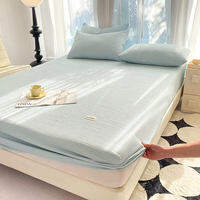
WUYINLIANGPIN | A Class Waffle 100% Cotton Fitted Sheet
$88.86$172.12
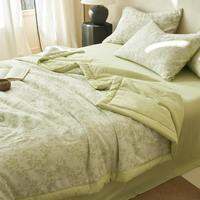
WUYINLIANGPIN | Cotton Three-layered Jacquard Air Conditioner Summer Quilt
$103.63$185.64
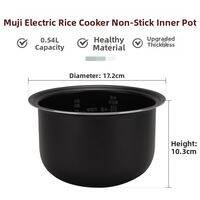
Replacement Inner Pot 0.54L
$57.29$57.72
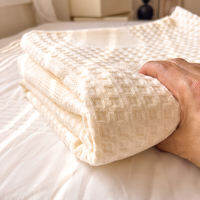
WUYINLIANGPIN | Antibacterial Summer Thin Blanket
$50.52
Buy on Lazada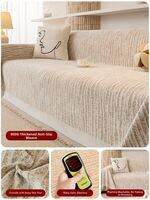
WUYINLIANGPIN | New Season Universal Full Cover Sofa Throw
$73.51$123.84
About WUYINLIANGPIN
Overview
WUYINLIANGPIN (Chinese: 无印良品; pinyin: Wúyìn Liángpǐn), frequently associated with the English name Natural Mill, is a Chinese home-textile and household-products brand linked to Beijing Cottonfield Textile Co., Ltd. (北京棉田纺织品有限公司). The brand’s core business has historically centred on towels, bedding, textiles, home furnishings and related household items. It is legally distinct from the Japanese lifestyle retailer MUJI, which also uses the Chinese characters “无印良品” as its localised name.2
The shared use of this Chinese name has been the subject of one of the most prominent trademark disputes in China involving an international retailer. Chinese courts ultimately recognised Beijing Cottonfield’s trademark rights in specified Class 24 textile goods, covering products such as towels, bedding and related textile articles.
Basic information
| Field | Information |
|---|---|
| Brand name | 无印良品 |
| Romanisation | WUYINLIANGPIN / Wuyinliangpin |
| English-associated name | Natural Mill |
| Country of origin | China |
| Principal company | Beijing Cottonfield Textile Co., Ltd. |
| Chinese company | 北京棉田纺织品有限公司 |
| Associated company | Beijing Wuyinliangpin Investment Co., Ltd. |
| Industry | Home textiles, household goods, retail |
| Core products | Towels, bedding, textiles, household fabrics, home-related products |
| Trademark class central to dispute | Class 24 |
| Major trademark registration | “无印良品” |
| Major controversy | Trademark dispute with Japan’s MUJI |
Court and industry records identify Beijing Cottonfield as the owner of the relevant “无印良品” trademarks, with Beijing Wuyinliangpin Investment acting as an authorised user.1
Name and meaning
The phrase “无印良品” literally translates to “no-brand quality goods” or “quality goods without a [prominent] brand”. The romanisation Wuyinliangpin reflects the Mandarin pronunciation of the four constituent characters:
- 无 / 無 — without, none
- 印 — mark, imprint
- 良 — good, fine
- 品 — product, goods
A significant complication is that the characters “无印良品” are not exclusively associated with the Chinese entity. The Japanese company Ryohin Keikaku also uses 無印良品 as the Chinese and Japanese name for its MUJI brand. Consequently, English-language sources often use the romanisation “Wuyinliangpin” to distinguish the Chinese trademark holder from the Japanese retailer.
Origins
The Chinese WUYINLIANGPIN business traces its roots to Hainan Nanhua Industrial & Trading Co. (海南南华实业贸易公司) during the 1990s. Historical business sources indicate that the company developed textile products influenced by traditional Chinese techniques, including batik and tie-dye, with an emphasis on natural materials and quality. It subsequently adopted the “无印良品” name for these textile products.
The company applied for registration of the “无印良品” trademark in 2000, and it was successfully registered in 2001 for Class 24 goods. The listed goods included cotton textiles, towels, bath towels, bed sheets, pillowcases, quilts, blankets and related textile products. In 2004, the trademark was transferred to Beijing Cottonfield Textile Co., Ltd.
Beijing Cottonfield
Beijing Cottonfield Textile Co., Ltd. (北京棉田纺织品有限公司) serves as the central corporate entity behind the Chinese WUYINLIANGPIN trademark. Established in 2000, the company’s activities encompass the design, production and marketing of high-end towels, functional bedding and homewear, alongside investment in e-commerce and household-goods retail.
Crucially, WUYINLIANGPIN did not originate merely as a name created to imitate MUJI. Its trademark history predates MUJI’s entry into mainland China, and the company had an established textile business in the relevant product category. This distinction proved significant in subsequent litigation.
Natural Mill
The brand is also marketed under the name Natural Mill. In 2011, Beijing Cottonfield established Beijing Wuyinliangpin Investment Co., Ltd. (北京无印良品投资有限公司), with Cottonfield serving as one of its investors. Cottonfield authorised this entity to use the relevant “无印良品” trademarks for manufacturing, selling and promoting designated goods.
The business subsequently marketed products under the “无印良品 Natural Mill” identity. This explains why the Chinese company is sometimes referred to as Natural Mill in English-language reporting, despite holding the Chinese trademark 无印良品.
Product range
WUYINLIANGPIN operates principally as a home-textile and home-lifestyle brand, rather than a broad lifestyle retailer in the manner of Japanese MUJI. Its historically documented products include:
Home textiles
- Towels
- Bath towels
- Face towels
- Hand towels
- Blankets
- Quilts
- Bedding
- Bed covers
- Bed sheets
- Pillowcases
- Other household textiles
Home and lifestyle products
The broader business has also been associated with household products, homewear and related lifestyle merchandise. However, the relevant Chinese trademarks specifically cover Class 24, a category centred on textiles and textile household products.2
Brand philosophy
The Chinese WUYINLIANGPIN brand positions itself around concepts such as quality-oriented products, natural materials, environmentally conscious living, simple product design, practical household goods, comfortable everyday living and textile craftsmanship. Chinese descriptions of the brand have connected it with traditional cultural ideas while presenting its products as part of a modern, environmentally conscious lifestyle.
This positioning naturally overlaps with some of the visual and philosophical territory occupied by Japanese MUJI, particularly regarding simplicity and everyday utility.
Relationship with Japanese MUJI
It is essential to distinguish WUYINLIANGPIN from the Japanese MUJI company. Japanese MUJI is operated by Ryohin Keikaku Co., Ltd. (株式会社良品計画). MUJI originated in Japan in 1980 as a private-label brand associated with Seiyu before becoming an independent business under Ryohin Keikaku. It entered mainland China in 2005.
Conversely, the Chinese company had registered the “无印良品” trademark for certain textile products years earlier. This created a situation where two independent companies held legitimate trademark interests involving essentially the same Chinese name, but under different commercial circumstances and trademark coverage. While MUJI registered its own trademarks for many categories of goods in China, its protection did not extend to every textile subcategory involved in the dispute.
The MUJI trademark dispute
The trademark dispute forms a major part of WUYINLIANGPIN’s public identity. Hainan Nanhua originally registered “无印良品” in China in 2001 for certain Class 24 textile products, with rights later transferring to Beijing Cottonfield.
When MUJI entered mainland China in 2005, it registered its MUJI and Chinese-language trademarks. However, this coverage did not encompass all textile products it subsequently sold, including certain bedding and towel items. In 2015, Beijing Cottonfield and its associated company filed a trademark-infringement lawsuit against Ryohin Keikaku and MUJI Shanghai concerning the use of “无印良品” on specific textile products.
The Beijing Intellectual Property Court ruled in favour of the Chinese company in 2017. Following an appeal, China’s Supreme People’s Court upheld the ruling in 2019. MUJI was ordered to pay approximately RMB 626,000 and issue a public apology regarding the infringement. Importantly, this ruling did not ban MUJI from China or revoke its general MUJI trademark; it concerned only the use of the Chinese “无印良品” mark on particular goods falling within the Chinese company’s rights. MUJI continues to operate in mainland China under the MUJI brand.
Controversy regarding visual identity
The WUYINLIANGPIN–MUJI dispute attracted considerable attention due to the brands’ remarkably similar visual identities. Observers have noted similarities in the Chinese name, red-and-white branding, minimalist store environments, neutral-coloured products, simple packaging, household and textile merchandise, and overall lifestyle positioning.
Some commentators have characterised Natural Mill as a MUJI-like or lookalike brand. Legally, however, this differs from being a counterfeit operation. The Chinese trademark was registered before MUJI entered mainland China, and the Chinese company demonstrated actual commercial activity in the relevant textile categories, facts that were pivotal to the courts’ decisions.
Trademark situation
Understanding the trademark landscape requires separating ownership by product category. The Chinese company’s key “无印良品” rights concern Class 24, covering textiles and household textile products. Conversely, MUJI holds extensive trademark protection across numerous other product categories and uses MUJI as its internationally recognisable Roman-letter brand.
Therefore, stating that “China’s MUJI trademark belongs to the Chinese company” is misleading. A more accurate description is that Beijing Cottonfield owns Chinese “无印良品” trademark rights in particular textile-related categories, while Ryohin Keikaku owns and operates the MUJI brand and holds extensive trademark rights covering many other categories. This distinction remains vital when identifying products sold under either brand.
Corporate structure
The principal corporate relationships are structured as follows:
- Hainan Nanhua Industrial & Trading Co.: Originally registered the relevant “无印良品” trademark.
- Beijing Cottonfield Textile Co., Ltd.: Current trademark holder and parent company.
- Beijing Wuyinliangpin Investment Co., Ltd.: Authorised user and operator associated with the WUYINLIANGPIN / Natural Mill business.
Court documents confirm that Beijing Cottonfield authorised Beijing Wuyinliangpin to use the relevant trademarks for production, sales and promotion.
Market positioning
WUYINLIANGPIN occupies a distinct position in the consumer market, primarily focusing on home textiles and household living, with particular strength in towels and bedding. Its branding emphasises a minimalist, clean and understated aesthetic, making it visually comparable to MUJI. However, its historical product concentration is far more heavily oriented towards textiles than MUJI’s cross-category portfolio.
Recent reporting indicates that the Chinese “无印良品” business has developed a significant retail and franchise presence, with online and physical stores operating independently of Japanese MUJI.
Comparison with MUJI
| Feature | WUYINLIANGPIN / Natural Mill | MUJI |
|---|---|---|
| Country | China | Japan |
| Main company | Beijing Cottonfield | Ryohin Keikaku |
| Origins | 1990s textile business / trademark history | 1980 |
| Chinese name | 无印良品 | 無印良品 |
| English-associated name | Natural Mill | MUJI |
| Main strength | Home textiles | Broad lifestyle products |
| Towels & bedding | Core category | One of many categories |
| Key Chinese trademark issue | Class 24 | Broad trademark portfolio, but historical gaps |
| Mainland China entry | Domestic business predates MUJI’s entry | 2005 |
| Relationship | Independent company | Independent company |
| Famous legal issue | Trademark holder in Class 24 | Lost infringement dispute concerning certain textile goods |
The fact that both businesses can legitimately use “无印良品” in different circumstances results from China’s trademark-registration history and the division of trademark rights by product category.
Public perception
WUYINLIANGPIN has a complex reputation because many consumers associate the phrase “无印良品” primarily with Japanese MUJI. Consequently, the Chinese brand’s products and stores are frequently confused with MUJI. Media reports have documented instances where consumers struggled to distinguish between the two brands due to similarities in store design, colour schemes, packaging and product categories.
This confusion extends beyond consumer perception to tangible commercial and legal consequences, underscoring why the trademark litigation became such a significant chapter in the brand’s history.
Legacy
The significance of WUYINLIANGPIN extends beyond its retail operations. The brand is frequently cited in discussions regarding Chinese trademark law, foreign-brand market entry and first-to-file trademark registration systems.
Its dispute with MUJI illustrates a critical issue for international companies entering China: having an established global brand does not automatically guarantee ownership of every corresponding Chinese trademark across all product categories. In this instance, a Chinese company obtained relevant “无印良品” trademark rights before MUJI entered mainland China, and those rights were ultimately upheld by Chinese courts for the relevant textile categories.