Shop on Lazada
Yellow Tail products
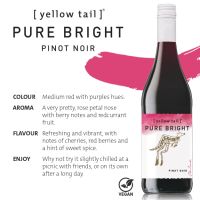
Yellow Tail Pure Bright Pinot Noir 750ml - Red Wine
$21.95$26.90
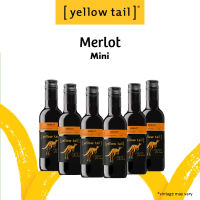
Yellow Tail Mini Merlot Red Wine 187ml - Case of 6
$57.55$67.70
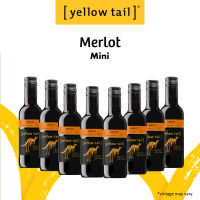
Yellow Tail Mini Merlot Red Wine 187ml - Case of 8
$75.14$88.40
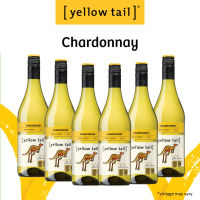
Yellow Tail Chardonnay 750ml - White Wine - Case6
$142.76$172.00
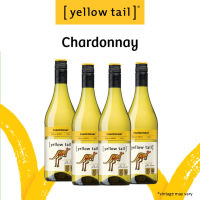
Yellow Tail Chardonnay 750ml - White Wine - Case4
$96.28$116.00
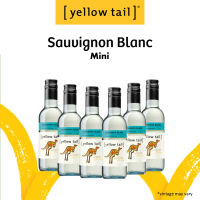
Yellow Tail Mini Sauvignon Blanc White Wine 187ml - Case of 6
$57.55$67.70
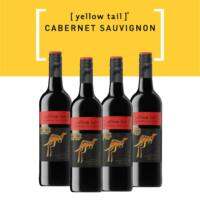
Yellow Tail Cabernet Sauvignon 750ml - Red Wine - Case4
$96.28$116.00
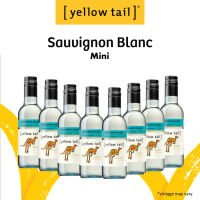
Yellow Tail Mini Sauvignon Blanc White Wine 187ml - Case of 8
$73.37$88.40
About Yellow Tail
Brand overview
Yellow Tail, commonly stylised as [yellow tail], is an Australian wine brand produced by Casella Family Brands, a family-owned beverage company based in Yenda, New South Wales. Launched internationally in 2001, it has become one of the most successful Australian wine exports of the modern era. The brand played a significant role in making Australian wine more accessible to mainstream consumers, particularly in the United States.
The official website for the brand is
Key facts
| Attribute | Details |
|---|---|
| Brand name | [yellow tail] |
| Industry | Wine / alcoholic beverages |
| Country of origin | Australia |
| Parent company | Casella Family Brands |
| Founded / launched | 2001 |
| Founder behind the brand | John Casella |
| Family business | Casella family |
| Winery location | Yenda, New South Wales, Australia |
| Main market breakthrough | United States |
| Positioning | Accessible, approachable, fruit-forward Australian wine |
| Brand personality | Fun, optimistic, relaxed, uncomplicated |
| International reach | More than 70 countries |
| Major product categories | Red, white, rosé, sparkling, Prosecco, lower-alcohol wines |
The brand remains family-owned, with production centred at the Casella family winery in Yenda.1
Company background
The origins of Yellow Tail predate the brand’s 2001 launch by several decades. In 1957, Italian immigrants Filippo and Maria Casella migrated from Sicily to Australia. The family established a winery in Yenda, New South Wales, in 1969. Their winemaking philosophy was deeply influenced by their Italian heritage, viewing wine as a beverage to be shared socially with family and friends rather than as a formal or intimidating product.2
Their son, John Casella, later became pivotal to the company’s development. During the 1990s, he expanded operations and invested in modern winemaking infrastructure, laying the groundwork for what would become Casella Family Brands’ international expansion.3
Prior to Yellow Tail, the Casella business primarily supplied bulk wine and grapes. John Casella identified an opportunity to create a consumer brand that ordinary drinkers could understand and enjoy without extensive oenological knowledge. The concept was deliberately simple: the wine should be easy to choose, easy to understand, easy to drink, affordable, approachable and suitable for casual social occasions.
When the brand launched in 2001 with a primary focus on the United States, initial sales targets were reportedly set at just 25,000 cases.4 Instead, Yellow Tail sold more than one million cases in its first year. This disparity between expectation and actual demand transformed the label into an immediate international phenomenon.5
Market strategy and positioning
Approach to the US market
The American wine market was critical to the brand’s ascent. Traditional wine marketing often emphasised geographical regions, estates, vintages and technical terminology, which could appear complex to novice consumers. Yellow Tail adopted a contrasting approach, presenting wine as simple, colourful and enjoyable. Rather than requiring consumers to navigate complicated classifications, the brand communicated that expertise was unnecessary; one simply needed to select a variety and enjoy it. This accessibility appealed strongly to casual drinkers and those new to wine, helping to establish Australian wine as a major international category.6
Brand philosophy
At its core, Yellow Tail operates on the proposition that great wine should be easy to enjoy. It does not position itself as a luxury status symbol or an intellectual pursuit. Instead, the brand focuses on enjoyment, socialising, accessibility, optimism, spontaneity and everyday occasions. Casella Family Brands describes the label as combining Italian winemaking heritage with a relaxed Australian attitude.7 This duality provides a foundation in family and food culture while maintaining an informal, approachable personality distinct from traditional European wine brands.
Competitive positioning
Yellow Tail occupies the accessible mainstream segment of the wine market, situated between premium wines and entry-level commodity wines. Its competitive advantage relies on a combination of Australian origin, recognisable branding, consistent taste, mass distribution and affordability. This positioning allows it to serve a broad consumer base rather than a niche audience.
Product portfolio
While originally known for accessible red wines, the Yellow Tail portfolio has expanded significantly to cover multiple drinking occasions.
Red wines
Key varieties include Shiraz, Cabernet Sauvignon, Merlot and Pinot Noir.
White wines
The range features Chardonnay, Sauvignon Blanc and Pinot Grigio.
Rosé
Rosé wines are positioned for casual and social consumption.
Sparkling wine and Prosecco
The brand has extended beyond still wines into sparkling varieties and Prosecco, designed for both celebratory and everyday occasions.8
Lower-alcohol options
The Pure Bright / Light & Bright range caters to consumers seeking lower-alcohol alternatives without compromising flavour.9
Winemaking style
Yellow Tail emphasises approachability over complexity. Wines are crafted to be fruit-forward, smooth, food-friendly and consistent from bottle to bottle. Unlike brands focused on terroir or vintage variation, Yellow Tail promises a predictable experience. The winemaking team prioritises consistency to ensure global appeal and reliability for consumers purchasing wine for dinners, parties or casual gatherings.10
Visual identity and packaging
Name and imagery
The name “Yellow Tail” refers to the yellow-footed rock-wallaby, an Australian marsupial related to kangaroos. This animal inspired the brand’s distinctive visual identity, immediately connecting the product to Australia while providing a friendly, recognisable icon.
Packaging design
Packaging has been central to the brand’s strategy. Departing from traditional conventions of dark colours, elaborate typography and estate imagery, Yellow Tail utilised bright colours, simple typography and clear varietal identification. This system allowed shoppers to distinguish varieties quickly on supermarket shelves without detailed wine knowledge. Casella describes this aesthetic as breaking away from the serious image of wine to make it more fun, accessible and inclusive.6
2025 brand refresh
In 2025, Yellow Tail introduced its first significant packaging revitalisation since launch. The redesign aimed to modernise the brand’s appearance while retaining core assets such as the Australian animal imagery, strong colour coding, approachable typography and playful personality. The rollout began in the UK and Europe in early 2025, followed by markets including the US, Canada, Australia and Asia.4
Milestones
- 1957: Filippo and Maria Casella migrate from Sicily to Australia.
- 1969: The Casella family establishes its winery in Yenda, New South Wales.
- 2001: Yellow Tail launches internationally; US sales exceed one million cases in the first year.11
- 2004: The brand receives the Jimmy Watson Memorial Trophy and Stodart Trophy, two significant Australian wine awards.12
- 2013: Casella celebrates the production and sale of the billionth bottle.
- 2021: Yellow Tail marks its 20th anniversary.7
- 2023: The brand is recognised as the World’s Most Powerful Wine Brand for six consecutive years.
- 2025: A major global packaging and visual refresh is implemented.4
Global presence and corporate structure
Yellow Tail is currently enjoyed in more than 70 countries worldwide. Its evolution from a regional family winery in New South Wales to a global consumer brand represents a significant trajectory in the Australian wine industry.
It is important to distinguish between [yellow tail] (the wine brand) and Casella Family Brands (the parent company). While Casella Family Brands owns other labels such as Peter Lehmann, Brand’s Laira, Morris of Rutherglen and Baileys of Glenrowan, Yellow Tail remains its flagship international brand and is described by the company as its world-leading Australian wine offering.
Consumer profile and marketing
The brand historically appeals to first-time wine drinkers, casual consumers, younger adults and those shopping in supermarkets who prefer affordable options without complicated terminology. Marketing communications tend to be conversational and optimistic, reflecting a personality that is friendly, relaxed, social and unpretentious.
Success is attributed to several factors:
* Simplification: Reducing purchase decisions to grape variety rather than region or vintage.
* Shelf recognition: Bright packaging facilitates quick identification in retail environments.
* Australian storytelling: Imagery and colour communicate origin instantly.
* Mass accessibility: Positioning wine as an everyday social product rather than a luxury.
* Consistency: Maintaining a reliable product experience across global markets.
As of 2026, the core proposition remains consistent with the original 2001 vision: great-tasting Australian wine that is easy to choose, understand and enjoy. The brand combines Australian culture, Italian family heritage, modern packaging and global distribution to maintain its position as a leading mainstream wine label.4
References
- Our Story | [yellow tail] Wines | US
- About – [yellow tail] Wines US
- 20 Years Young! – [yellow tail] wines
- [yellow tail] Wine Unveils Fresh Look | Casella Family Brands
- [yellow tail] | Casella Family Brands
- United States – [yellow tail] wines
- Happy 20th Birthday, [yellow tail] | Casella Family Brands
- Our Story | [yellow tail] Wines | Australia
- Casella Family Brands | The home of [yellow tail] wine
- Our Story | [yellow tail] Wines | Canada
- International – [yellow tail] wines
- Canada – [yellow tail] wines