Shop on Lazada
Cuisinart products
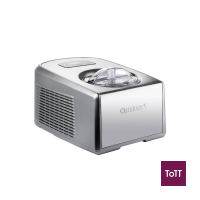
Cuisinart ICE-100BCHK Ice Cream And Gelato Maker
$409.00$1,082.00
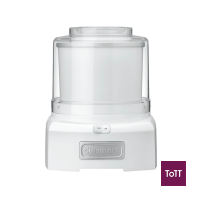
Cuisinart ICE-21 Frozen Yogurt /Ice Cream & Sorbet Maker 1.5L 220-240V 35W
$131.90$202.90
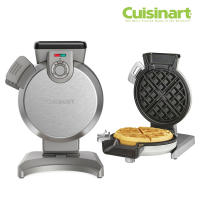
Cuisinart WAF-V100KR Vertical Waffle Maker Pan Kitchen Cooker Baking 4.1
$105.00$140.00
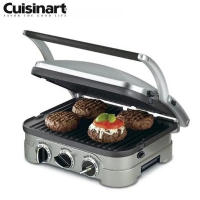
Cuisinart GR-4NKR Electric Grill Meat Griddler Removable Plates Integrated UP
$170.00$238.00
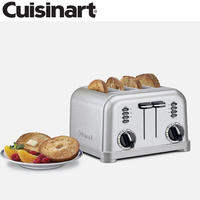
Cuisinart CPT-180 Toaster 4 Slice Slices Metal Classic Oven Grill Official Toasters Bread 3.51
$116.00$162.00
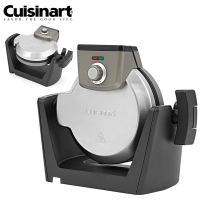
Cuisinart WAF-V400KR Vertical Waffle Maker Pan Toaster Kitchen Cooker Baking 4.41
$123.00$183.00
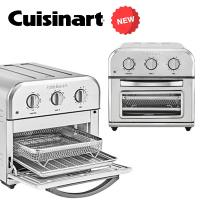
Cuisinart TOA-52KR Air Fryer Counter Top Oven 9L Stainless AirFryer Toaster 12.41
$225.00$300.00
Cuisinart Belgian Waffle Maker
$239.00
Buy on LazadaAbout Cuisinart
Cuisinart is an American kitchen-appliance and cookware brand best known for introducing the food processor to the home market in the 1970s. Founded in 1971 by Carl Sontheimer, the brand was established to bring professional-style food preparation and culinary techniques into ordinary domestic kitchens. Cuisinart is currently part of Conair Corporation, which acquired the brand in 1989.1
Today, Cuisinart has expanded significantly beyond its original food processor. Its portfolio includes blenders, coffee makers, toasters, air fryers, ovens, grills, ice-cream makers, cookware, cutlery, kitchen tools and other culinary products. The brand positions itself around a combination of innovation, functionality, design and the enjoyment of cooking.1
Overview
| Category | Information |
|---|---|
| Brand | Cuisinart |
| Founded | 1971 |
| Founder | Carl Sontheimer |
| Country of origin | United States |
| Industry | Kitchen appliances, cookware and culinary products |
| Best known for | Food processors |
| Parent company | Conair Corporation |
| Acquired by Conair | 1989 |
| Core positioning | Kitchen innovation and accessible culinary performance |
| Product range | Small kitchen appliances, cookware, kitchen tools and accessories |
| Official website | cuisinart.com |
History
Origins
The origins of Cuisinart trace back to Carl Sontheimer, an American engineer and MIT-trained physicist with a strong interest in cooking and French cuisine. During a trip to France, Sontheimer encountered professional food-preparation technology that inspired him to adapt the concept for American households. He believed that sophisticated food preparation could be made substantially easier through a well-designed household appliance.1
In 1971, Sontheimer founded Cuisinart. The company’s early business included high-quality stainless-steel cookware while Sontheimer developed a food-preparation machine suitable for consumers.2 The name Cuisinart combines the concepts of cuisine and art, reflecting the company’s original ambition to treat cooking not merely as a household chore but as a form of culinary creativity and craftsmanship.2
The Food Processor
The product that established Cuisinart’s identity was its food processor. Sontheimer refined the machine’s design by modifying the feed tube, cutting blades and discs, and adding safety features suitable for the American market. In 1973, Cuisinart officially presented its food processor at the National Housewares Exposition in Chicago.1
The appliance was significant because it automated tasks such as chopping, slicing, shredding and mixing that traditionally required considerable manual work. Cuisinart’s history describes the product as a breakthrough that helped make sophisticated cooking techniques more accessible to home cooks.1 The food processor also benefited from support from influential figures in food culture. Julia Child and James Beard were among the culinary personalities who helped introduce the appliance to a broader audience and highlighted its usefulness for preparing sophisticated dishes.1 Consequently, the Cuisinart name became strongly associated with food processors and, for a period, was closely identified with the product category itself.
Expansion of the Brand
Although the food processor established Cuisinart’s reputation, the company gradually expanded into a much broader kitchen portfolio. Over subsequent decades, Cuisinart introduced or marketed products across categories including:
- Food processors
- Blenders
- Hand and stand mixers
- Coffee makers
- Toasters and toaster ovens
- Air fryers
- Grills and griddlers
- Ice-cream makers
- Juicers and food-preparation appliances
- Cookware
- Cutlery
- Kitchen utensils
- Kitchen accessories
This expansion transformed Cuisinart from a specialist food-processor manufacturer into a full-range kitchen brand. Operations in markets such as Canada and Australia describe the modern brand as covering a broad spectrum of kitchen essentials while retaining its original emphasis on practical, high-quality culinary products.13
Acquisition by Conair
Cuisinart experienced financial difficulties during the 1980s. After changes in ownership and a period of financial distress, the brand was acquired by Conair Corporation in 1989.4 This acquisition marked a major turning point; Cuisinart remained focused on kitchen products while gaining the resources and distribution capabilities of the larger Conair organisation.
Conair is a diversified consumer-products company whose businesses include personal-care products and kitchen appliances. Its portfolio includes several well-known consumer brands, with Cuisinart forming its major culinary and kitchen brand.1 Cuisinart has remained under Conair ownership since the 1989 acquisition.1
Brand Philosophy
Cuisinart’s original philosophy was essentially to bring professional culinary capabilities into the home. That philosophy has evolved over time; rather than focusing exclusively on professional-style equipment, the modern brand emphasises making everyday cooking easier, more enjoyable and more creative. Cuisinart describes its approach through themes including:
- Innovation: Developing new kitchen technologies and product concepts.
- Functionality: Designing products around practical cooking tasks.
- Quality: Emphasising durable materials and reliable performance.
- Design: Combining appliance functionality with contemporary kitchen aesthetics.
- Culinary accessibility: Helping ordinary home cooks perform techniques that might otherwise require more time or specialised equipment.
- Lifestyle: Presenting cooking as part of social and family life rather than simply food preparation.1
Its current brand platform, “A Work of Cuisinart,” extends this philosophy by connecting Cuisinart products with everyday meals, celebrations and moments in the home.1
Product Categories
Food Processors
Food processors remain the product category most closely associated with Cuisinart. The company’s original machine established the brand in the United States and remains an important part of its identity. Modern Cuisinart food processors range from compact models intended for smaller kitchens to larger machines designed for substantial food preparation.
Coffee Makers
Cuisinart has become a major player in the home coffee-appliance category, offering products ranging from traditional drip coffee makers to more specialised brewing systems. This category represents the brand’s broader transition from a food-preparation specialist to a general kitchen-appliance company.
Blenders and Mixers
Cuisinart produces various blending and mixing appliances for tasks such as smoothies, sauces, soups, baking preparation and general food processing.
Toaster Ovens and Air Fryers
The brand’s countertop cooking portfolio includes toaster ovens, convection ovens and air-frying appliances. These products reflect the changing role of the countertop appliance, where one machine can perform several cooking functions.
Cookware
Cuisinart also sells non-electric kitchen products, including cookware and related culinary equipment. The expansion into cookware helped make the brand less dependent on electrical appliances and allowed it to offer products across a wider portion of the cooking process.1
Kitchen Tools and Accessories
The brand’s product ecosystem extends to cutlery, utensils, kitchen accessories and other tools. This supports Cuisinart’s positioning as a comprehensive kitchen brand rather than a single-product appliance company.1
Design and Innovation
Design has historically been an important part of Cuisinart’s identity. The company has emphasised products that combine functional engineering with visual design, receiving various design and consumer-product awards throughout its history.1
One notable historical aspect was Cuisinart’s work with industrial designer Marc Harrison during the 1970s. Harrison was known for incorporating principles of universal design into consumer products, including features intended to make appliances easier to operate for people with different physical abilities.4 This illustrates an important characteristic of Cuisinart’s early design philosophy: the appliance was intended not merely to perform a technical function, but also to make that function understandable and accessible to the user.
Culinary Influence
Cuisinart’s historical importance extends beyond its individual products. The introduction of the food processor helped change expectations about what an ordinary home kitchen could accomplish, demonstrating that tasks involving considerable chopping, slicing, shredding or mixing could be mechanised. The endorsement and use of Cuisinart products by influential culinary figures—including Julia Child and James Beard—helped establish the brand’s credibility among serious home cooks.1
The brand subsequently developed international culinary associations. In France, for example, Cuisinart became associated with renowned chef Paul Bocuse, reflecting the connection between the brand’s American development and the French culinary tradition that originally inspired Sontheimer.1
International Development
Although Cuisinart originated in the United States, the brand has expanded internationally. Its products are sold through retail channels in multiple markets, including North America, Europe, Australia and Asia. Regional Cuisinart operations adapt product ranges and positioning to local markets while maintaining the overall brand identity.15
The international expansion is particularly notable because the brand eventually returned to France, the country whose culinary culture had helped inspire its creation. Cuisinart’s European history records its development in France and other European specialist markets during the 2000s.6
Brand Positioning
Cuisinart is generally positioned between mass-market kitchen appliances and more specialised premium culinary equipment. Its brand image is built around several key concepts:
- Professional inspiration: The brand’s history is rooted in professional food-preparation technology and culinary expertise.
- Premium-but-accessible cooking: Cuisinart seeks to make sophisticated cooking techniques available to ordinary home cooks rather than restricting them to professional kitchens.
- Broad kitchen coverage: Unlike brands specialising in a single appliance category, Cuisinart offers products covering much of the cooking process.
- Design-conscious appliances: The company places considerable emphasis on appearance as well as functionality.
- Established heritage: More than five decades of history give Cuisinart a stronger heritage story than many newer countertop-appliance brands.
Relationship with Conair
It is important to distinguish Cuisinart as a brand from Conair as its parent company. Cuisinart operates as a culinary and kitchen brand within the broader Conair organisation. Conair itself originated in 1959 and subsequently developed a large portfolio of consumer products spanning personal care, beauty and kitchen appliances.1 Conair’s ownership has allowed Cuisinart to continue developing its product portfolio while benefiting from the larger group’s manufacturing, marketing and distribution infrastructure.
Reputation and Legacy
Cuisinart’s most significant legacy is arguably its role in popularising the home food processor in the United States. Before the food processor became commonplace, many sophisticated preparation techniques were relatively labour-intensive. Cuisinart’s machine demonstrated that a countertop appliance could substantially reduce this work. The brand therefore became associated not simply with an appliance but with a broader change in home cooking: the mechanisation and democratisation of culinary preparation.
Over time, the Cuisinart name became sufficiently associated with food processors that the brand itself was widely recognised as a category leader. Its subsequent expansion into coffee, cooking, baking, cookware and countertop appliances transformed that original reputation into a much broader kitchen identity.
Cuisinart Today
Today, Cuisinart describes itself as a comprehensive kitchen brand rather than simply a food-processor manufacturer. Its portfolio encompasses both electrical and non-electrical kitchen products, and its brand messaging focuses on helping people eat well, cook often and enjoy the experience of preparing food.1 The company’s contemporary identity combines its historic connection to culinary professionals with a strong focus on everyday home cooking. Its products are intended for everyone from enthusiastic home cooks to those seeking convenient appliances for routine meals.
Cuisinart’s evolution can be summarised as: French culinary inspiration → American food processor → premium kitchen appliance brand → global kitchen lifestyle brand.
Timeline
- 1971 — Foundation: Carl Sontheimer establishes Cuisinart after being inspired by French culinary culture and professional food-preparation technology.1
- 1973 — Food processor introduced: Cuisinart presents its food processor at the National Housewares Exposition in Chicago, introducing the product to the American market.1
- 1970s — Brand gains culinary recognition: Cuisinart’s food processor gains attention from prominent culinary figures including Julia Child and James Beard.1
- 1980s — Expansion and financial difficulties: The brand expands its product activities but later experiences financial problems.4
- 1989 — Acquired by Conair: Conair Corporation acquires Cuisinart.1
- 1990s–2000s — Product diversification: Cuisinart expands beyond food processors into categories such as blenders, coffee makers, toasters and other kitchen equipment.1
- 2000s — International development: The brand expands its presence in Europe and other international markets.6
- 2020s — Full kitchen brand: Cuisinart continues to operate as a broad kitchen-products brand encompassing appliances, cookware and accessories, while maintaining its food-processor heritage.1