Shop on Lazada
Le Labo products
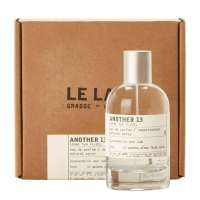
Le Labo Another 13 Eau de Parfum For Unisex 100ml
$32.36$200.00
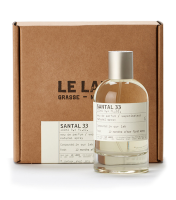
Le Labo | 💯 Authentic Unisex Santal 33/Another 13 Eau de Parfum Perfume 100ml
$388.00$420.00
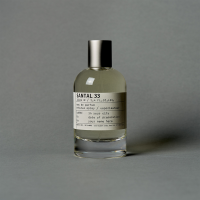
Top Quality Le Labo SANTAL 33 eau de parfum 100ml
$110.00$600.00
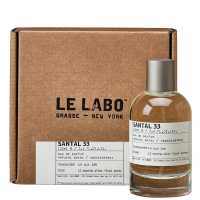
Le Labo SANTAL 33 Eau de Parfum For Unisex 100ml
$32.36$200.00
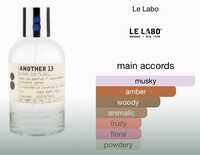
Le Labo Perfume Sample Vial Spray 💯 Parfum EDP EDT Mini Perfume | Santal 33 | Another 13 | Iris 39 | Rose 31 | Bergamot 22 | The Noir 29 | Jasmin 17
$6.03$6.30
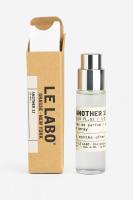
Le Labo Another 13 Eau de Parfum Unisex 10ml
$18.00$75.00
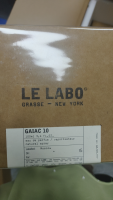
LE LABO Perfume Decant Santal Another 13/ Bergamote 22 / The Matcha 26 / Santal 33 EDP Unisexs 100ML Perfume
$40.50$256.00
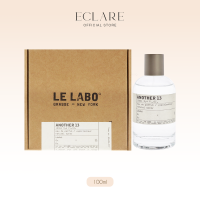
Le Labo Another 13 Eau de Parfum 100ml
$380.24$460.00
About Le Labo
Le Labo is a luxury fragrance and sensory-lifestyle house headquartered in New York City. Founded in 2006 by Fabrice Penot and Edouard “Eddie” Roschi, the brand is distinguished by its artisanal, largely genderless perfumes, laboratory-inspired retail environments, personalised labels, and numbered naming conventions 1. Its most recognisable creations include SANTAL 33 and ANOTHER 13. In October 2014, Le Labo was acquired by The Estée Lauder Companies, within whose prestige beauty portfolio it currently operates 27.
Brand overview
| Category | Information |
|---|---|
| Brand | Le Labo |
| Industry | Luxury fragrance / beauty / sensory lifestyle |
| Founded | 2006 |
| Founders | Fabrice Penot, Edouard “Eddie” Roschi |
| Birthplace | New York City, USA |
| First location | 233 Elizabeth Street, Nolita, Manhattan |
| Parent company | The Estée Lauder Companies |
| Acquired | 2014 |
| Core identity | Artisanal perfumery, personalisation, craftsmanship |
| Best known for | SANTAL 33, ANOTHER 13, ROSE 31, THÉ NOIR 29 |
| Positioning | Luxury / niche-inspired / artisanal fragrance |
| Website | lelabofragrances.com |
Le Labo traces its origins to 2006, when its founders opened their first “lab” at 233 Elizabeth Street in New York’s Nolita neighbourhood. The venture was established with the ambition of creating a “scented revolution” that challenged conventional perfumery norms.
Name and philosophy
Le Labo is French for “The Laboratory”. This nomenclature is integral to the brand’s philosophy; rather than positioning itself as a traditional perfume maison, it deliberately adopts the visual and linguistic vocabulary of a scientific laboratory. Key conceptual pillars include formulation, ingredients, technicians, freshly blended perfume, numbered creations, personalisation, and craftsmanship.
Consequently, a Le Labo boutique typically resembles an apothecary, workshop, or laboratory more closely than a conventional luxury perfume counter. Upon its launch in 2006, this concept was distinctive within the market. The founders sought to challenge the standardised, mass-produced nature of mainstream fragrance, presenting perfume instead as a crafted object and personal ritual. Contemporary accounts describe its early positioning as artisanal, unisex, and deliberately divergent from industry conventions 2.
Founding history
Le Labo was established by two French nationals:
Fabrice Penot
A fragrance industry professional and co-founder of Le Labo.
Edouard “Eddie” Roschi
Penot’s co-founder and business and creative partner.
Both founders had prior experience in the fragrance sector before deciding to build an entity fundamentally different from traditional perfume marketing 3. In 2006, they opened the first Le Labo laboratory at 233 Elizabeth Street, Nolita, New York City. This location is significant to the brand’s mythology; emerging from downtown New York rather than a Parisian salon, it established a dual identity characterised by French perfumery expertise combined with New York cultural attitude 4.
Product concept and presentation
Fresh formulation
A primary innovation of Le Labo was integrating the preparation of perfume into the product experience. Whereas traditional luxury perfume emphasises the finished bottle and packaging heritage, Le Labo highlights the process: ingredients, formulation, laboratory, technician, fresh preparation, and personalisation. This approach renders the bottle less like an industrially manufactured object and more like a bespoke creation. The brand’s refill system extends this philosophy, allowing participating laboratories to freshly blend perfume rather than simply exchanging factory-filled bottles 5.
Packaging and labelling
The Le Labo label is among the most recognisable packaging designs in modern niche fragrance. Bottles typically feature clear glass, a black cap, and a white rectangular label with black typography displaying the perfume name, a number, ingredient information, and optional personalisation. Examples include SANTAL 33, ANOTHER 13, ROSE 31, and THÉ NOIR 29. The aesthetic intentionally mimics a laboratory specimen label. Customers may personalise labels with up to 23 characters, reinforcing the notion that luxury lies in individual ownership rather than excessive decoration 6.
Numbered nomenclature
Fragrances are identified by names such as SANTAL 33, ROSE 31, THÉ NOIR 29, BERGAMOTE 22, NEROLI 36, VETIVER 46, and ANOTHER 13. These numbers generally relate to aspects of the fragrance’s formulation or creative development rather than serving as mere product generation codes. This convention reinforces the perception of the perfume as a formula or laboratory creation.
Fragrance philosophy
Genderless positioning
Le Labo does not categorise its main perfumes into traditional “men’s” and “women’s” segments. Fragrances are intended for any individual who responds to them, a stance that was significant given the gender-segregated marketing prevalent at the time of the brand’s emergence.
Ingredient focus
Compositions often centre on specific raw materials or olfactory ideas. Examples include sandalwood (SANTAL 33), rose (ROSE 31), neroli (NEROLI 36), vetiver (VETIVER 46), patchouli (PATCHOULI 24), and black tea (THÉ NOIR 29). The resulting scents are typically abstract interpretations rather than literal representations of these ingredients.
Minimalist presentation
Packaging is intentionally restrained, eschewing ornate boxes, celebrity endorsements, or prominent logos in favour of a laboratory aesthetic. This approach exemplifies “quiet luxury” before the term entered mainstream usage.
Atmospheric storytelling
Rather than listing notes, Le Labo frequently constructs narrative scenes around fragrances. For instance, SANTAL 33 is presented through imagery of open fire, smoke, the American West, and wilderness, alongside descriptions of cardamom, iris, violet, Australian sandalwood, cedarwood, and spicy, leathery, musky facets 7.
Signature fragrances
SANTAL 33
SANTAL 33 transformed Le Labo from a niche brand into a global cultural phenomenon. It remains one of the most recognisable niche fragrances of the 2010s and 2020s. According to the brand, its profile combines sandalwood, cedarwood, cardamom, iris, violet, leather, musk, and spicy facets 8. Distinctively dry, woody, smoky, and leathery, it differs markedly from simple sandalwood perfumes. Its prominence arose from its unisex appeal, minimalist bottle design, association with creative industries, and visibility in hospitality and fashion sectors.
ANOTHER 13
ANOTHER 13 originated in 2010 as a commission for AnOther Magazine, facilitated through Colette and involving editor-in-chief Jefferson Hack 9. Centred on ambroxyde (a synthetic musk) combined with jasmine and moss, it is characterised as musky, clean, skin-like, airy, and minimalist 10. Initially a collaboration exclusive, it subsequently joined the permanent Classic Collection 11.
Classic Collection
The current Classic Collection encompasses numerous fragrances beyond the signature scents 12:
| Fragrance | General character |
|---|---|
| SANTAL 33 | Woody, spicy, smoky, leathery |
| ANOTHER 13 | Musky, clean, ambroxan-like, skin scent |
| ROSE 31 | Rose, woody, spicy, earthy |
| THÉ NOIR 29 | Black tea, woody, fruity, smoky |
| BERGAMOTE 22 | Citrus, floral, musky |
| BAIE 19 | Fresh, wet, earthy, juniper-like |
| LYS 41 | White floral |
| NEROLI 36 | Neroli/citrus/floral |
| VETIVER 46 | Woody, smoky, earthy |
| JASMIN 17 | Jasmine, musk, floral |
| TONKA 25 | Warm, woody, vanilla/tonka-like |
| PATCHOULI 24 | Smoky, leathery, woody |
| AMBRETTE 9 | Soft, musky, fresh |
| THÉ MATCHA 26 | Matcha, fig, cedar, vetiver |
| VIOLETTE 30 | Violet-focused floral/woody composition |
| LAVANDE 31 | Lavender with a sophisticated woody/musky structure |
| EUCALYPTUS 20 | Aromatic/fresh |
| FLEUR D’ORANGER 27 | Orange blossom |
| YLANG 49 | Ylang-ylang/floral |
| LABDANUM 18 | Resinous/ambery |
As the collection evolves, the official catalogue should be consulted for current availability 13.
City Exclusive Collection
Le Labo created the City Exclusive Collection to associate specific fragrances with individual cities, operating on the principle of “one city, one special fragrance”. Historically, these scents were available primarily in their respective home cities. Under current policy, samples are available worldwide in August–September, while full-size Eau de Parfums become globally accessible in September; outside this window, they remain exclusive to their home cities year-round 14. This strategy utilises scarcity as a form of brand storytelling, linking fragrance to geography and travel.
Current City Exclusives
| City | Fragrance |
|---|---|
| Beijing | SHIU 25 |
| Tokyo | GAIAC 10 |
| Kyoto | OSMANTHUS 19 |
| Paris | VANILLE 44 |
| Berlin | CEDRAT 37 |
| Miami | TABAC 28 |
| Los Angeles | MUSC 25 |
| Shanghai | MYRRHE 55 |
| Mexico City | CORIANDRE 39 |
| Seoul | CITRON 28 |
| Amsterdam | MOUSSE DE CHENE 30 |
| Hong Kong | BIGARADE 18 |
| New York | TUBEREUSE 40 |
| London | POIVRE 23 |
| Dubai | CUIR 28 |
| San Francisco | LIMETTE 37 |
| Chicago | BAIE ROSE 26 |
| Dallas | ALDEHYDE 44 |
| Moscow | BENJOIN 19 |
For example, CITRON 28 (Seoul) features lemon, ginger, jasmine, cedar, and musk, while OSMANTHUS 19 (Kyoto) interprets the city through osmanthus, incense, lavender, and woody elements 1516.
Expanded product universe
While fundamentally a fragrance house, Le Labo has evolved into a broader sensory lifestyle brand 17:
- Fine fragrance: Eau de Parfum, discovery samples, discovery sets, travel tubes.
- Home: Classic candles, City Exclusive candles, home fragrances, diffusers.
- Body: Body lotion, body oil, hand cream, hand soap, shower gel, body bar, liquid balm.
- Hair: Shampoo, conditioner.
- Other: Grooming products, sets, personalised items.
Candles adhere to the same minimalist, laboratory-aesthetic philosophy as perfumes, with SANTAL 26 being a notable home creation 18.
Services and programmes
Personalisation
Customers may personalise fragrance and box labels with up to 23 characters 24. This service transforms a standardised product into a bespoke item, enhancing its suitability for gifts and personal collections.
Refill Programme
Le Labo operates a dedicated Refill Programme based on the principle of reusing the same bottle for the same scent. Eligible empty 50 ml or 100 ml bottles can be returned for refilling and relabelling, typically at approximately 20% below retail price 26. Participating physical laboratories also offer in-person refills. Freshly compounded Eau de Parfum undergoes maceration for at least 14 days to develop its olfactory profile 19.
Craftsmanship and sourcing
Le Labo emphasises the provenance of its materials and the artisans involved. Official materials highlight sources such as sandalwood from Kimberley, Australia; rose from Grasse, France; bergamot from Reggio Calabria, Italy; concrete candles from Charleston, USA; diffusers from Brooklyn, USA; neon signs from New York; and denim totes from Okayama, Japan 20. This narrative frames perfume as a product of global craft rather than anonymous industrial manufacturing.
Retail experience
Le Labo stores are designed to differ from conventional department store counters, featuring wooden furniture, laboratory bottles, industrial details, exposed materials, and visible preparation areas. Staff are designated as “Lab Technicians” rather than sales associates, reinforcing the artisanal, experiential nature of the purchase 21. The environment is intended to immerse customers in the world where the perfume is made, selling the ritual surrounding the fragrance as much as the product itself.
Corporate ownership and market position
In October 2014, The Estée Lauder Companies acquired Le Labo, classifying it within its prestige fragrance and sensory lifestyle portfolio 27. This acquisition is often cited as a successful transition from niche to global luxury. While retaining its distinctive identity, Le Labo gained access to extensive resources. Today, it operates as a globally recognised luxury fragrance house with distribution across North America, Europe, Asia, the Middle East, and other regions 25. It is best described as a luxury house with niche-perfumery DNA rather than a small independent entity.
Cultural significance and branding
Le Labo helped redefine luxury perfumery by prioritising craftsmanship, ingredients, minimalism, individuality, and place over glamour and celebrity. Its coherent brand universe—encompassing laboratory aesthetics, numbered naming, personalisation, and city-specific scents—has been highly influential. Many subsequent brands have adopted similar minimalist labels, ingredient-focused naming, and gender-neutral positioning.
The brand relies less on traditional advertising than on product recognition (particularly of SANTAL 33 and ANOTHER 13), word of mouth, retail experience, scarcity (City Exclusives), and cultural associations with fashion, design, and hospitality. This represents a modern form of luxury branding where the aesthetic appears expensive without conventional opulence.
Strengths and considerations
Le Labo possesses a strong visual identity, iconic hero products, a distinctive retail experience, and high cultural relevance. However, considerations include premium pricing relative to mainstream brands, the ubiquity of SANTAL 33 reducing its exclusivity, potential brand saturation as distribution expands, imitation of its aesthetic by competitors, and performance variations due to individual skin chemistry.
Timeline
- 2006: Fabrice Penot and Edouard Roschi establish Le Labo in New York and open the first laboratory at 233 Elizabeth Street 22.
- 2010: ANOTHER 13 is created through a collaboration involving AnOther Magazine and Colette.
- 2010s: SANTAL 33 becomes the defining global fragrance; international following develops.
- 2014: The Estée Lauder Companies acquires Le Labo 27.
- 2010s–2020s: International expansion, development of City Exclusive concept, growth into body, hair, and home categories.
- Today: Operates as a global luxury fragrance and sensory-lifestyle house maintaining laboratory, personalisation, and craftsmanship identity 23.
References
- ABOUT US | Le Labo Fragrances
- Le Labo
- Spotlight on Le Labo
- Who Founded Le Labo? | Osmetheca
- Refill Program | FAQ | Le Labo Fragrances
- Personalization | Le Labo Fragrances
- OUR CREATIONS | Le Labo Fragrances
- SANTAL 33 | Sample | Le Labo Fragrances
- OUR CREATIONS | Le Labo Fragrances
- ANOTHER 13
- EAU DE PARFUM | Le Labo Fragrances
- DISCOVERY | Classic Collection | Le Labo Fragrances
- City Exclusive Collection | FAQ | Le Labo Fragrances
- The City Exclusive Event | Le Labo Fragrances
- CITRON 28 | Seoul City Exclusive | Le Labo Fragrances
- OSMANTHUS 19 | Kyoto City Exclusive | Le Labo Fragrances
- Store Locator | Le Labo Fragrances
- The History of Le Labo | Perfume Finder
- el-20240630
- el-20230630
- el-20220630
- How Le Labo Scaled Up Without Losing Its Soul | Global Cosmetic Industry
- Cult perfume brand Le Labo and the chemistry – personal and actual – behind its success | South China Morning Post
- Personalization | Le Labo Fragrances
- Store Locator | Le Labo Fragrances
- Refill Program | FAQ | Le Labo Fragrances
- Le Labo – The Estée Lauder Companies Inc.