Shop on Lazada
Orient products
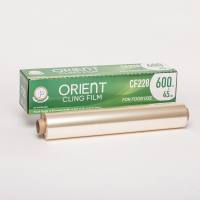
Food Grade Kitchen Cling Film Food Wrap with two-way sliding blades
$23.00$48.00
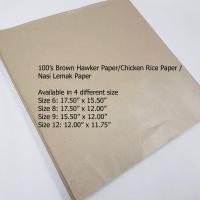
100s Hawker Brown Paper / Chicken Rice Paper / Nasi Lemak Paper
$3.70
Buy on Lazada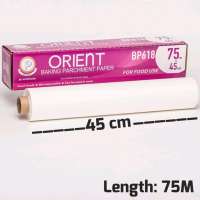
Non Stick Parchment Paper Baking Paper Liners Kitchen Paper 45cm x 75M
$31.00
Buy on Lazada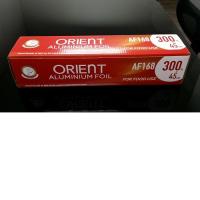
Food Grade Kitchen Aluminium Foil Roll with plastic cutter
$60.00
Buy on Lazada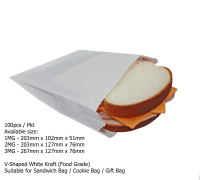
100s White Kraft Food Greaseproof Paper Bag / Sandwich Bag / Goodie Bag / Cookie Bag
$5.90
Buy on Lazada
Food Grade Kitchen Aluminium Foil Sheets 30cm x 25cm - 500sheets/Box
$35.00$50.00
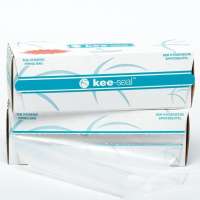
(Clear) Microwavable Kee Seal Piping Bag 100s Bag/Box
$28.00$52.40

Disposable Vinyl Hand Gloves (Black/Blue/Clear) 100S/Box
$7.50
Buy on LazadaAbout Orient
Overview
Orient is a Japanese watch brand best known for its mechanical wristwatches and its capability to develop and manufacture mechanical movements within the Epson group. Established during the post-war era of Japanese watchmaking, the brand has built a reputation for reliable mechanical movements, distinctive designs, domestic manufacturing, and accessible pricing. Today, Orient is operated by Seiko Epson Corporation rather than Seiko Watch Corporation.1
| Category | Information |
|---|---|
| Brand | Orient |
| Japanese name | オリエント |
| Origin | Japan |
| Founded | 13 July 1950 |
| Original company | Tama Keiki Co., Ltd. |
| Renamed | Orient Watch Co., Ltd., 1951 |
| Current owner/operator | Seiko Epson Corporation |
| Main products | Mechanical wristwatches |
| Related premium brand | Orient Star |
| Known for | In-house mechanical movements, value, distinctive designs |
| Global presence | More than 70 countries |
| Corporate integration | Watch operations transferred into Epson in 2017; Orient Watch Co., Ltd. was legally merged into Epson in 2026 |
A key distinction for consumers is that Orient and Seiko are not the same watch brand. Orient is a Japanese watch brand operated by Epson, whereas Seiko watches are associated with Seiko Watch Corporation.1
History
Origins: 1950
The modern history of Orient begins on 13 July 1950, when Tama Keiki Co., Ltd. commenced wristwatch production at the former Toyo Tokei factory in Hino, Tokyo. Its first mass-produced model was named New Orient.
In 1951, the company changed its name to Orient Watch Co., Ltd. During the same year, it introduced Orient Star, a name intended to symbolise a “shining star” that would continue to shine beyond time.
The launch of Orient Star was significant as it established a second identity for the company: a more sophisticated mechanical watch line that continues to exist today.
Early development
Throughout the 1950s and 1960s, Orient focused heavily on mechanical watch technology and began expanding beyond Japan. The company developed proprietary movements and experimented with automatic winding, water resistance, calendars, and other complications.
In 1955, Orient introduced its T-type centre-seconds movement. In 1958, it developed the N-type movement, followed by an N-type self-winding movement in 1961. The company also began producing water-resistant watches around this period.2
The 1960s: Divers, Calendars and High-End Watches
The 1960s marked an important period for product diversification at Orient.
One notable achievement was the Olympia Calendar Diver, introduced in 1964 and regarded by Orient as its first diver’s watch. It featured a stainless-steel case, 40 mm diameter, and a 19-jewel mechanical movement. A self-winding successor followed later.
Orient also experimented with ambitious mechanical watches during this decade. A famous example was the Orient Grand Prix 100, which used 100 jewels. During a period when Japanese manufacturers competed heavily over jewel counts, Orient used the Grand Prix series to demonstrate its technical ambitions.
Other historical models from this era included:
- Orient Star
- Orient Star Dynamic
- Royal Orient
- Grand Prix
- Olympia
- Calendar models
- Diver models
These watches helped establish characteristics that still define Orient: mechanical engineering combined with unusual and sometimes adventurous designs.
The 1970s and the Quartz Crisis
The 1970s dramatically changed the global watch industry as Japanese quartz technology became increasingly important. While many traditional mechanical watch manufacturers shifted attention towards battery-powered watches, Orient maintained a substantial commitment to mechanical watchmaking.
A pivotal development occurred in 1971 when Orient designed the Caliber 46 series. These movements were smaller and thinner than earlier designs and incorporated an efficient automatic winding mechanism.2
The 46 series became one of the most important movement families in Orient’s history. Used across a vast range of Orient and Orient Star watches, it remained in production and development for decades. According to Epson, the basic 46-series architecture became practically synonymous with Orient for approximately 40 years.2
Significance of the Caliber 46
For watch enthusiasts, the 46-series movement is central to Orient’s identity. The underlying philosophy was straightforward: create a dependable mechanical movement that could be produced efficiently and utilised in diverse watches.
This resulted in movements that were:
- Automatic
- Relatively simple
- Durable
- Easy to service
- Inexpensive compared with many Swiss mechanical movements
- Adaptable to different watch designs
The long production life of the 46 family contributed significantly to Orient’s reputation for affordable mechanical watches.
Later developments included the 46-F6 and 46-F7, while newer generations such as the 46-F8 incorporated modern manufacturing technology. Epson states that the 46-F7 improved the specified accuracy of the preceding 46-F6, while later versions increased power reserve to approximately 50 hours.2
Mechanical Watchmaking Focus
Mechanical watches are arguably the heart of the Orient brand. Unlike quartz watches, mechanical watches store energy in a mainspring and use a complex system of gears and an escapement to regulate energy release.
Orient’s historical emphasis has been unusual in the mass-market segment because the company invested heavily in developing its own mechanical movements. Epson describes Orient’s long-standing strength as its ability to combine mechanical movement development, manufacturing, and watch production.1
This vertical integration is a primary reason enthusiasts often consider Orient one of the more interesting choices at the affordable end of mechanical watchmaking.
Corporate Relationship with Epson
Orient eventually became part of the Seiko Epson corporate structure. Orient Watch developed a capital relationship with Epson during the 2000s, and its watch operations were ultimately transferred into Seiko Epson in 2017. Epson subsequently became responsible for operating the Orient and Orient Star brands.1
The corporate distinction is as follows:
- Seiko Group / Seiko Watch Corporation: Operates Seiko watches
- Seiko Epson Corporation: Operates Orient and Orient Star watches
While they share historical connections within the broader Japanese watchmaking ecosystem, Orient remains a distinct brand.
Merger of Orient Watch Co., Ltd.
In 2017, Orient Watch’s actual watch business was transferred to Seiko Epson and Epson Sales Japan, leaving the old Orient Watch company essentially dormant as a corporate entity.
On 1 February 2026, Seiko Epson formally absorbed Orient Watch Co., Ltd. through a merger. Epson explicitly stated that the manufacture and sale of Orient watches would continue unchanged after the merger.2
As of 2026, Orient Watch Co., Ltd. no longer exists as a separate operating company, but the Orient watch brand continues under Seiko Epson.
Orient Star
Orient Star is Orient’s higher-end mechanical watch brand. Introduced in 1951, it is almost as old as Orient itself. The name refers to the concept of a star that continues to shine.
Orient Star generally occupies a more premium position than standard Orient watches. Typical differences include:
- More elaborate finishing
- More sophisticated dials
- Higher-grade movements
- Power-reserve indicators on many models
- Greater attention to case and dial finishing
- More premium bracelets and crystals on selected models
Orient Star sits above the mainstream Orient range while remaining considerably more accessible than many traditional Swiss luxury brands.
Major Product Families
Orient’s modern catalogue has evolved over time, but several families have become particularly recognisable.
Bambino
The Orient Bambino is perhaps the most internationally recognisable modern Orient model. It is a classic dress watch characterised by a domed crystal, traditional dial design, relatively slim styling, automatic mechanical movement, and accessible pricing. The Bambino helped make Orient popular among buyers purchasing their first mechanical watch.
Mako
The Orient Mako family is one of the company’s best-known dive and sports watch lines. It combines an automatic movement, rotating dive-style bezel, luminous hands and markers, water-resistant case, sporty styling, and affordable pricing. The Mako gained popularity for offering the look and functionality of a mechanical diver without luxury pricing.
Kamasu
The Kamasu is another highly recognisable Orient diver-style watch. Compared with some earlier Mako models, Kamasu watches are known for their more modern case and dial design and, on many versions, sapphire crystal.
Ray
The Orient Ray is an important affordable diver-style family, particularly popular among enthusiasts seeking a straightforward automatic sports watch.
Orient Star Collections
At the upper end are the Orient Star collections, which emphasise refined mechanical construction, finishing, and complications.
Design Philosophy
Orient does not adhere to a single visual style, which is a defining characteristic of the brand. Its watches span multiple categories:
- Dress: Bambino, Classic, and traditional Orient models
- Sports: Mako, Kamasu, and other robust automatic watches
- Diving: Diver-oriented models with rotating bezels and luminous displays
- Retro: Models inspired by historical Orient designs
- Contemporary: Modern cases, colours, and integrated designs
This diversity allows Orient to appeal to both traditional mechanical watch enthusiasts and younger buyers seeking distinctive everyday watches. Orient describes its philosophy as combining tradition and technology while offering designs ranging from simple and elegant to sporty and functional.
In-House Movements
A significant aspect of Orient is its history of in-house mechanical movements. “In-house” indicates that the movement is developed or manufactured within the company’s own organisation rather than purchased as a finished unit from a specialist supplier.
Orient’s movements have historically been developed and manufactured within its own production network, now under Epson. This is notable because Orient watches can be relatively inexpensive compared with Swiss watches featuring proprietary mechanical movements. Epson describes Orient’s long history of mechanical movement development as one of the brand’s defining technical strengths.1
Manufacturing and Japan
Orient is fundamentally a Japanese watch brand, and domestic manufacturing remains central to its identity. However, not every component of every Orient watch is necessarily made in Japan.
The Orient/Epson production network includes Japanese manufacturing capabilities alongside overseas production. For example, Epson’s watch operations manufacture mechanical movements in Japan, while production of particular watches may involve other Epson manufacturing facilities depending on the model and market.
Enthusiasts typically distinguish between a “Japanese brand” and a “Japanese-made individual watch”, as these are not automatically synonymous.
Technology and Innovation
Epson has continued developing mechanical movement technology for the brand. One example is the 46-F8 movement family, which benefited from Epson’s precision manufacturing technologies, including MEMS-related manufacturing techniques.2
Orient’s historical innovations also include:
- Automatic winding systems
- Water-resistant watches
- Calendar mechanisms
- Power-reserve indicators
- Retrograde displays
- Unusual calendar systems
- Silicon components in newer high-end movements
- Increasingly sophisticated movement decoration
The brand has thus combined traditional mechanical watchmaking with modern industrial technology.
The Quartz Era
Although Orient is now strongly associated with mechanical watches, it did not completely ignore quartz technology. Like many Japanese manufacturers, Orient produced quartz watches during the quartz era. However, mechanical watches remained an important part of its identity.
This decision proved valuable when mechanical watches experienced a renewed global revival from the 1990s onward. Epson notes that the resurgence of interest in Swiss mechanical watches during the 1990s also brought renewed attention to Orient. The company subsequently introduced more sophisticated mechanical mechanisms and complications.2
Market Position
Orient generally sits in the affordable-to-mid-range mechanical watch segment rather than competing directly with luxury brands. A simplified hierarchy might appear as follows:
- Entry-level mechanical watches
- Orient
- Orient Star
- Mid-range Swiss/Japanese mechanical watches
- Luxury mechanical watches
While there is significant overlap between these categories, Orient’s major competitive advantage is the amount of mechanical watch engineering offered for the price.
Appeal to Enthusiasts
Orient has developed a strong following among watch enthusiasts for several reasons:
- Mechanical movements: Buyers can obtain an authentic automatic mechanical watch without paying luxury prices.
- Distinctive designs: Orient is often willing to experiment with colours, dials, hands, and case shapes.
- Strong value: Watches tend to offer substantial mechanical content for their retail price.
- Heritage: The brand has been making watches since 1950 and possesses a long mechanical watch history.
- In-house movement tradition: Developing and manufacturing its own mechanical movements distinguishes Orient from many inexpensive watch brands.
- Japanese identity: For buyers interested in Japanese watchmaking, Orient provides an alternative to Seiko and Citizen.
Comparison with Seiko
Confusion often arises regarding the relationship between Orient and Seiko.
| Feature | Orient | Seiko |
|---|---|---|
| Brand owner/operator | Seiko Epson | Seiko Watch Corporation |
| Origin | Japan | Japan |
| Mechanical watches | Major focus | Major focus |
| Quartz | Yes, historically/currently in some ranges | Major historical importance |
| In-house movements | Major characteristic | Major characteristic |
| Famous affordable models | Bambino, Mako, Kamasu | Seiko 5, Prospex, etc. |
| Premium sister/related brand | Orient Star | Grand Seiko |
| Corporate identity | Epson | Seiko Group/Seiko Watch |
Both brands have historical roots in the broader Japanese watchmaking industry and are associated with the Seiko name at a corporate level. However, Orient is not a Seiko Watch Corporation brand; it is specifically operated by Seiko Epson.1
Distinction from Orient Star
The relationship between the two lines is hierarchical:
- Orient: Mainstream brand focusing on accessible mechanical watches
- Orient Star: More premium mechanical brand with elaborate construction, finishing, and complications
Both are operated by Epson. The Orient Star name dates back to 1951, meaning it has been part of the company’s identity almost from the beginning rather than being a recent invention to move upmarket.
Notable Historical Models
Historically significant Orient watches include:
- New Orient (first mass-production model)
- Original Orient Star (introduced 1951)
- Orient Star Dynamic
- Royal Orient
- Grand Prix 100
- Olympia Calendar Diver
- Calendar Auto Orient Diver
- Multi-Year Calendar
- Flash
- Touchtron
- Various Mako and diver models
- Bambino
- Kamasu
- Modern Orient Star models
Orient’s historical catalogue is unusually diverse, ranging from conventional dress watches to experimental electronic and mechanical designs.
Brand Philosophy
Orient’s current philosophy can be summarised as Japanese mechanical watchmaking made approachable. The brand emphasises reliability, mechanical craftsmanship, individuality, practical everyday use, traditional watchmaking, contemporary design, and technological evolution.
Its official brand story describes Orient as a Japanese watch brand present in more than 70 countries, with an emphasis on reliability, design, and long-term mechanical watch expertise.
Current Status
As of 2026, Orient remains an active watch brand under Seiko Epson. Although the corporate structure has changed, Epson confirmed that Orient watch manufacturing and sales would continue after the February 2026 merger of Orient Watch Co., Ltd. into Epson.2
The current Orient identity is that of a Japanese mechanical watch brand operated by Seiko Epson, with more than seven decades of watchmaking history and a particular emphasis on internally developed mechanical movements.
Timeline
| Year | Event |
|---|---|
| 1901 | Shogoro Yoshida establishes a watch wholesale business in Tokyo, part of the longer corporate lineage cited by Orient’s U.S. distributor.3 |
| 1950 | Tama Keiki begins wristwatch production; New Orient becomes its first mass-produced watch. |
| 1951 | Company becomes Orient Watch Co., Ltd.; Orient Star is introduced. |
| 1955 | T-type centre-seconds movement developed. |
| 1958 | N-type movement developed. |
| 1961 | N-type automatic movement introduced. |
| 1964 | Olympia Calendar Diver introduced. |
| 1971 | Caliber 46 movement family developed. |
| 1970s–80s | Orient continues mechanical and quartz watch production during the Quartz Crisis. |
| 1990s | Renewed worldwide interest in mechanical watches helps revive interest in Orient. |
| 2000s | Orient and Epson deepen their corporate relationship. |
| 2017 | Orient’s watch business is transferred into Seiko Epson. |
| 2020 | Orient celebrates its 70th anniversary. |
| 2021 | Orient Star reaches its 70th anniversary. |
| 2025 | Epson announces the planned legal merger of Orient Watch Co., Ltd. into Seiko Epson. |
| 2026 | Orient Watch Co., Ltd. is absorbed into Seiko Epson; Orient watches continue under Epson.2 |
Key Characteristics
Orient is notable for preserving Japanese mechanical watch manufacturing at a price point far below traditional luxury watchmaking. Its identity rests on four pillars:
- Japanese heritage: More than 75 years of modern Orient watchmaking.
- Mechanical expertise: A long history of developing proprietary mechanical movements.
- Value: Mechanical watches offered at prices accessible to a wider audience.
- Individuality: A catalogue that includes everything from conservative dress watches to colourful divers and unusual historical designs.
This combination makes Orient unusual in the modern watch industry.