Shop on Lazada
ROMON products
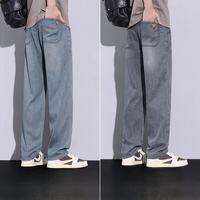
ROMON | Lormen Mens Ice Silk Jeans Summer Thin Loose Straight Leg Wide Leg Blue Lyocell Casual Elastic Long Pants Youth Fashion
$58.59$70.50
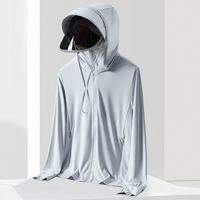
ROMON | Romon Ice Silk Mens Womens Summer Ultra-Thin Sun Protection Clothing Breathable Outdoor Sports Fishing Jacket With Detachable Cap
$36.55$67.55
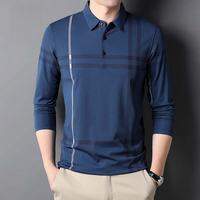
ROMON | Lormen Mens Long Sleeve Polo Shirt Spring Autumn New Stripe With Collar T-Shirt Middle Youth Business Male Upper Apparel
$26.21$49.30
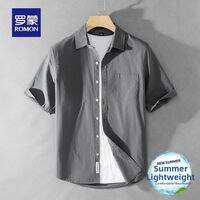
ROMON | Cotton Lightweight Loose Breathable Easy Care Mens Short Sleeve Shirt
$44.35$78.90
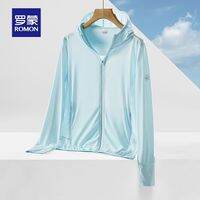
ROMON | Lomond Ice Silk UV Protection Clothing Summer Thin Casual Outdoor Fishing Sportswear Men Women Lightweight Breathable Jacket
$37.51$72.13
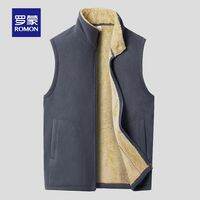
ROMON | Lormen Mens Fleece Vest Spring Autumn Winter Thickened Lamb Velvet Jacket Zipper Closure Fashion Urban Style Standard Fit
$26.61$48.80
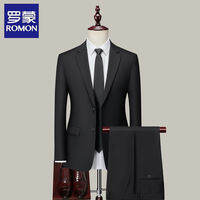
Romon Mens Business Suit Set Casual Workwear Interview Wedding Groomsmen Formal Wear Standard Fit Four Seasons Long Sleeve
$81.53$258.58
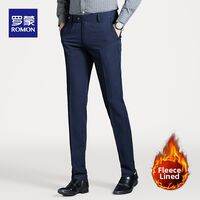
ROMON | Business Dress Pants Elastic Mens
$39.79$63.45
About ROMON
Overview
ROMON is a Chinese apparel brand and enterprise group headquartered in Ningbo, Zhejiang Province. Established in 1978, the company’s core business encompasses the design, research and development, manufacturing and retail of clothing.1 Its product portfolio includes menswear, suits, shirts, womenswear, corporate uniforms and made-to-measure tailoring services. Within the Chinese garment industry, ROMON is particularly recognised for its suiting and professional attire.2
According to official corporate disclosures, the group employs over 10,000 staff and produces more than six million garments annually. In 2024, ROMON stated that its annual sales volume for men’s suits and shirts both ranked within the top three in the Chinese market.2
Corporate profile
| Item | Details |
|---|---|
| Brand name | ROMON |
| Founded | 1978 |
| Place of origin | Ningbo, Zhejiang, China |
| Headquarters | Fenghua District, Ningbo, Zhejiang Province |
| Industry | Apparel, menswear, corporate uniforms, bespoke tailoring |
| Key products | Suits, shirts, menswear, womenswear, uniforms, custom clothing |
| Primary markets | China and overseas |
| Market positioning | Mid-to-high-end apparel |
| Core characteristics | Suiting, corporate wear, Hongbang tailoring heritage, ready-to-wear and bespoke |
| Enterprise type | Large-scale Chinese apparel enterprise group |
| Official website | romon.com |
History
Foundation and early years
ROMON was established in 1978. The brand’s formative development was closely linked to the modernisation of China’s garment industry and the traditional “Hongbang” (Red Gang) tailoring culture native to the Ningbo region.
Corporate historical records indicate that during its initial phase, ROMON engaged Yu Yuanfang, a descendant of the Hongbang tailoring tradition, alongside senior technical specialists Dong Longqing and Lu Chengfa, as technical consultants. These experts integrated traditional Hongbang craftsmanship into the company’s modern production processes.3
The Hongbang tailors are widely regarded as a foundational influence on China’s modern suit-making industry, with Ningbo serving as a primary birthplace of this sartorial tradition. Consequently, the synthesis of Hongbang techniques, modern industrial manufacturing and suit construction has become an integral element of ROMON’s historical identity.
Quality recognition in the 1980s
During the 1980s, ROMON began to establish a reputation for quality, craftsmanship and product design. Official archives record several key milestones:
- 1985: ROMON garments received a Shanghai Quality Product designation, recognised for workmanship, pattern cutting, pressing and fabric selection.
- 1988: The ROMON men’s overcoat was awarded a Ministry-Level Quality Product title.
- 1990: ROMON men’s suits were designated a Quality Product by the Ministry of Textile Industry.
- 1991: ROMON suits achieved outstanding results in a national quality inspection conducted by state technical supervision authorities.4
Throughout this period, ROMON evolved from a traditional garment manufacturer into a nationally recognised brand.
Brand strategy and expansion in the 1990s
The 1990s marked a pivotal era for ROMON’s brand development. In 1992, the company adopted a “Master Designers + Celebrity Endorsement + Famous Brand” strategy. This initiative involved recruiting European designers and Japanese apparel experts, while appointing the renowned actor Pu Cunxin as the brand ambassador. ROMON regards this period as a critical juncture in the maturation of its marketing framework.5
Subsequent achievements included:
- 1994: ROMON suits received honours at the inaugural “China’s Top Ten Famous Suit Brands” selection.
- 1997: The enterprise obtained ISO9002 international quality system certification.
- 1998: ROMON suits were named among “China’s Top Ten Famous Menswear Brands”, and the company launched an eco-friendly suit line featuring non-fused interlining.6
By the end of the decade, ROMON had firmly established its identity as a premium domestic Chinese suiting brand.
Diversification into corporate wear
In the 21st century, ROMON expanded its scope beyond traditional men’s suiting to encompass a broader range of categories, including menswear, shirts, womenswear, corporate uniforms, industrial workwear, institutional clothing and bespoke tailoring.
Official documentation confirms that ROMON has maintained a long-standing presence in the corporate and institutional uniform sector, developing specialised systems for professional attire production and customisation.7 Notably, in 1999, ROMON designed the People’s Police uniform for China’s public security authorities, receiving design awards for the project.8 This diversification signalled the brand’s transition from a specialist suit maker to a comprehensive apparel enterprise.
Manufacturing and craftsmanship
A defining cultural asset of ROMON is its connection to Hongbang tailoring. This tradition emphasises precise body measurement, structural pattern drafting, hand-stitching, canvas construction, meticulous pressing, three-dimensional cutting and attention to fine details.
ROMON has sought to integrate these artisanal methods with contemporary industrial manufacturing. The company states that it has imported production equipment from Italy, France, Germany, Japan and Switzerland to build a modernised manufacturing infrastructure.9 The resulting product philosophy combines traditional tailoring craftsmanship, modern apparel industrialisation and pattern engineering tailored to the fit preferences of Chinese consumers.
Products
ROMON categorises its offerings into four primary divisions: menswear, womenswear, corporate wear and bespoke tailoring.10
Menswear
Menswear remains ROMON’s most traditional and central business line. The collection comprises men’s suits, trousers, dress shirts, jackets, overcoats, business casual attire and coordinating accessories. Men’s suits and shirts have historically been the brand’s most representative products.
Womenswear
As part of its business expansion, ROMON entered the womenswear market. Products in this category focus on women’s suits, professional office attire, business formal wear and commuter clothing.
Corporate wear
Corporate wear distinguishes ROMON from many conventional menswear brands. Clients span corporations, government agencies, public institutions, financial organisations, educational establishments and large-scale organisations. The company provides services including government procurement, workwear customisation and school uniform manufacturing.11
Bespoke tailoring
ROMON operates a dedicated made-to-measure service under the ROMON Custom banner. The bespoke process follows a structured workflow: body measurement, pattern design, fabric selection, garment construction and fitting adjustments. This service caters to business professionals, corporate executives, institutional clients, government bodies and individuals seeking wedding or formal business attire. The company currently positions a dual “ready-to-wear + bespoke” model as a strategic priority for future growth.12
Market positioning
ROMON positions itself as a mid-to-high-end apparel brand, with traditional strengths concentrated in suits, shirts and corporate uniforms.13 It is not positioned as a streetwear label nor as a luxury house in the European sense. Rather, it functions as a domestic Chinese brand specialising in business formal wear, professional attire and suiting.
Its core demographic has traditionally comprised business professionals, corporate management, white-collar workers, civil servants and individuals requiring formal dress codes. In recent years, however, ROMON has pursued younger consumers through contemporary design aesthetics and new retail channels.14
Brand culture
ROMON articulates its brand ethos through three pillars: “Refinement, Integrity and Aspiration”.15
- Refinement relates to temperament, etiquette, taste and professional image as expressed through clothing.
- Integrity corresponds to responsibility, trustworthiness, professionalism and steadiness expected of career professionals.
- Aspiration reflects progress, growth, modernisation and youthfulness.
The company also cites innovation, quality, culture and continuous learning as guiding principles.16
Brand ambassadors
Celebrity endorsement has played a significant role in ROMON’s marketing history. In 1992, the acclaimed actor Pu Cunxin was appointed as brand ambassador, representing one of the earliest instances of celebrity image licensing in China’s apparel sector.17 The brand later collaborated with actor and singer Jimmy Lin (Lin Zhiying). Both ambassadors were selected to embody the brand’s values of refinement, integrity and aspiration.
Key milestones
| Year | Event |
|---|---|
| 1978 | ROMON founded; begins传承 of Hongbang tailoring techniques |
| 1985 | Products receive Shanghai Quality Product recognition |
| 1988 | Men’s overcoat awarded Ministry-Level Quality Product title |
| 1990 | Men’s suits awarded Ministry-Level Quality Product title |
| 1991 | Outstanding results in national suit quality inspection |
| 1992 | Launch of “Master Designers + Celebrity + Famous Brand” strategy |
| 1994 | Honoured at inaugural “China’s Top Ten Famous Suit Brands” selection |
| 1997 | Obtained ISO9002 international quality system certification |
| 1998 | Launched eco-friendly suits with non-fused interlining |
| 1999 | Designed People’s Police uniform for public security authorities; received design award |
| 2004 | Introduced fully hand-stitched classic suits and full-canvas construction |
| 2006 | Named a “Landmark Brand in China’s Suit Industry” |
| 2018 | Recognised for “20 consecutive years of leading sales” in men’s suits market share |
| 2021 | Selected as a Competitive Advantage Enterprise in China’s Textile and Apparel Brand sector |
| 2022 | Received honours as a Leading Sales Brand in China’s Consumer Goods Market |
| 2023 | Reconfirmed as a Market Leading Sales Brand |
| 2024 | Designated a National Intangible Cultural Heritage Productive Protection Demonstration Base |
| 2025–2026 | Continued advancement of bespoke tailoring, youth-oriented design and new retail initiatives |
This timeline is compiled from ROMON’s official brand chronicles and corporate publications.
Intangible cultural heritage status
ROMON places significant emphasis on its relationship with traditional Chinese garment craftsmanship. In March 2024, the Ministry of Culture and Tourism officially designated ROMON as a “National Intangible Cultural Heritage Productive Protection Demonstration Base”.18 This recognition situates the brand within the framework of preserving traditional Chinese tailoring技艺 while advancing modern industrial application, extending its significance beyond commercial branding alone.
Market standing
According to official data, ROMON’s apparel division operates with the following scale:
- Over 10,000 employees
- Annual production exceeding six million garments
- More than 1,000 retail outlets, including standalone stores, department store counters and flagship locations
- Annual apparel revenue reaching tens of billions of RMB
- Brand valuation exceeding RMB 10 billion
Additionally, ROMON reports that in 2024, its annual sales volume for both men’s suits and shirts ranked within the top three nationwide. These figures are self-reported by the company.
Group diversification
Beyond apparel, ROMON operates as a diversified enterprise group. Its stated business segments include:
- Apparel industry
- Theme park operations
- Hospitality
- Other ventures
Specific assets include the Ningbo Grand Hotel, ROMON Hilton Garden Inn and ROMON Universal Amusement Park. Thus, ROMON functions simultaneously as an apparel label and as a conglomerate anchored by its garment manufacturing heritage.
Sales and distribution
ROMON employs a multi-channel operating model comprising direct retail, joint operations, franchising, department store concessions, flagship stores, e-commerce platforms, group procurement, corporate customisation and uniform manufacturing. The company states it maintains over 1,000 physical points of sale across China and is actively developing new retail formats. This structure enables coverage of B2C retail, B2B institutional procurement and bespoke tailoring services.
Distinction from international luxury brands
Although positioned in the mid-to-high-end segment, ROMON is not an international luxury brand. Its commercial positioning differs fundamentally from European houses such as Hugo Boss, Armani or Canali. ROMON emphasises the Chinese domestic market, suit manufacturing expertise, corporate wear, large-scale production capacity and customisation services. By contrast, European luxury menswear typically foregrounds luxury positioning, exclusive fabrics, artisanal handwork, integration into the global fashion system and distribution through luxury retail channels. ROMON is therefore more accurately understood as a major Chinese business and suiting brand rather than a domestic equivalent of a Western luxury label.
Contemporary evolution
Historically, ROMON’s brand image centred on mature male professionals, business attire and formal identity. In recent years, the company has sought to broaden its appeal through younger design aesthetics, fashion-forward products, new retail formats, e-commerce expansion, a dual ready-to-wear and bespoke model, and marketing directed at younger demographics. The company has explicitly articulated a goal of evolving towards a “younger and more fashionable” identity, leveraging the “ready-to-wear + bespoke” dual-track approach to drive brand upgrading.
Current status
As of 2026, ROMON has developed from a 1978-era garment manufacturer into a comprehensive group spanning apparel production, retail, corporate wear, bespoke tailoring and diversified ancillary businesses. Apparel remains its core operation. The brand’s principal assets may be summarised as its 1978 founding heritage, Ningbo Hongbang tailoring culture, suiting expertise, Chinese manufacturing scale and experience in corporate and bespoke apparel. The company continues to cite traditional craftsmanship, modern manufacturing capability and the principles of innovation, quality, culture and learning as foundational to its ongoing development.
References
- 罗蒙简介_罗蒙官网|罗蒙西服定制|衬衫定制|职业装定制官网
- 罗蒙官网|罗蒙西服定制|衬衫定制|职业装定制官网
- 罗蒙品牌简介_罗蒙官网|罗蒙西服定制|衬衫定制|职业装定制官网
- 大事记_罗蒙官网|罗蒙西服定制|衬衫定制|职业装定制官网
- 企业服装定制 团体服装定制
- 产品展示_罗蒙官网|罗蒙西服定制|衬衫定制|职业装定制官网
- 新闻中心_罗蒙官网|罗蒙西服定制|衬衫定制|职业装定制官网
- ROMON – Ningbo Yunsi E-commerce Co., Ltd Trademark Registration
- 服装品牌罗蒙(ROMON)_罗蒙标志含义_罗蒙品牌故事_标志网
- 罗蒙简介_罗蒙官网|罗蒙西服定制|衬衫定制|职业装定制官网
- 联系我们_罗蒙官网|罗蒙西服定制|衬衫定制|职业装定制官网
- 董事长致辞_罗蒙官网|罗蒙西服定制|衬衫定制|职业装定制官网
- 罗蒙产业_罗蒙官网|罗蒙西服定制|衬衫定制|职业装定制官网
- 新闻中心_罗蒙官网|罗蒙西服定制|衬衫定制|职业装定制官网
- romongroup.com
- romongroup.com
- 罗蒙品牌介绍_罗蒙是哪个公司品牌?-百强排行-百强网
- 罗蒙(ROMON)服饰京东自营旗舰店 – 京东