Shop on Lazada
Scholl products
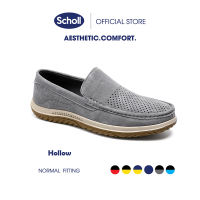
Scholl Kaiser Shoes Mens Slip-Ons & Loafers Men Suede Sneakers - S6669902
$41.80$85.00
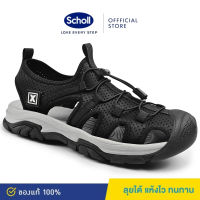
Scholl Scottish Sandals Mario X Sandals Men Health Shoes Comfort Sandal Durable Light Plus Size EU46 Mens Shoes Flip Flops & Sandals
$28.01$169.00
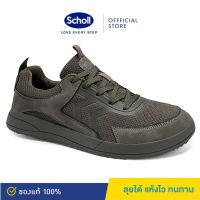
Scholl Men Shoes Wide Foot Health Shoes Mens Shoes Sneaker Men Wide Head Design Sneakers Shoes Sneaker Health Shoes Innovation Biomechanics Plus Size EU39-48
$31.83$159.00
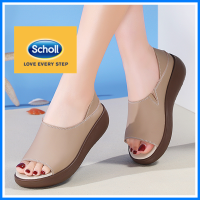
scholl women shoes Womens Boat Shoes scholl Womens leather Bohemia sandals shoes Flat sandals Loafers scholl ladies shoes Kasut wanita scholl summer casual Fashion Korean sandals for woman-2025
$22.81$40.00
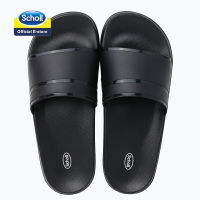
Scholl Cyclone Shoes Men Slides BLUE SCHOLL Tip Top Slippers for Men Health Shoes Comfort Sandal Durable Light Mens Slides-21033L
$9.10$69.00
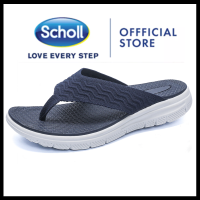
Scholl shoes men scholl mens shoes Scholl slipper men Scholl Kasut Scholl Scholl shoes sandal for men men summer beach slippers sandal men flip flop sandals outdoors slippers men
$18.72$37.45
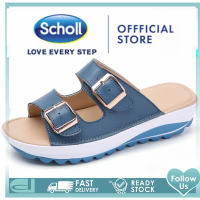
Scholl shoes Women Flat shoes Women Korean Scholl women shoes Scholl sandal Scholl loafers Flat shoes Scholl slippers Women sandals Scholl sandals
$22.19$45.00
scholl women shoes scholl Womens leather sandal shoes scholl ladies shoes Kasut wanita scholl women slippers scholl casual sandal for women Scholl Womens Bohemia sandals Womens Boat Shoes Flat Loafers Shoes-2027
$21.89$41.58
About Scholl
Scholl is an established international brand specialising in foot care, comfort footwear and wellness solutions. Its origins trace back to Chicago, United States, in the early 20th century, where it was founded by Dr William Mathias Scholl, a physician and pioneer in podiatric products. The brand built its reputation on the principle that a deeper understanding of foot anatomy leads to healthier and more comfortable movement. Today, Scholl is best known for its range of foot-care products, insoles, orthopaedic and comfort footwear, sandals and treatments for common foot ailments.1
With a history spanning more than a century, the brand has evolved from a medically oriented foot-support business into a consumer lifestyle and wellness label that integrates foot health, comfort, technology and fashion.2
Basic information
| Category | Information |
|---|---|
| Brand name | Scholl / Dr. Scholl’s |
| Industry | Footwear, foot care, wellness |
| Founded | 1906* |
| Founder | Dr William Mathias Scholl |
| Origin | Chicago, Illinois, United States |
| Original focus | Foot supports and orthopaedic foot care |
| Major categories today | Insoles, footwear, sandals, foot-care treatments, skin and callus care, and other foot-comfort products |
| Current global owner | Scholl’s Wellness Company / Yellow Wood Partners |
| Current positioning | Foot health + comfort + technology + lifestyle |
| Notable heritage product | Pescura sandal |
| Major technology/product names | GelActiv, Bioprint, Memory Cushion, Scholl Biomechanics |
| International presence | Global; brand operations cover numerous markets |
Historical records vary slightly regarding the founding date. While official histories note that William Scholl patented his first major invention in 1904, the company itself was established shortly afterwards. The brand generally traces its corporate founding to 1906 or 1907*.3
The founder: Dr William Mathias Scholl
The Scholl story begins with William Mathias Scholl, who was born on 22 June 1882 in Indiana. Raised in a large family, he developed an early interest in footwear and foot-related issues. His grandfather was a shoemaker, and William eventually left the family farm to work in a shoemaker’s shop in Chicago. There, he observed how frequently customers complained of foot pain and discomfort.4
This experience directed him towards medicine and the specialised study of the foot. Scholl’s philosophy was unconventional for his era: rather than treating foot discomfort merely as a symptom, he sought to understand the anatomy, structure and biomechanics of the foot and apply that knowledge to design practical products. This scientific approach became the foundation upon which the brand was built.
The first invention: Foot-Eazer
A pivotal moment in the brand’s history occurred in 1904. At approximately 22 years of age, William Scholl patented his first significant invention, the Foot-Eazer. This device was essentially an insert designed to support and reinforce the arch of the foot within a shoe.5
This invention established the core Scholl philosophy: using an understanding of foot anatomy to make everyday movement more comfortable. Rather than simply manufacturing conventional shoes, Scholl began developing products intended to interact directly with the structure of the foot. This approach laid the groundwork for the company’s later development of arch supports, insoles, orthopaedic footwear, foot-care products, comfort sandals and treatments for common foot problems.
Establishment of the Scholl company
Following his initial invention, William Scholl established the business that would become Scholl Manufacturing Co. Official accounts differ slightly on the precise timeline; some materials cite 1906 as the founding year, while others identify 1907 for the incorporation of Scholl Manufacturing Co. Inc.6 Regardless of the specific corporate milestone, the early 1900s marked the beginning of Scholl’s transformation from an inventor’s niche product into a major commercial foot-care enterprise.
Science and education
Scholl’s interests extended beyond product sales to the promotion of scientific study in podiatry. In 1912, William Scholl founded the Illinois College of Chiropody and Orthopaedics, which became a significant educational institution in the field.7 This commitment to education is integral to the brand’s heritage, as Scholl’s identity was constructed around the intersection of medicine, biomechanics, footwear and consumer products. This combination remains central to the brand’s presentation today.
Expansion of the product range
Over subsequent decades, Scholl expanded well beyond its original arch support offerings. The company developed a wide array of products designed around foot anatomy, including specialised shoes and various foot-support devices. Eventually, the brand became associated with the broader concept of everyday foot health.
William Scholl was a prolific inventor. According to official Dr. Scholl’s history, he helped bring more than 1,000 foot-care products to market during his lifetime.8 This extensive output helped establish Scholl not merely as a footwear company, but as a dedicated foot-care specialist.
The Pescura sandal
One of the most recognisable products in Scholl’s history is the Pescura sandal. Emerging in the 1960s, with 1961 noted as a key milestone in the brand’s history, the Pescura featured an anatomical wooden footbed contoured to the shape of the foot.9
The Pescura was significant because it demonstrated Scholl’s ability to combine foot anatomy, comfort, functional design, distinctive aesthetics and fashion. The sandal became closely associated with 1960s style and was worn by fashion icons such as Twiggy and Jean Shrimpton.10 This success helped transform Scholl from a purely functional foot-health name into a brand with fashion credibility.
From medical product to lifestyle brand
The transition from medical utility to lifestyle appeal is a defining aspect of Scholl’s evolution. Originally, the brand’s proposition was essentially remedial: understanding why feet hurt and supporting them scientifically. Over time, this evolved into a focus on healthy feet enabling comfortable movement and a better everyday life. Ultimately, the brand came to represent a synthesis of health, comfort, technology and design.
Scholl’s modern footwear business describes its objective as creating footwear that combines aesthetics, comfort and technology, while drawing on its orthopaedic roots.11 Consequently, the contemporary Scholl brand occupies a unique space between several categories:
- Medical and orthopaedic heritage
- Foot care
- Comfort footwear
- Lifestyle and fashion
Product categories
Today, Scholl’s portfolio varies somewhat by country due to differing market needs and licensing arrangements. Broadly, however, the brand encompasses several major categories.
Insoles
Insoles remain one of Scholl’s most recognisable product lines. Technologies such as GelActiv are designed to provide cushioning and support for various types of footwear and daily activities. The underlying principle is to improve comfort by altering how forces and pressure are distributed under the foot.
Comfort footwear
Scholl produces shoes and sandals engineered specifically for foot comfort. Its footwear heritage includes anatomical footbeds, supportive soles, cushioning, ergonomic construction, adjustable straps, lightweight materials and contemporary designs. The company’s modern positioning explicitly combines comfort with contemporary aesthetics.12
Pescura
The Pescura remains one of the brand’s signature footwear families. Its distinctive wooden anatomical sole provides an immediately recognisable appearance and connects contemporary Scholl products with the brand’s 1960s heritage.
Foot-care treatments
Scholl develops products intended to address everyday foot concerns. Depending on the market, these may include treatments for calluses, hard skin, corns, blisters, dry feet, foot odour, sweating, fungal infections and bunion discomfort. For example, the North American Dr. Scholl’s business lists specific products for corns, calluses, blisters, bunions and other common issues.13
Foot-care devices
The brand has also expanded into electronic and mechanical foot-care products. A notable development was the introduction of electric hard-skin and callus removers, which helped modernise the traditional foot-file category.
Socks and accessories
The modern Scholl ecosystem includes additional products such as socks, foot masks and orthopaedic insoles in select markets.14
Major technologies
Scholl’s branding has historically emphasised technology as a key differentiator. Key technologies include:
- GelActiv: A cushioning technology used in insoles to improve comfort and reduce foot fatigue.
- Bioprint: A footwear technology associated with anatomical foot support.
- Memory Cushion: A cushioning concept designed to provide a softer walking experience.
- Scholl Biomechanics: A range focused on biomechanical support and foot alignment.
These technologies reflect Scholl’s broader effort to translate its original medical and orthopaedic philosophy into consumer-friendly products. The current Scholl footwear business identifies GelActiv, Bioprint, Memory Cushion and Scholl Biomechanics among its registered trademarks and proprietary technologies.15
Scholl and the fashion world
Although rooted in foot health, Scholl has repeatedly intersected with the fashion industry. The 1960s Pescura sandal is the classic example, appealing to consumers through an unusual combination of orthopaedic-inspired construction, distinctive design and comfort. This was particularly relevant during the 1960s when footwear became increasingly linked with youth culture and experimentation.
Scholl thus developed a unique brand identity characterised by “orthopaedic” roots without necessarily resembling a medical product. This tension between function and fashion remains important to the brand’s positioning today.
Corporate ownership history
Scholl’s ownership structure has been complex due to geographic divisions at various points in its history.
Early independent company
The business was originally built by William Scholl and grew into an international foot-care company operating independently for much of the 20th century.
2010: Reckitt acquisition
In 2010, Reckitt acquired SSL International, bringing Scholl and Durex into its portfolio. Reckitt’s corporate history confirms that Scholl joined the group through this acquisition.16 Under Reckitt, Scholl became part of a larger global consumer-health portfolio.
2021: Yellow Wood Partners
Reckitt subsequently decided to divest the brand. In February 2021, Reckitt announced an agreement to sell Scholl to Yellow Wood Partners, with the transaction officially closing on 1 June 2021.17 This acquisition was particularly significant as it reunited the international Scholl business with the Dr. Scholl’s business in the Americas, which had previously been separately owned. The resulting entity was described as a global foot-care company operating in more than 50 countries, with annual retail sales exceeding $700 million at the time of acquisition.18
Scholl vs Dr. Scholl’s
Consumers may encounter both Scholl and Dr. Scholl’s branding. Both names originate from the same historical heritage but have been used differently across regions:
- Scholl is widely used in Europe and many international markets.
- Dr. Scholl’s is the primary name in the United States and Canada.
- Both trace their lineage to Dr William Mathias Scholl.
Decades of geographic separation contributed to differences in branding, product portfolios and marketing strategies. The 2021 acquisition by Yellow Wood Partners reunited the international Scholl business with the Dr. Scholl’s business in the Americas under a common ownership structure.19
Brand philosophy
Scholl’s philosophy is organised around three core pillars:
- Care: Helping people maintain and care for their feet.
- Comfort: Reducing everyday discomfort to make standing and walking easier.
- Aid: Providing targeted solutions for specific foot problems.
Brand materials explicitly articulate its purpose through these concepts of Care, Comfort and Aid, offering a proposition that extends beyond simply selling footwear.20
Brand positioning
Scholl occupies a distinct position in the market, being neither purely medical nor purely fashion. Its competitive strengths can be summarised as follows:
| Dimension | Scholl’s position |
|---|---|
| Medical heritage | ★★★★★ |
| Foot-care expertise | ★★★★★ |
| Comfort | ★★★★★ |
| Footwear | ★★★★☆ |
| Fashion | ★★★☆☆–★★★★☆ |
| Technology | ★★★★☆ |
| Lifestyle | ★★★★☆ |
| Heritage | ★★★★★ |
Its strongest competitive asset is arguably its heritage and credibility in foot health. While conventional footwear companies can offer comfortable products, Scholl leverages a century-long narrative explaining why foot support and comfort matter.
Target consumers
While Scholl historically appealed to those seeking practical solutions for foot discomfort, its modern audience is considerably broader.
Traditional consumers
- Older demographics
- Individuals with tired or uncomfortable feet
- People who stand for prolonged periods
- Consumers seeking orthopaedic-style support
- Those looking for specific foot-care treatments
Modern consumers
- Comfort-oriented shoppers
- Professionals spending long hours on their feet
- Travellers
- Wellness-focused individuals
- Consumers seeking supportive everyday footwear
- Fashion consumers interested in retro or heritage styles
This broadening of the consumer base is central to Scholl’s contemporary positioning.
Key competitive advantage
Scholl’s primary advantage lies in its combination of heritage, specialisation and consumer recognition. Its brand story is difficult for new entrants to replicate, encompassing the 1904 invention, medical and biomechanical expertise, over 100 years of foot-care experience, the iconic Pescura sandal, modern comfort technologies and global brand status. The company emphasises its experience of more than 100 years and its foundational understanding of foot structure and biomechanics.21
Brand identity
Scholl’s identity is defined by five key attributes:
- Health: The original foundation of the company.
- Comfort: One of the strongest associations with the brand name.
- Science: Reflecting the founder’s anatomical and medical approach to foot problems.
- Technology: Translating heritage into modern cushioning, support and biomechanical innovations.
- Style: Demonstrated through products like the Pescura, proving that supportive footwear can also be fashionable.
Important milestones
| Year | Milestone |
|---|---|
| 1882 | William Mathias Scholl is born |
| 1899 | Scholl moves to Chicago and becomes interested in footwear and foot problems |
| 1904 | Patents the Foot-Eazer arch-support invention |
| 1906–07 | Establishes his manufacturing business |
| 1912 | Illinois College of Chiropody and Orthopaedics founded |
| 1961 | Pescura sandal introduced |
| 1960s | Brand becomes strongly associated with fashion and comfort |
| 2003–04 | Centenary period; brand identity and product portfolio renewed |
| 2010 | Becomes part of Reckitt through acquisition of SSL International |
| 2021 | Reckitt sells Scholl to Yellow Wood Partners |
| 2021 onward | International Scholl and American Dr. Scholl’s businesses united under Yellow Wood |
| Today | Operates as a global foot-care and comfort brand |
Sources for these milestones include Scholl’s official histories, Dr. Scholl’s corporate records and Reckitt’s transaction announcements.22
Scholl today
As of 2026, Scholl remains centred on foot health, comfort and footwear, though its identity is broader than its original orthopaedic-support business. The modern footwear division combines aesthetic design, comfort and technology while continuing to draw on the brand’s orthopaedic roots.23 Meanwhile, the broader Dr. Scholl’s business positions itself around helping people move better, with products ranging from insoles to therapeutic treatments.
The result is a brand that effectively spans three connected markets:
- Foot health: Insoles, treatments and support devices.
- Foot comfort: Cushioning, ergonomic footwear and sandals.
- Footwear lifestyle: Fashionable, heritage-inspired and contemporary shoes.
Distinctive characteristics
Scholl is distinguished by having turned foot science into an everyday consumer brand. Unlike many footwear brands that begin with fashion and add comfort later, Scholl did the opposite. It began with foot anatomy and health, developed practical solutions for foot problems, and gradually transformed those solutions into lifestyle products. Consequently, its medical heritage is not merely marketing decoration but the actual foundation of the company.
References
- La nostra storia – Scholl Italia
- About Scholl | Scholl Sokken
- Scholl: Company and Origins | Scholl Shop Online
- About Us – Scholl Australia
- About Dr. William Scholl – Dr. Scholl’s
- Dr Scholl Foundation » Our History
- Pourquoi choisir Scholl ? – Soin des Pieds – Scholl France
- Our Purpose – DrScholls
- Reckitt announces closing of sale of Scholl | Reckitt.com
- Yellow Wood Partners Announces Completion of Scholl Acquisition – DrScholls
- Scholl’s Wellness Company Enters High-Growth Athletic Performance Category Through Acquisition of Premium Carbon Fiber Insole Company VKTRY
- Scholl: Company and Origins | Scholl Shop Online
- Terms and Conditions – DrScholls
- YellowWood – Taking the Road Less Traveled in Private Equity. | June 02 2021
- Yellow Wood Partners to Acquire Scholl From Reckitt Benckiser – DrScholls
- Investegate | Company Announcement
- Bayer completes sale of Dr. Scholl’s™ brand to Yellow Wood Partners
- Scholl: Company and Origins | Scholl Shop Online
- Perché Scholl? – Scholl Italia
- SCHOLL Concepts – Autopflegeprodukte seit 1962. Made in Germany ✓
- About Us | Dr. Scholl’s Shoes
- Scholl Australia – Shop Ethical!
- 關於我們 – 爽健 台灣