Shop on Lazada
Suntory products
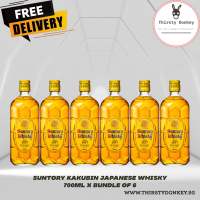
Suntory Kakubin Japanese Whisky 700ml (Bundle of 6)
$345.50$345.80
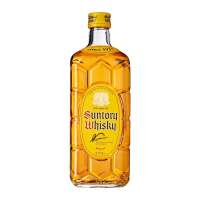
Suntory Kakubin Japanese Whisky - Japan Special
$54.90$61.50
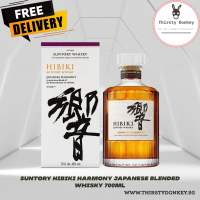
Suntory Hibiki Harmony Japanese Blended Whisky 700ml
$138.00$144.90
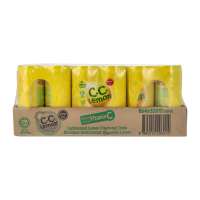
Suntory Vitamin C.C. Lemon Cans 320ML - Case
$23.69$29.57
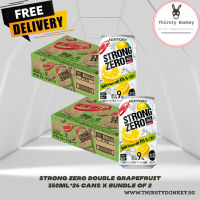
Suntory Strong Zero Double Grapefruit - 350ml x 24 cans (Bundle of 2) *BCRS* (BBD: 03/2027)
$280.80
Buy on Lazada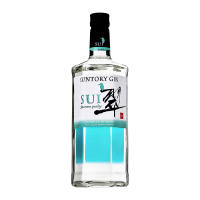
Suntory Sui Gin 700ML
$48.00$62.00
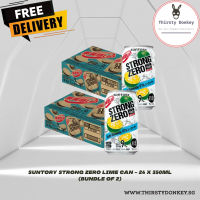
Suntory Strong Zero Lime Can - 24 x 350ml (Bundle of 2) *BCRS* (BBD: 04/2027)
$280.80
Buy on Lazada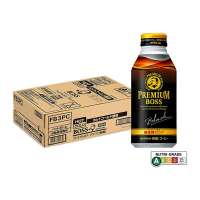
Suntory Premium Boss Black Bottle 390ML
$60.00
Buy on LazadaAbout Suntory
Suntory (Japanese: サントリー, Santorī) is a Japanese multinational beverage and consumer-products group headquartered in Osaka, Japan. Established in 1899 by Shinjiro Torii, the company originally produced and sold wine before expanding into whisky, beer, soft drinks, spirits, ready-to-drink (RTD) beverages, and health and wellness products. Suntory is internationally recognised as one of the world’s major beverage companies and is particularly noted for its Japanese whisky portfolio, which includes Yamazaki, Hakushu and Hibiki.1
As of 31 December 2025, Suntory Group reported 259 group companies, 41,628 employees, consolidated revenue of ¥3.0701 trillion and consolidated operating income of ¥221.2 billion. Its businesses operate in more than 80 countries.2
Company profile
| Item | Information |
|---|---|
| Name | Suntory Holdings Limited / Suntory Group |
| Japanese name | サントリー |
| Industry | Beverages, alcoholic drinks, food & wellness |
| Founded | 1 February 1899 |
| Founder | Shinjiro Torii |
| Origin | Osaka, Japan |
| Head office | Kita-ku, Osaka, Japan |
| World headquarters | Minato-ku, Tokyo, Japan |
| Major businesses | Spirits, beer, wine, soft drinks, RTD, non-alcoholic drinks, wellness |
| Employees | 41,628 |
| Group companies | 259 |
| 2025 revenue | ¥3.0701 trillion |
| Geographic presence | More than 80 countries |
The current holding-company structure dates from 2009, when Suntory Holdings was established to oversee the group’s diversified operations.3
Origins and early history
Suntory’s history began with founder Shinjiro Torii (1879–1962). In 1899, at the age of 20, Torii established Torii Shoten in Osaka to produce and sell wine. His objective was to introduce Western-style alcoholic beverages to Japan while adapting them to suit local tastes.4 This approach established a foundational principle for the company: reinterpreting overseas products through Japanese craftsmanship and sensibilities.
A significant early commercial success occurred in 1907 with the launch of Akadama Port Wine, a sweetened wine that provided the financial foundation for Torii’s subsequent ventures. The product’s sophisticated advertising, packaging and branding were considered innovative for the era and helped finance the company’s transformation into a spirits producer.5
Whisky production
Yamazaki Distillery
In 1923, Torii commenced construction of the Yamazaki Distillery near Kyoto, despite internal opposition regarding the viability of Japanese whisky. Yamazaki became Japan’s first malt whisky distillery, with distillation beginning in 1924.6 The location was selected specifically for its water quality and natural environment, as Torii believed Japan’s climate could produce a whisky with distinct character.7 This initiative marked the beginning of the modern Japanese whisky industry.
Early whisky brands
Suntory released Suntory Whisky Shirofuda (“White Label”) in 1929, positioning it as Japan’s first authentic whisky. Although initially unfamiliar to domestic consumers, the company continued to refine its production methods.8 In 1937, Suntory introduced Kakubin, whose distinctive square bottle design became iconic within Japanese drinking culture. Kakubin remains a core component of the company’s whisky portfolio, particularly associated with the highball serve.9
International recognition
Suntory played a central role in establishing Japanese whisky as a globally recognised category. While relatively obscure outside Japan for much of the 20th century, international acclaim grew significantly from the 2000s onwards. In 2003, Yamazaki 12 Year Old won Gold at the International Spirits Challenge, an achievement Suntory cites as a pivotal moment for global recognition.11 Subsequent awards and rising demand elevated brands such as Yamazaki, Hakushu and Hibiki to luxury status worldwide.
Diversification beyond whisky
Although whisky remains symbolically central to Suntory’s identity, the company has diversified extensively across multiple beverage and wellness categories.10
Beer
Suntory entered the beer market decades after its founding and eventually became one of Japan’s major brewers. Its signature brand, The Premium Malt’s, is positioned as a premium Japanese lager. The beer portfolio also includes Suntory Nama Beer and Kin-Mugi.13
Soft drinks and non-alcoholic beverages
The non-alcoholic business is a substantial component of Suntory’s operations. Major brands include BOSS Coffee, Suntory Tennensui bottled water, TEA+, Oasis, Lucozade, Orangina and V energy drinks. BOSS is particularly notable as an iconic canned-coffee brand in Japan. Internationally, Suntory strengthened its European soft-drinks business through the acquisition of the Orangina Schweppes Group in 2009.12
Ready-to-drink beverages
Suntory is a significant player in the ready-to-drink (RTD) market, which comprises pre-mixed alcoholic beverages sold in cans or bottles. A key brand in this category is -196 (pronounced “minus one-nine-six”), which represents the company’s approach to canned cocktails and fruit-based alcoholic drinks. Suntory has expanded this concept internationally while adapting products to local preferences.14
Wine
Suntory maintains a presence in both Japanese and international wine markets. Notably, the company has managed Château Lagrange, a Bordeaux wine estate in France, since 1983, establishing a long-standing foothold in the French wine industry.15
Health and wellness
Beginning in the 1980s, Suntory developed a health and wellness business that now forms a significant part of its portfolio. Products include Sesamin EX, VARON, VISTRA and various functional foods and supplements.16
Global expansion and acquisitions
Suntory’s transformation into a global spirits group accelerated markedly in the 21st century through strategic acquisitions. In 2014, the company acquired Beam Inc., creating one of the world’s largest premium spirits businesses.12 This acquisition brought major American and international brands into the Suntory family, including Jim Beam, Maker’s Mark, Knob Creek, Basil Hayden, Hornitos and Sauza. The spirits business is now represented globally through Suntory Global Spirits.
Beyond acquisitions, Suntory pursues organic growth by launching Japanese products such as whisky, BOSS coffee and -196 in overseas markets. Today, the group operates across the Americas, Europe, Africa, Asia and Oceania.16
Corporate philosophy and culture
Yatte Minahare
Suntory’s corporate culture is closely associated with the phrase Yatte Minahare (「やってみなはれ」), which translates loosely as “Go ahead and try it” or “Give it a try.” This philosophy encourages entrepreneurial risk-taking, experimentation and the pursuit of ambitious ideas. It reflects the company’s historical willingness to undertake challenging projects, such as establishing Japan’s whisky industry in 1923 despite limited precedent.17
Monozukuri and craftsmanship
The concept of monozukuri, referring to Japanese craftsmanship and the pursuit of excellence, underpins Suntory’s approach to product development. In whisky production, this encompasses meticulous attention to raw materials, water, fermentation, distillation, barrel maturation and blending. Rather than replicating Scotch whisky, Suntory sought to create a style rooted in Japan’s climate, water and aesthetic sensibilities, a philosophy that became foundational to Japanese whisky’s international reputation.18
Water stewardship
Water is central to Suntory’s corporate philosophy and operational practices. The company describes its mission as creating rich experiences “in harmony with nature,” emphasising the relationship between beverages and natural resources.19 Initiatives include the Natural Water Sanctuary programme, which protects water sources and surrounding ecosystems, and Mizuiku, an environmental education programme focused on water and nature.20
Arts and cultural patronage
Suntory has historically invested in arts and culture beyond commercial beverage production. Notable institutions include the Suntory Museum of Art, established in 1961, and Suntory Hall, which opened in 1986. The company also supports the Suntory Foundation for Arts, music programmes, scientific research and educational initiatives. This cultural engagement distinguishes Suntory from many Western beverage conglomerates.21
Corporate purpose
Suntory’s current corporate purpose is expressed as: “To inspire the brilliance of life, by creating rich experiences for people, in harmony with nature.”22 This statement connects the company’s beverage expertise with broader commitments to taste, craftsmanship, social experiences, culture and environmental stewardship, reflecting its integrated approach to business across spirits, soft drinks, wellness and cultural activities.
Suntory today
As of 2025, Suntory Group comprises 259 companies with 41,628 employees, generating consolidated revenue of ¥3.0701 trillion and operating income of ¥221.2 billion across more than 80 countries.23 Its portfolio spans luxury Japanese whisky, mass-market bottled water, coffee, beer, soft drinks, RTDs and health products. This combination of premium spirits, everyday beverages, wellness offerings, wine and cultural activities under a single corporate group makes Suntory distinctive among major global beverage companies.
Major timeline
| Year | Event |
|---|---|
| 1899 | Shinjiro Torii establishes Torii Shoten in Osaka |
| 1907 | Akadama Port Wine launched |
| 1921 | Kotobukiya Limited established |
| 1923 | Construction of Yamazaki Distillery begins |
| 1924 | Yamazaki Distillery begins distillation |
| 1929 | Suntory Whisky Shirofuda launched |
| 1937 | Kakubin whisky introduced |
| 1963 | Company renamed Suntory Limited |
| 1969 | Suntory begins beer production |
| 1970s | Major expansion into soft drinks and food |
| 1983 | Suntory begins managing Château Lagrange |
| 1986 | Suntory Hall opens |
| 1990s | Health and wellness business expands |
| 2004 | Orangina Schweppes acquired |
| 2009 | Suntory Holdings established; Suntory Beverage & Food separated as a core company |
| 2013 | Suntory Beverage & Food listed on Tokyo Stock Exchange |
| 2014 | Beam Inc. acquired |
| 2023 | 100th anniversary of Suntory’s whisky-making |
| 2025 | Group reaches 259 companies and more than 41,000 employees |
Historical information is based primarily on Suntory’s official corporate history.24
Significance
Suntory holds significance across multiple domains. In Japanese business history, it exemplifies the successful adaptation of imported Western consumer products into distinctly Japanese offerings. In whisky history, it is a foundational company behind the Japanese whisky category. In the global beverage sector, it operates as a major multinational spanning alcoholic and non-alcoholic categories. In branding, Suntory demonstrates how a company can build global identity around craftsmanship, heritage and premium quality. Culturally, the Suntory name has achieved international recognition far beyond Japan, particularly through Japanese whisky and appearances in Western media.25
References
- About Us | Suntory
- Heritage | About Us | Suntory
- About Us | Suntory
- サントリーの歴史|企業情報|サントリーホールディングス
- HISTORY|サントリーウイスキー100周年
- 1899年〜|タイムライン|サントリーの歴史|企業情報|サントリーホールディングス
- About Us | The House of Suntory
- History | Introduction to The Company | Investor | SUNTORY BEVERAGE & FOOD
- Suntory Celebrates its 100th Anniversary of Whisky Making| News Release | Suntory
- Brands | Suntory
- Suntory Group
- COMPANY OVERVIEW
- Suntory Beverage & Food Limited – Annual Report 2025 | FinancialFilings
- Financials | Suntory
- Financials | Suntory
- About Suntory – Suntory Singapore Varon
- About Us | Suntory
- About Us | Suntory
- About Us | Suntory
- Alcohol | Business Portfolio | About Us | Suntory
- Suntory | Corporate and Group Information | Graduate Employment
- 企業概要|企業情報|サントリーホールディングス
- 企業概要|企業情報|サントリービバレッジ&フード
- 企業・グループ情報|採用情報|サントリーホールディングス株式会社
- History | Introduction to The Company | Investor | SUNTORY BEVERAGE & FOOD