Shop on Lazada
Zwilling J.A. Henckels products
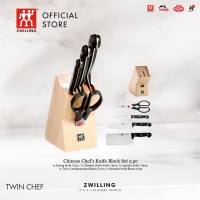
ZWILLING Twin Chef Chinese Chef’s Knife Block Set 5 pc
$158.00$398.00
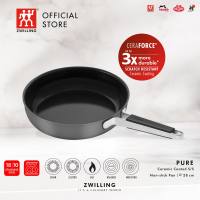
ZWILLING Pure Ceraforce Ceramic Coated 18/10 Stainless Steel Non-Stick Frying Pan 20/24/28cm Grey
$108.00$148.00
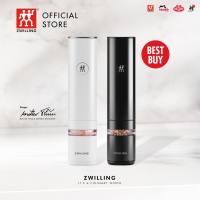
ZWILLING Enfinigy Electric Salt & Pepper Mill Set 2pc
$148.00$198.00
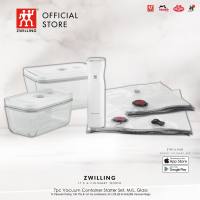
ZWILLING Fresh & Save Vacuum Starter Set with Pump & Bags Set of 7 Grey Plastic
$178.00$258.00
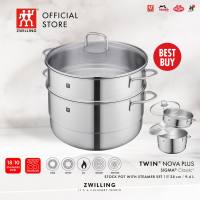
ZWILLING Twin Nova Plus Stockpot with Steamer Set with Glass Lid 18/10 Stainless Steel Sigma Classic+ 28cm/9.4L
$168.00$288.00
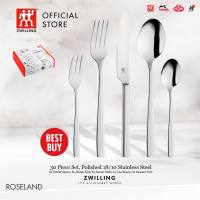
ZWILLING Roseland 18/10 Stainless Steel Cutlery Set 30 pc Polished Silver
$148.00$398.00
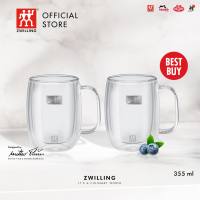
ZWILLING Sorrento Plus Set of 2 Coffee Cup with Handle 355ml / 12oz Double Wall Borosilicate Glass
$39.80$59.80
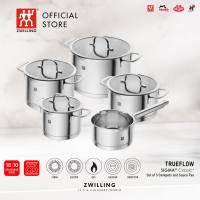
ZWILLING Trueflow Cookware Set with Glass Lid 5 pc 18/10 Stainless Steel Sigma Classic+
$343.68$738.00
About Zwilling J.A. Henckels
Zwilling J.A. Henckels is a German consumer goods company and one of the world’s oldest continuously operating manufacturers of cutlery and kitchenware. Its origins trace back to 13 June 1731, when knifemaker Peter Henckels registered the ZWILLING trademark with the Cutlers’ Guild in Solingen, Germany. While historically renowned for knives and cutlery, the company’s modern business encompasses cookware, kitchen tools, scissors, beauty instruments, and a diverse portfolio of specialist culinary brands 13.
The nomenclature can be a source of confusion; Zwilling J.A. Henckels refers to the corporate group, whereas ZWILLING and HENCKELS are now positioned as two distinct consumer brands. ZWILLING serves as the premium, heritage-oriented label, while HENCKELS focuses on accessible everyday kitchen products 1.
Quick facts
| Category | Information |
|---|---|
| Official name | Zwilling J.A. Henckels AG |
| Common brand name | ZWILLING |
| Founded | 13 June 1731 |
| Founder | Peter Henckels |
| Origin | Solingen, Germany |
| Industry | Kitchenware, cutlery, cookware, household and beauty products |
| Best known for | Kitchen knives and professional cutlery |
| Parent company | Werhahn Group / Wilhelm Werhahn KG |
| Ownership | Fully owned by Werhahn since 1970–71 |
| International presence | More than 100 countries |
| Major brands | ZWILLING, HENCKELS, STAUB, MIYABI, BALLARINI, DEMEYERE and others |
| Core reputation | German engineering, craftsmanship, durability and premium kitchen products |
The corporate headquarters of Zwilling J.A. Henckels remain in Solingen, a city traditionally recognised as Germany’s “City of Blades”. The company states that its products and brands are distributed in more than 100 countries 1.
The meaning of “ZWILLING”
The word Zwilling translates to “twin” in German. The company’s logo depicts two human figures, leading to the brand’s common association with the “Twin” symbol.
Peter Henckels registered the ZWILLING mark on 13 June 1731, under the zodiac sign Gemini, which is represented by twins. This coincidence became integral to the company’s identity, and ZWILLING describes the registration as a foundational element of its nearly 300-year history 213. It is important to note that 1731 marks the founding date of the ZWILLING trademark and business tradition, rather than the incorporation date of the modern corporation.
Peter Henckels and company origins
The company’s history began in Solingen, a German city with a deeply established tradition of sword, blade, and cutlery manufacturing. In 1731, local knifemaker Peter Henckels registered the ZWILLING symbol with the Solingen Cutlers’ Guild. At that time, this served essentially as a craftsman’s mark identifying the origin and quality of his wares 3.
The enterprise subsequently became associated with the Henckels family, particularly Peter’s son, Johann Abraham Henckels. Born in 1771, Johann Abraham became a pivotal figure in the company’s development. The corporate name J.A. Henckels is derived from him; under his leadership, the business evolved from a local knifemaking operation into an organised commercial enterprise 12.
Expansion during the 19th century
The 19th century marked the transformation of ZWILLING from a Solingen-based cutlery maker into an international brand.
1818 — Berlin
ZWILLING opened its first sales outlet outside Solingen in Berlin in 1818 3.
1851 — London
The company exhibited at the Great Exhibition in London, receiving an award for its products 4.
1855 — Paris
ZWILLING received another major accolade at the Paris World’s Fair 12.
1883 — New York
Establishing a presence in New York represented a significant step in the company’s international expansion 12.
1893 — Chicago
At the World’s Columbian Exposition in Chicago, ZWILLING won the only medal awarded in its category, further solidifying its international reputation 12.
By the close of the 19th century, the company had ceased to be merely a German cutlery maker and had become an internationally recognised manufacturer.
From knifemaker to industrial company
Throughout the 20th century, ZWILLING increasingly combined traditional Solingen craftsmanship with industrial manufacturing processes. The product range expanded beyond conventional kitchen knives to include:
- Kitchen scissors
- Household scissors
- Professional scissors
- Cutlery
- Kitchen tools
- Manicure instruments
- Beauty tools
- Cookware
A notable technical development was the company’s 1939 patent for its ice-hardening process, which eventually became associated with the FRIODUR® treatment used on many ZWILLING blades. According to the company, this process enhances edge retention, flexibility, and corrosion resistance 12.
Another significant milestone was the introduction of the FOUR STAR knife series in 1976. This range became one of ZWILLING’s best-selling knife lines and remains a key part of the brand’s product history 12.
The Werhahn era
A major turning point occurred in 1970, when Wilh. Werhahn KG became the sole shareholder of Zwilling J.A. Henckels. Werhahn subsequently integrated ZWILLING into its diversified corporate structure 12.
Consequently, ZWILLING is no longer an independent knife company but part of the broader Werhahn Group, a German family-owned conglomerate with interests across multiple industries. Within Werhahn, ZWILLING belongs to the Consumer Goods division alongside its kitchenware and beauty businesses. Werhahn describes ZWILLING Kitchenware as a global supplier of premium kitchen products and brands 12.
Transformation into a global kitchen group
A defining aspect of the modern ZWILLING is its strategy of acquiring and developing complementary brands. Rather than competing exclusively as a German knife manufacturer, ZWILLING has gradually assembled a portfolio of international culinary brands.
MIYABI
ZWILLING expanded into Japanese-style premium knives through MIYABI, a brand associated with traditional Japanese knifemaking craftsmanship and production in Seki, Japan. This concept combines Japanese aesthetics and blade traditions with ZWILLING’s technological and manufacturing expertise 14.
STAUB
In 2008, ZWILLING acquired the French cookware manufacturer STAUB. Renowned for enamelled cast-iron cookware, including Dutch ovens and cocottes, STAUB provides the ZWILLING Group with a strong position in premium French cookware 14.
DEMEYERE
Also in 2008, ZWILLING acquired Belgian cookware manufacturer DEMEYERE. Known for high-performance stainless-steel cookware and induction technology, DEMEYERE holds a strong reputation among professional chefs 14.
BALLARINI
In 2015, ZWILLING acquired the Italian cookware brand BALLARINI, noted for its non-stick cookware and extensive Italian manufacturing heritage 14.
These acquisitions have transformed ZWILLING from primarily a knife company into a comprehensive premium culinary group.
ZWILLING vs. HENCKELS
The distinction between the corporate name and consumer brands is frequently misunderstood. While “Zwilling”, “J.A. Henckels”, and “Henckels” are often used interchangeably, the company’s modern brand architecture is distinct. Today, ZWILLING describes its structure as “One Legacy, Two Distinct Websites” 1.
ZWILLING
ZWILLING represents the premium segment of the business. Its positioning emphasises German heritage, premium craftsmanship, professional-quality knives, high-quality cookware, innovation, design, and long-term durability. Products include knives, cookware, kitchen tools, glassware, and kitchen electrics, with particular emphasis placed on German-made knives and Solingen craftsmanship 1.
HENCKELS
HENCKELS is positioned as the more accessible everyday kitchen brand. It offers knives, cutlery, cookware, kitchen tools, BBQ products, glassware, and everyday kitchen essentials. ZWILLING describes HENCKELS as being established in 1895, focusing on quality, affordability, durability, and everyday performance 5.
In simplified terms, ZWILLING denotes premium heritage and higher-end products, while HENCKELS targets the accessible everyday kitchen market. Both, however, belong to the same corporate family.
Meaning of “J.A. Henckels”
J.A. Henckels refers to the historical company name associated with Johann Abraham Henckels. The complete corporate name, Zwilling J.A. Henckels AG, therefore combines the historical ZWILLING trademark with the J.A. Henckels family name.
This explains the presence of various names on products, including ZWILLING, Zwilling J.A. Henckels, J.A. Henckels, HENCKELS, and Henckels International. While historically related, these do not necessarily represent identical product tiers or manufacturing origins.
Manufacturing and “Made in Germany”
A primary competitive advantage for ZWILLING is its association with Solingen, which has been a major European centre for blade manufacturing for centuries. ZWILLING continues to manufacture knives in Solingen and heavily emphasises the heritage of German-made blades 10.
However, not every ZWILLING product is made in Germany. The company has developed a global manufacturing network, with production operations in locations including Germany, Japan, China, India, France, Belgium, and Italy, depending on the specific product and brand 11. Consequently, the “ZWILLING” name does not automatically signify “Made in Germany”; the specific series and country-of-origin marking must be verified.
ZWILLING knives
Knives remain the core of the brand, with a portfolio ranging from accessible everyday options to high-end professional and Japanese-style blades.
FRIODUR®
The FRIODUR® ice-hardening process is one of ZWILLING’s most recognised blade technologies. The company states this treatment contributes to edge retention, corrosion resistance, flexibility, and durability 12.
Forged German knives
Many premium ZWILLING knives feature forged construction and German stainless steel. These typically emphasise robustness, balance, thick spines, strong bolsters, and traditional European chef-knife geometry.
Japanese knives
Through MIYABI and other collections, the group also offers knives featuring Japanese blade geometry, thinner edges, and Japanese craftsmanship. This allows the ZWILLING Group to cover both major traditions of premium kitchen knives: German/European and Japanese knifemaking.
Major ZWILLING knife families
While exact line-ups vary by market, historically significant and well-known families include:
- ZWILLING Pro
- ZWILLING Four Star
- ZWILLING Professional S
- ZWILLING Gourmet
- ZWILLING Twin
- ZWILLING Twin 1731
- ZWILLING Pro Le Blanc / Le Blanc-related collections
- MIYABI
- Various premium collaboration and specialty collections
The Four Star series is particularly significant, as its design dates to 1976 and it remains an iconic ZWILLING product family 12.
Beyond knives
The modern ZWILLING portfolio extends significantly beyond knives.
Cookware
- Stainless-steel pots
- Frying pans
- Sauce pans
- Non-stick cookware
- Cast iron
- Ceramic cookware
- Dutch ovens
Kitchen tools
- Kitchen scissors
- Peelers
- Tongs
- Spatulas
- Can openers
- Cutting boards
- Knife blocks
- Sharpeners
Tableware
- Flatware
- Glassware
- Serving products
Kitchen electrics
The portfolio also includes selected kitchen appliances and electrical products. This broader transformation is reflected in Werhahn’s description of ZWILLING Kitchenware as a supplier of a wide portfolio of premium culinary products and brands 10.
The ZWILLING Group’s major culinary brands
The modern group operates as a house of culinary brands.
| Brand | Origin / identity | Main specialization |
|---|---|---|
| ZWILLING | Germany | Premium knives & kitchenware |
| HENCKELS | Germany | Everyday knives & kitchenware |
| MIYABI | Japan/Germany | Premium Japanese knives |
| STAUB | France | Enamelled cast iron & ceramic cookware |
| DEMEYERE | Belgium | Premium stainless-steel cookware |
| BALLARINI | Italy | Non-stick cookware |
| SANTOS | Germany | Professional coffee equipment |
| FLAMMKRAFT | Germany | Outdoor cooking / grills |
Werhahn identifies ZWILLING Kitchenware’s portfolio as including brands such as STAUB, MIYABI, BALLARINI, DEMEYERE, SANTOS, and FLAMMKRAFT 14.
Internationalization
ZWILLING’s international expansion began remarkably early. Its historical network developed through locations including Berlin, New York, Vienna, Copenhagen, Rotterdam, and Paris, later expanding via subsidiaries and distribution companies across Europe, North America, and Asia 12. Today, the distribution network reaches more than 100 countries 1.
China has been particularly significant for international development. ZWILLING established a joint venture there in 1995 and later opened a major ZWILLING Culinary World flagship store in Shanghai in 2018 11.
Premium positioning
ZWILLING’s premium reputation rests on several converging factors:
- Brand heritage: The legitimate tracing of the ZWILLING trademark to 1731 provides nearly three centuries of history 6.
- Solingen heritage: The association with Solingen offers a powerful connection to German blade-making.
- Manufacturing expertise: The combination of traditional knifemaking techniques with modern industrial technology.
- Product engineering: Technologies such as FRIODUR demonstrate a focus on metallurgical and manufacturing processes.
- Professional reputation: Historical use by professional cooks and culinary institutions reinforces premium positioning.
- Brand portfolio: Acquisitions such as STAUB, DEMEYERE, and BALLARINI allow coverage of the kitchen beyond knives alone.
Sustainability
In recent years, ZWILLING has increasingly emphasised sustainability under its “We Care” strategy. This programme covers supply-chain standards, fair working conditions, environmental standards, greenhouse-gas reduction, product carbon footprints, packaging, and resource efficiency.
ZWILLING reports that 110 BSCI supplier audits were conducted by independent external auditing companies in 2024. Additionally, 50% of packaging for globally available product series had been environmentally optimised 7. The company has also begun incorporating lower-emission steel into certain products; for example, the newer PRO knife made with lower-emission steel reportedly reduces CO₂ emissions by 1.9 kg per knife compared with the previous model 7.
Corporate leadership and ownership
Zwilling J.A. Henckels AG is headquartered in Solingen, Germany, and belongs to the Werhahn Group. The company is unusual in the modern consumer goods industry because its ownership remains connected to a German family-owned corporate group rather than being a publicly traded multinational. Werhahn describes the acquisition of ZWILLING as the origin of its Consumer Goods division 12.
According to current corporate information, Gerrit Schneider serves as CEO of Zwilling J.A. Henckels AG and is a member of the Werhahn Executive Board 12.
Timeline
1731
Peter Henckels registers the ZWILLING trademark in Solingen 8.
1818
First ZWILLING sales outlet opens in Berlin 3.
1851
ZWILLING receives an award at the London World’s Fair 9.
1855
Another major award is received in Paris 12.
1883
ZWILLING establishes a presence in New York 12.
1893
ZWILLING wins the only medal awarded in its category at the Chicago World’s Fair 12.
1909
The first U.S. subsidiary is established 12.
1939
ZWILLING patents its ice-hardening process, later associated with FRIODUR® 12.
1970
Werhahn becomes sole shareholder 12.
1976
The FOUR STAR knife range is developed 12.
1995
ZWILLING establishes its Chinese joint venture 11.
2004
TWEEZERMAN is acquired, expanding the group into premium beauty tools 12.
2008
STAUB and DEMEYERE join the group 14.
2015
BALLARINI is acquired 14.
2018
The first ZWILLING Culinary World flagship store opens in Shanghai 11.
2020s
ZWILLING continues positioning itself as a broader culinary and lifestyle group while expanding its sustainability programme and refining its brand portfolio 12.
Comparison with other knife brands
Zwilling J.A. Henckels occupies a unique position at the intersection of heritage, engineering, and global brand management. Unlike Wüsthof, which is strongly associated specifically with German Solingen chef knives, or Victorinox, known for Swiss engineering and value-oriented practicality, ZWILLING combines German Solingen heritage with Japanese knife expertise through MIYABI. Furthermore, unlike single-category specialists such as Global or Shun, ZWILLING maintains a much larger cookware ecosystem through brands like STAUB and DEMEYERE. Consequently, ZWILLING functions less as a single knife manufacturer and more as a global culinary house of brands.
Reputation and positioning
The brand spans multiple price levels, making generalisations about cost potentially misleading. The portfolio ranges from relatively affordable everyday products to expensive professional and luxury collections. At the top end, ZWILLING competes with premium German and Japanese knifemakers; at middle and entry levels, it competes with mass-market kitchenware companies. This broad portfolio is intentional, designed to ensure consumers encounter the ZWILLING ecosystem at different stages of their culinary journey.
Cultural significance
Zwilling J.A. Henckels is significant not only for its age but for representing the evolution of German cutlery craftsmanship into a global consumer brand. Over nearly three centuries, the company has progressed from Solingen blacksmith to German knifemaker, international cutlery manufacturer, diversified kitchenware company, and finally global culinary group.
The modern identity combines two seemingly disparate concepts: tradition (1731, Solingen, craftsmanship, German knives, the twin logo) and modernity (Japanese knives, French and Belgian cookware technology, Italian non-stick cookware, kitchen electrics, global retail, and sustainability). This synthesis is arguably the central characteristic of the modern ZWILLING.
Summary
Zwilling J.A. Henckels is a nearly 300-year-old German culinary company originating in Solingen, best known for premium knives and cutlery, which has evolved into a global kitchenware group encompassing brands such as ZWILLING, HENCKELS, MIYABI, STAUB, DEMEYERE and BALLARINI. 12
References
- ZWILLING J.A. HENCKELS Brands
- ZWILLING J.A. HENCKELS FACTS
- ZWILLING J.A. HENCKELS – THANK YOU, PETER
- Zwilling J. A. Henckels
- EDGAR Filing Documents for 0001637459-26-000009
- Learn more about Our Brand Story | ZWILLING.COM
- Culinary World | ZWILLING.COM
- ZWILLING GIVEAWAY TERMS AND CONDITIONS
- ZWILLING GIVEAWAY TERMS AND CONDITIONS
- About us
- ZWILLING双立人集团官网
- ZWILLING J.A. HENCKELS – Ponad 290 lat historii sukcesu
- The origin of the name ZWILLING was written in the stars. In June of 1731, our founder, Peter, registered the trademark for ZWILLING in the city of blades: Solingen, Germany. We’re sure you’ll agree… | ZWILLING J.A. Henckels LLC
- Marcas ZWILLING Herencia – ZWILLING J.A. Henckels México